
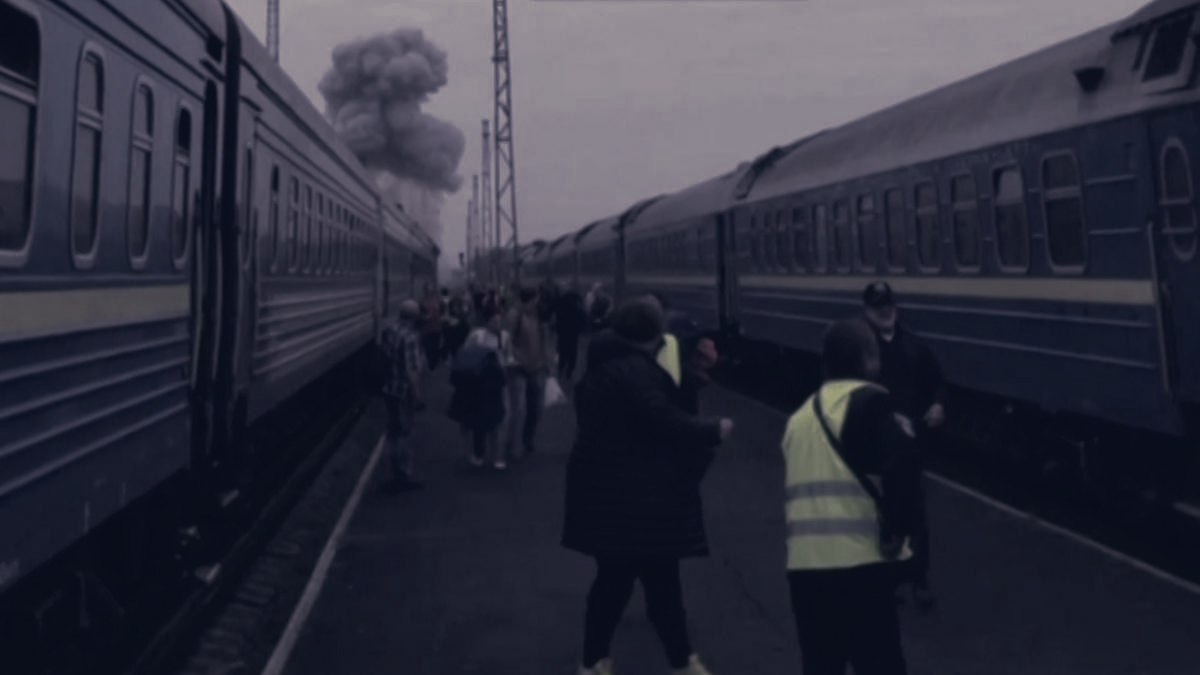
Diplomatic and civilian safety around Ukraine's rail corridors is now more acute after a Russian jet-propelled drone struck a locomotive at Yahodyn station, roughly 2km from the Polish border. Ukrainian railway operators said the projectile hit the train's engine, but staff had cleared passengers 15 minutes before impact after detecting the incoming craft.
Ukrzaliznytsia, the state railway company, said personnel detected the drone and ordered an evacuation well ahead of the strike. The authority confirmed the train that had carried former UK prime minister Boris Johnson and senior European security advisers had been at Yahodyn earlier and left ahead of schedule, and it suggested a diplomatic carriage may have been the intended target because it departed sooner than planned amid repeated threats of Russian strikes. The railway company also said former CIA director David Petraeus was travelling on a separate train at Yahodyn when the drone struck.
Polish officials recorded the impact as occurring 2km from their border. Former prime minister Boris Johnson expressed incredulity at the attack, saying, "I don't know what warped logic drove Putin to blow up a stationary Ukrainian locomotive on the Polish border this morning," and asked, "When are we going to give them the air defences they need?" Former Swedish prime minister Carl Bildt described how passengers on his train were told to prepare to evacuate before being cleared to continue.
Kyiv presented the strike as a step up in pressure on transport near NATO territory. Ukrainian foreign minister Andrii Sybiha called the Yahodyn strikes "Putin's terror 'knocking' directly on the doors of the EU and Nato" and demanded tougher sanctions on Moscow, saying harsher measures are the only way to raise the cost of war to an unacceptable level for Russia.
The incident follows months of assaults on Ukraine's rail network. In recent weeks and months Russia has struck depots and passenger services, killing six Ukrzaliznytsia employees at a Kyiv depot earlier this month, a female conductor on a southern passenger train this week, and five people in a January attack on a crowded passenger service in the Kharkiv region. With civilian flights suspended since the 2022 invasion, the rail system remains central to domestic travel and to movement of officials.
For now the strike underlines why Kyiv continues to prioritise protection for key rail corridors and why officials in Kyiv and allied capitals are likely to press again for more air-defence systems and for measures that increase the political and economic cost to Moscow. The proximity to Poland will sharpen those calls, as diplomatic delegations and civilians alike face higher exposure whenever transport nodes come under fire.