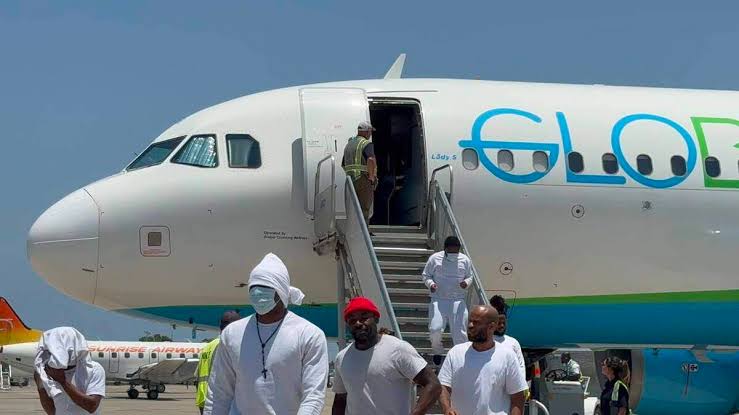

Roughly 350,000 Haitian nationals now face the loss of Temporary Protected Status after courts cleared the way for deportations, and U.S. Immigration and Customs Enforcement put the policy into action with a charter flight that landed in Cap-Haïtien carrying more than 160 people. Authorities chose Cap-Haïtien because Port-au-Prince’s main international airport is considered too dangerous for U.S. arrivals, with a U.S. ban on commercial flights to the capital in place through early September.
The arrival was tense and controlled. Deportees wore white and many covered their faces as journalists filmed, and most declined to speak. Some said they fear being targeted by gangs that Haitian officials estimate control about 70% of Port-au-Prince and territory beyond. The U.S. Department of State warns on its travel advisory, “Do not travel to Haiti for any reason. US citizens are at risk due to crime, terrorism, kidnapping, unrest, and limited health care.”
The charter is the first to Haiti since a U.S. district judge removed a stay on deportations earlier this month, after the U.S. Supreme Court affirmed the federal government’s authority to end TPS protections. ICE is believed to have carried out eight flights to Haiti so far this year, including a flight on 16 July that carried deportees with criminal records.
Haiti’s director general of the national office of migration, Jean Négot Bonheur Delva, told the Miami Herald the flight included people born in Chile and the Dominican Republic who were sent to Haiti because they have a Haitian parent. Those returned from the United States reportedly received the equivalent of US$76.40, an amount officials said would not cover a ticket to Port-au-Prince from Cap-Haïtien but might help travel through some gang-controlled roads.
Advocates framed the policy as a moral and economic breach. Krish O’Mara Vignarajah, president and CEO of Global Refuge, called the move a “stunning contradiction,” arguing it forces people into dangerous conditions while U.S. officials warn citizens not to travel to Haiti. Josiane Valsaint, a former TPS recipient, told the Guardian that Haitian workers contribute taxes, labor, and community support and “deserve to stay here, with our families and loved ones.”
The Department of Homeland Security secretary, Markwayne Mullin, has drawn a hard line, saying, “These individuals can either self-deport or we’ll arrest you and send you back. It’s that simple.” U.S. officials have warned Haitian authorities to expect increased removals, setting the stage for more charters and an intensifying humanitarian and security challenge for a country already grappling with gang violence and limited services.