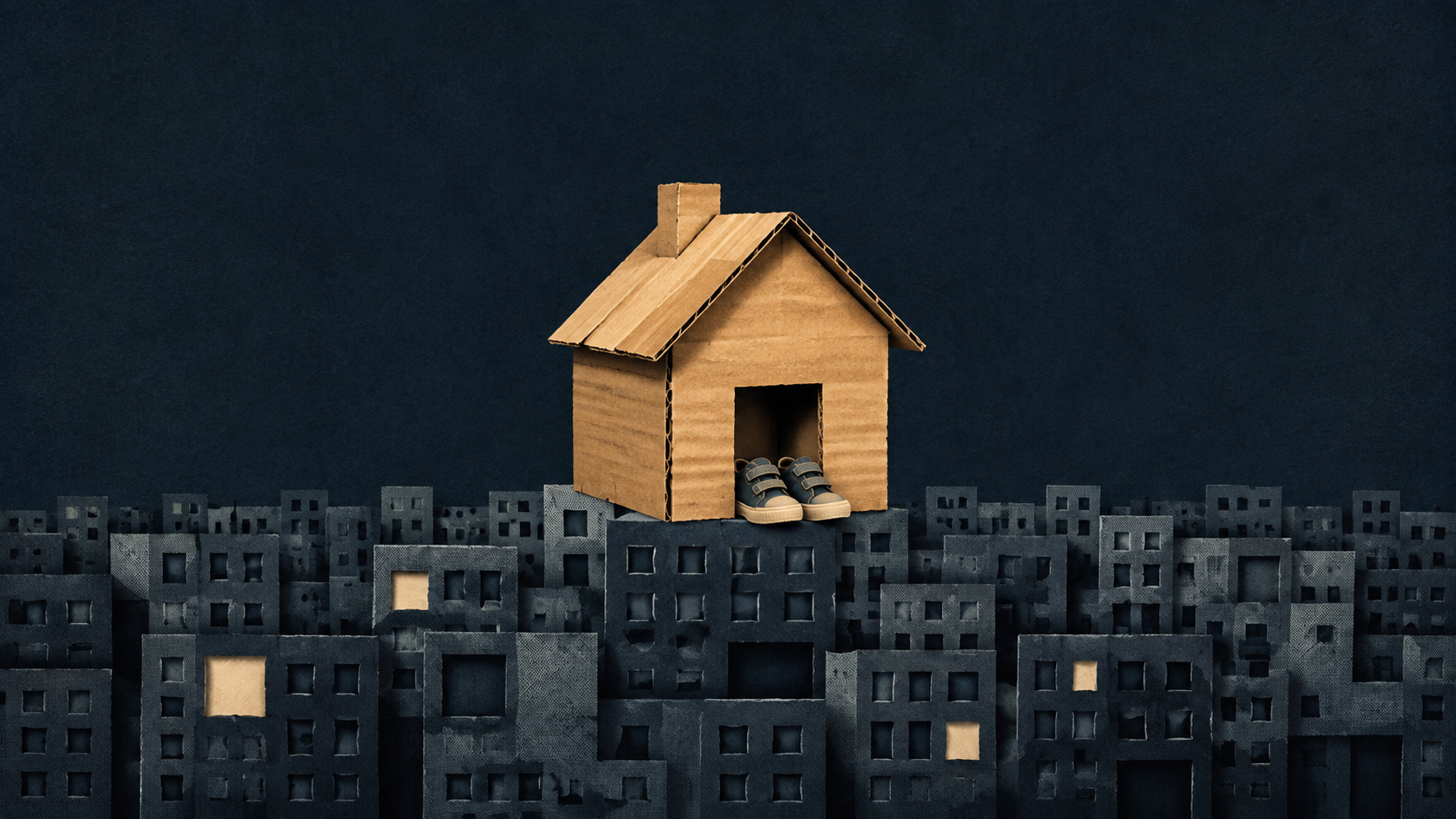

The number of homeless children in England living in temporary accommodation has risen by 5% in a year to 177,530, according to new government figures.
The January-to-March period marked the 18th consecutive quarterly increase, although the number of children living in bed and breakfast accommodation fell.
The total number of households in temporary accommodation also increased by nearly 4% over the year, according to the Ministry of Housing, Communities and Local Government.
Ronesha, 31, has been living in temporary accommodation with her two sons since 2024 after a no-fault eviction left her homeless. She said she could not afford to rent privately and found that many social landlords required prospective tenants to have a guarantor.
The family spent seven weeks in a bed and breakfast, exceeding the six-week limit. Ronesha said it had no proper cooking facilities and no refrigerator for her younger son’s medication before the family moved into its current accommodation.
“Living in temporary accommodation has taken a huge toll on my family,” she said.
Ronesha, who lives in north London, is a registered carer for her younger son, who has type one diabetes and other complex needs. She said the disruption of moving between temporary homes had been difficult for him.
His glucose monitor beeps at night in the family’s small flat, waking his older brother and affecting his GCSE revision, she said.
“He tried his best to do all the revision he could, but I felt really bad because there was nothing that I could do apart from giving alternatives like studying at a friend’s house, or going to the library,” Ronesha said.
Section 21 no-fault evictions were banned from May 2026. However, Ronesha said rising rents, rather than Section 21 itself, were the central problem.
The Labour government has pledged to build 1.5 million new homes in England during this Parliament, but is not currently on course to meet that target.
Prime Minister Andy Burnham has pledged what he described as “the biggest council house-building programme since the postwar period”.
Shelter chief executive Sarah Elliot said it was “shameful” that a record number of children were growing up without a home, blaming a shortage of genuinely affordable social housing.
The charity called on the government to use October’s Budget to remove financial barriers preventing councils from building more social rent homes.
The number of households with children living in bed and breakfast accommodation fell by half over the year to March. About 1,000 households with children had nevertheless remained in such accommodation for more than the six-week limit.
Housing Secretary Angela Rayner said the fall in bed and breakfast use was welcome, but that the figures showed “there is still a long way to go” as record numbers remained in temporary accommodation.
The government has also pledged an additional £340 million to end rough sleeping.