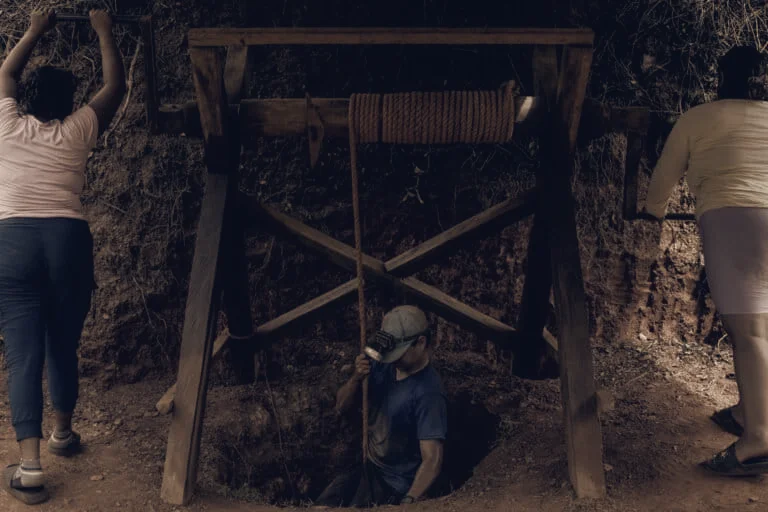
Illegal mining in Venezuela has grown this year, including incursions into protected areas, even as U.S. officials and Venezuelan authorities push to formalise the sector and remove criminal actors. Observers and local sources say attempts to open the industry to foreign investment and step up enforcement have not reduced the scale of illicit operations.
In March, U.S. Secretary of the Interior Doug Burgum travelled to Venezuela with over a dozen mining company executives and met Caracas officials to discuss creating a "legitimate mining sector" and removing the criminal groups that operate at many mine sites. Burgum described the country's mining potential as worth billions, and his trip followed a U.S. military operation months earlier that removed then-President Nicolás Maduro and transported him to a detention centre in New York.
Since those events, Venezuelan authorities and their international partners have taken a series of measures to attract investment and curb illegal activity, passing mining reform laws, arresting leaders of criminal groups involved in mining and raiding illegal sites. U.S. officials are also considering an executive order aimed at improving access to critical minerals, steps designed to make the sector more appealing to outside companies.
Despite those moves, sources and observers report that criminal groups have tightened their control over many mining areas and that illegal operations have expanded in the past year. Cristina Burelli, founder of SOSOrinoco, said, "[Since Maduro's capture], nothing has changed in the criminal and legal ecosystem. If anything, we have seen an increase in certain areas." Vendors continue to weigh and trade gold at gold-buying shops in El Callao, illustrating how informal and illicit flows remain part of the market.
The authorities' push to formalise mining and attract foreign capital has not yet produced a clear decline in illegal activity. Whether reforms, raids and potential U.S. policy measures will reverse the expansion of illicit mining or shift control of sites away from entrenched criminal groups remains uncertain. The coming months will show if enforcement and policy changes can meaningfully reduce incursions into protected areas and the hold of criminal networks.