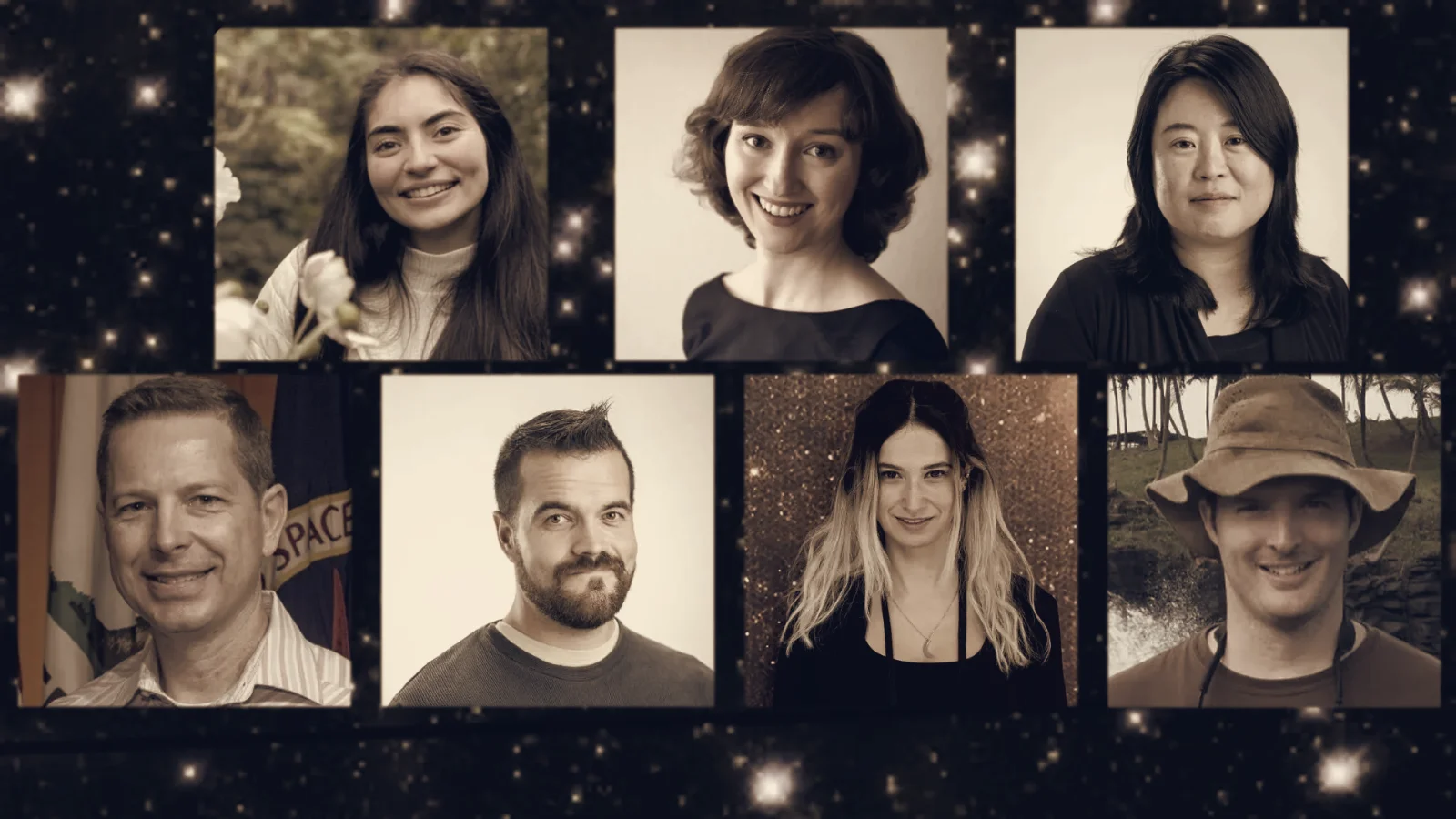
NASA Ames is elevating mission readiness by naming seven staff as its September Stars, spotlighting work that advances image processing for Hubble and the Roman Space Telescope, supports Europa science ahead of Europa Clipper, and pushes NASA toward GeoAI ground truthing. The Science Directorate recognised employees and affiliates whose recent efforts improve facility safety, data pipelines, planetary modelling and atmospheric observation capabilities at the center.
Space Biosciences nominations highlight operational resilience. Steve Ormsby, a project engineer in the Space Biosciences Division with Amentum in the Center Operations Directorate, was cited for persistent oversight of division facilities, infrastructure maintenance and his diligence as a property custodian. Aphrodite Kostakis, Facility Service Manager with Amentum for building ₦239, was recognised for maintaining building safety, preparing for and leading VPP inspections, and proposing infrastructure upgrades that were implemented for staff benefit.
In astrophysics, Alejandro Borlaff, a research scientist with the Bay Area Environmental Research Institute, received recognition for leading development of image reduction pipelines for the Hubble Space Telescope and the Roman Space Telescope’s Wide Field Instrument. The algorithms Borlaff led model background contamination including scattered and zodiacal light, which the directorate says improves detection of ultra‑low surface brightness features and helps maximise science return from flagship missions. Sarah Nickerson, also a research scientist with the Bay Area Environmental Research Institute, was honoured for her work curating and analysing data from EXES onboard NASA’s SOFIA observatory, producing high‑level data products for the global astrophysics community and enabling synergy with other NASA missions.
Planetary Science recognition went to Martina Caussi, a NASA Postdoctoral Program Fellow in the Planetary Science and Exobiology Division, for finite element simulations showing that topographic relaxation has significantly shaped Tegid, an unusually formed impact crater on Europa. The directorate framed this work as valuable precursory science in anticipation of the Europa Clipper mission, which will refine understanding of the moon.
Earth science Stars include Keiko Nomura, a research scientist for the NASA Earth Exchange in the Earth Science Division with the Bay Area Environmental Research Institute, who was acknowledged for leadership and stakeholder coordination on the newly funded NEX‑GeoAI project. The directorate called NEX‑GeoAI a key step toward establishing NASA as a ground‑truthing agency for federal and private sector GeoAI models used for decision making. Stephen Broccardo, a research scientist in the Earth Science Division with the Bay Area Environmental Research Institute, was recognised for initiative and technical leadership in sustaining Ames’ atmospheric remote‑sensing capabilities and for developing milestones for future satellite validation and science activities.
The awards underline internal work that the Science Directorate says will translate into stronger operational readiness, richer data products for researchers worldwide, and more rigorous preparation for upcoming missions such as Europa Clipper. Ames will continue to track these projects as they move into implementation and mission phases.