
The Story in Pictures
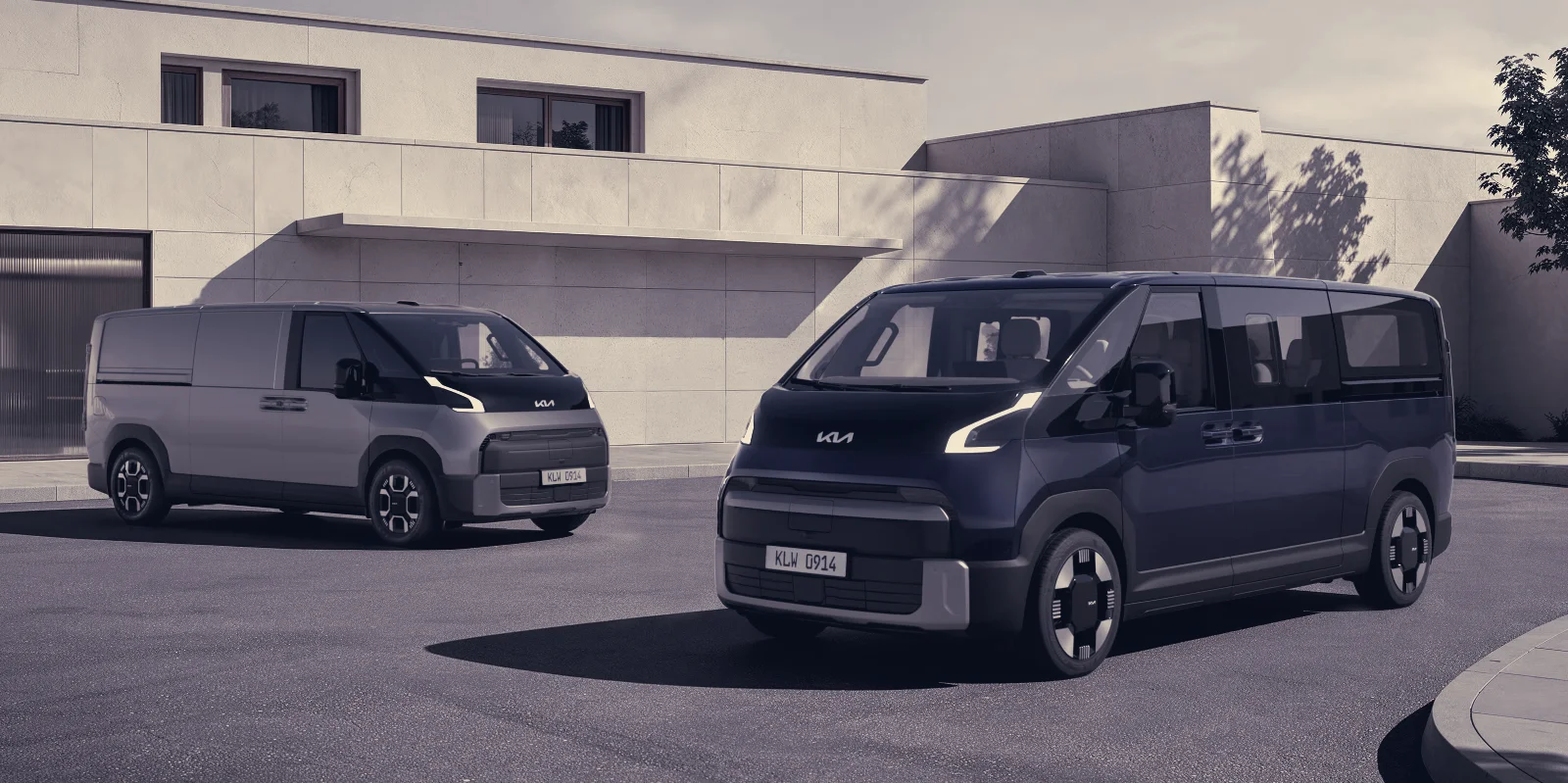
The PV7 uses the E-GMP.S architecture to create a flat floor and flexible interior packaging. Kia offers the van in Cargo and Passenger variants, and intends a wide model mix: the company plans 23 different variants including Compact Cargo and Passenger versions, a Chassis Cab, and multiple conversion models.
Powertrain options include either a 72-kWh or 96-kWh battery, both using nickel-cobalt-manganese chemistry. Initial models will be front-wheel drive with all-wheel drive added later. Kia quotes a maximum output of 268 horsepower and 309 pound-feet of torque, though exact figures will vary by market and configuration. The Long Range Cargo version is rated at 285 miles on the WLTP cycle, which Kia says would likely equate to about 240 miles under the EPA methodology.
The PV7 adopts an 800-volt electrical architecture, allowing DC fast charging from 10 to 80 percent in around 25 minutes. There are two charging ports, a front combined AC/DC port and an optional rear AC port. The vehicle also supports vehicle-to-load capability for powering tools and equipment, aimed at commercial users.
Measured in the Long configuration, the Cargo PV7 is 210.6 inches long. Cargo Long offers up to 215 cubic feet of storage, while the High Roof variant increases capacity to 282 cubic feet. Payload for the Long model is rated at 2568 pounds, and buyers can choose either a twin-swing tailgate or a lift-up tailgate. The Passenger model shares the same exterior dimensions and seats nine, with some Korean-market layouts accommodating 11 seats.
The cabin is functional, with a 14.6-inch touchscreen on the dash and a slim digital instrument display. Kia retains many physical controls, including climate toggles. The PV7 introduces Pleos Connect, an Android Automotive OS-based system with flexible screen layouts and an open app marketplace, plus Gleo AI as a voice assistant for vehicle, navigation, and messaging tasks.
Fleet-focused features include the Kia Business Solutions Portal for managing charging and maintenance, and Uptime services that use real-time monitoring and predictive diagnostics to reduce downtime. The PV7 will be built at Kia’s Hwaseong plant in South Korea, the same facility that produces the PV5. Kia also plans an even larger PV9 in 2029, while the future of the smaller PV1 remains unclear.
What comes next is a staged rollout: sales start in South Korea and Europe in 2027, additional markets will follow, and Kia will expand the lineup with more variants and an AWD powertrain in later model years.