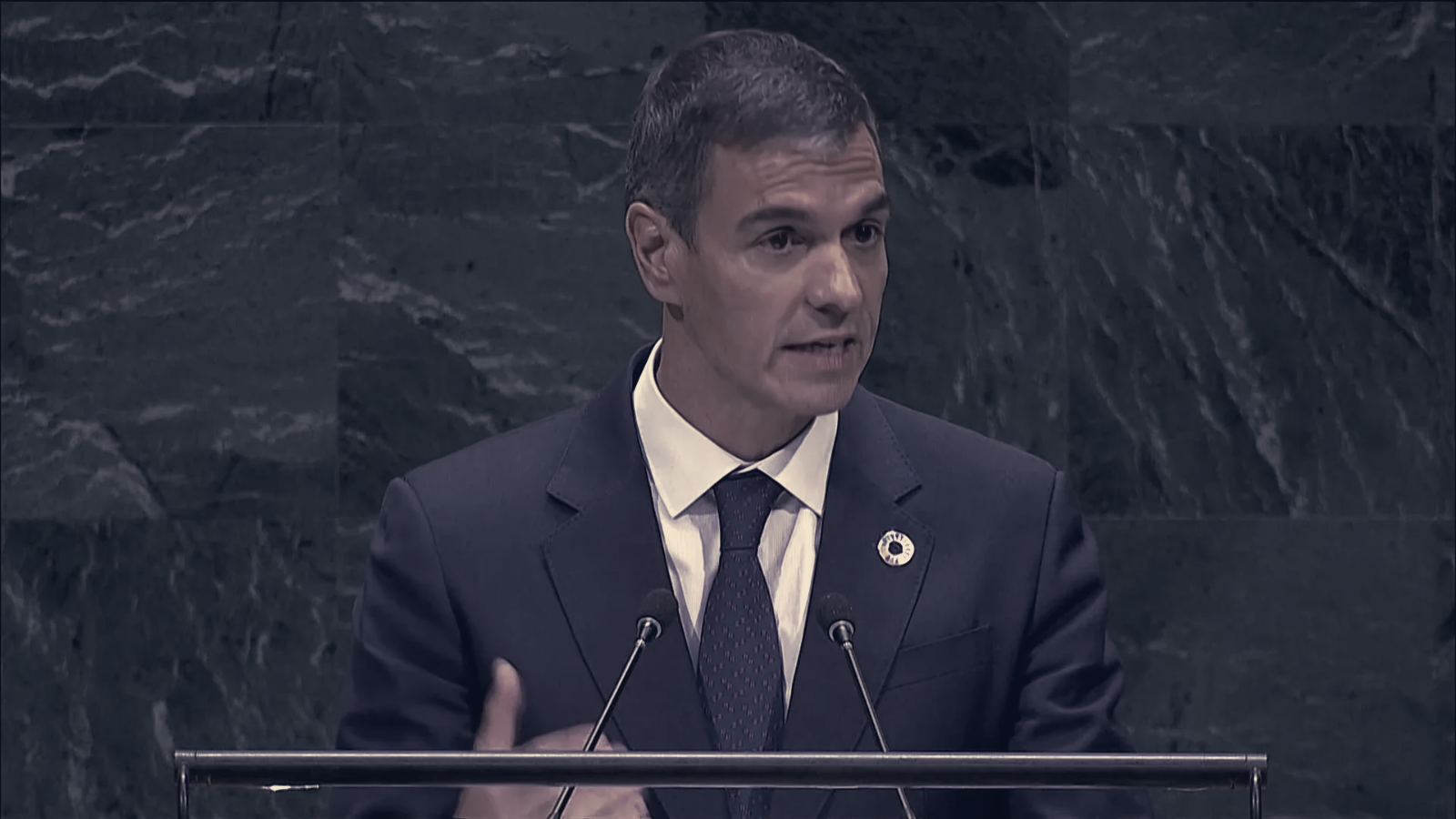
Global cohesion is at risk, Spanish prime minister Pedro Sanchez said in an address to the UN General Assembly published on 24 September 2026. Sanchez used his speech at the world body to single out a political current he described as a growing threat, framing it as a problem that extends beyond national politics.
In his remarks, Sanchez warned of the rising influence of what he called "selfish, ignorant and cruel" forces, language that the prime minister linked directly to far-right movements in his address. By taking the argument to the UN General Assembly, Sanchez elevated his critique from domestic debate to an international forum, putting the issue on the agenda of a multilateral institution.
The choice of words turned a policy disagreement into a moral judgement, casting the actors he criticised as an existential risk to shared human values. Addressing the assembly in New York, Sanchez presented that risk as not merely political competition but as an erosion of the norms that underpin global cooperation.
Delivering the warning at the General Assembly gives it added visibility among diplomats and national leaders who gather there each year. Sanchez’s intervention imports a contentious national argument into the UN setting, where statements are recorded and circulated among delegations.
The immediate effect is rhetorical, a tightening of language used by a head of government when speaking on the world stage. What follows will be shaped by how other governments and international actors respond during the General Assembly’s sessions and in subsequent diplomatic exchanges. Sanchez’s speech ensures the question of how to address those forces appears on the multilateral agenda, setting the terms for further discussion at the UN.