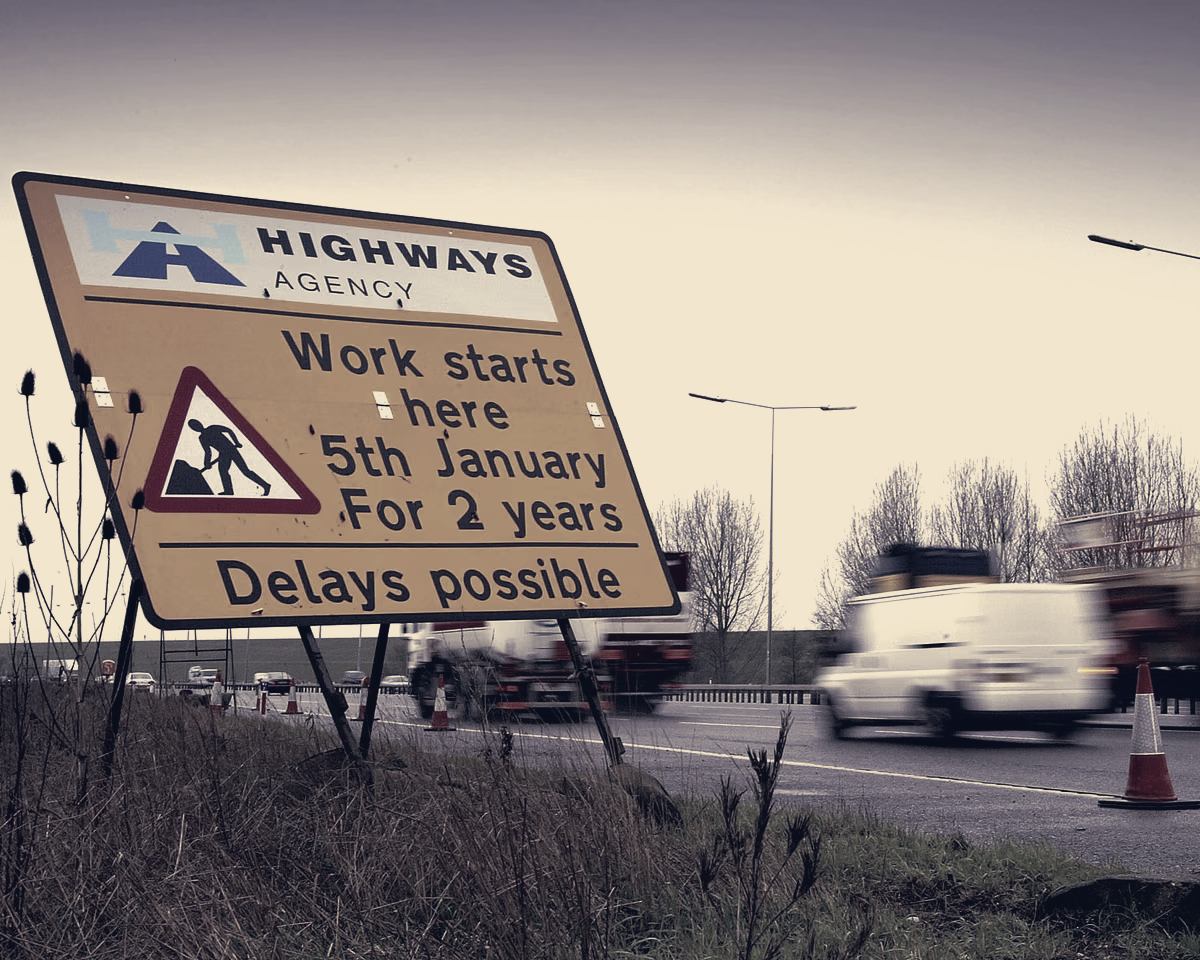
Road workers and other road users now face a higher danger on England’s motorways and major A-roads after National Highways recorded more than 400 incidents this year in which drivers deliberately ignored cones or barriers to bypass queues and diversions. The agency said it logged 814 incursions between January and July, and that 53% of those involved motorists attempting to save time by entering restricted work zones.
The Story in Pictures
On average about 30 incursions are recorded each week, and contractors are increasingly treating these events as deliberate rather than inadvertent. That behaviour has real operational consequences. National Highways has repeatedly moved from lane closures to shutting whole sections of motorway to protect crews, a change that imposes substantial detours on other drivers and complicates traffic management.
The agency pointed to one early-year incident on the M1 in Hertfordshire where incursions prompted a full closure and a 10-mile diversion. National Highways has published video clips of motorists entering closed work areas, and where the evidence has been sufficient those incidents have produced prosecutions and driving bans.
Melanie Clarke, director of health, safety and wellbeing at National Highways, said the pattern is worrying, "a worrying number of drivers wilfully ignoring roadworks to save time, putting road workers and other people at risk." She added, "This year alone there have been over 400 incidents of those 'seeking benefits' as we describe it," and urged staff to report incursions so the scale of the danger is clearer.
While the illustrative footage shown by the agency did not include casualties, Clarke said at least one fatality this year resulted from an incursion. Contractors working beside live traffic describe the threat as immediate. Sinead Ryan, a lead traffic management operative for HW Martin, said: "People don't always realise how dangerous our job can be. We work close to live traffic and, while we can do everything possible to keep ourselves safe, we can't control the actions of drivers. When someone ignores a closure or drives into a work area, it only takes a second for someone to get hurt."
National Highways warned that drivers who enter closed work areas are often travelling at speed and can encounter machinery, recently treated surfaces or damaged carriageways. The agency also cautioned that closures are imposed because work is either underway or about to start, and that shortcuts usually do not save time. It is urging motorists to obey closures and to report incursions, so crews can be protected and the need for wider shutdowns that disrupt journeys and raise risk can be reduced.