
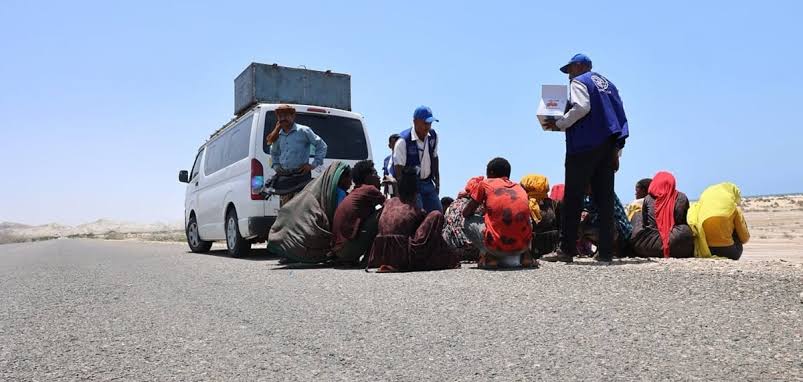
Ethiopian nationals accounted for 91% of the 13,687 migrants who arrived in Yemen in July 2026, making them the largest group of migrants recorded entering the conflict-affected country during the month. The International Organization for Migration (IOM) reported that the number of migrant arrivals increased by 3% from June, with the majority entering through southern coastal landing points and the Yemen-Oman land border crossing. Of the total arrivals, an estimated 2,584, or about 19%, were under the age of 18, while 2,540, or 18.5%, were women.
The majority of arrivals were recorded in Abyan, which accounted for 41% of the total, followed by Shabwah and Ta'iz with 26% each, and Al Maharah with 2%. IOM said all migrants arriving in Abyan and Ta'iz had departed from Djibouti, while those arriving in Shabwah came from Somalia and those recorded in Al Maharah entered from Oman. Somali nationals represented the remaining 9% of arrivals, highlighting the dominance of Ethiopians along the migration routes into Yemen during the reporting period.
The IOM data also showed that Ethiopian nationals accounted for all 1,649 migrants who departed Yemen in July, with most heading to Djibouti through the Lahj coast and others travelling to Oman through the Al Maharah land border. Of those departing Yemen, 87% were adult men, 8% adult women and 5% children. IOM noted that a small proportion of the children were under five years old.
The figures come amid a broader humanitarian crisis in Yemen, where IOM reported that more than 22 million people require humanitarian assistance. The agency said conflict, deteriorating maritime security, severe weather and damage to shelters at displacement sites continued to intensify humanitarian needs in July. According to IOM, the July arrivals were part of an active migration route linking the Horn of Africa with Yemen and onward destinations.
IOM also reported that it provided direct protection assistance to 1,905 migrants during July, alongside support to internally displaced people, refugees and asylum-seekers. Across its operations, the agency provided services including protection case management, cash assistance, food support and referrals to specialized services. The UN Refugee Agency (UNHCR) described the corridor as "one of the world's most active and dangerous mixed-movement corridors," warning that migration along the route is rarely a straightforward journey.
UNHCR said evidence collected along the route indicates that onward movement is often driven by unmet protection needs rather than being "a simple choice," stressing that timely access to asylum can significantly alter the course of a person's journey. The assessment comes against the backdrop of a sharp increase in migration along the corridor, with more than 506,600 outward movements recorded during the latest reporting period, representing an 18% increase from the previous year.
The IOM said the route had become the deadliest on record, despite mounting dangers faced by migrants travelling from the Horn of Africa toward Yemen and the Gulf. According to the IOM, Ethiopian nationals accounted for 97% of all tracked migrants, while 95% cited economic hardship as their primary reason for leaving. The agency also reported that smugglers have increasingly adopted remote routes that bypass official monitoring points and border checkpoints in Ethiopia, Djibouti, Somalia and Yemen, making movements more difficult to track and exposing migrants to greater risks.