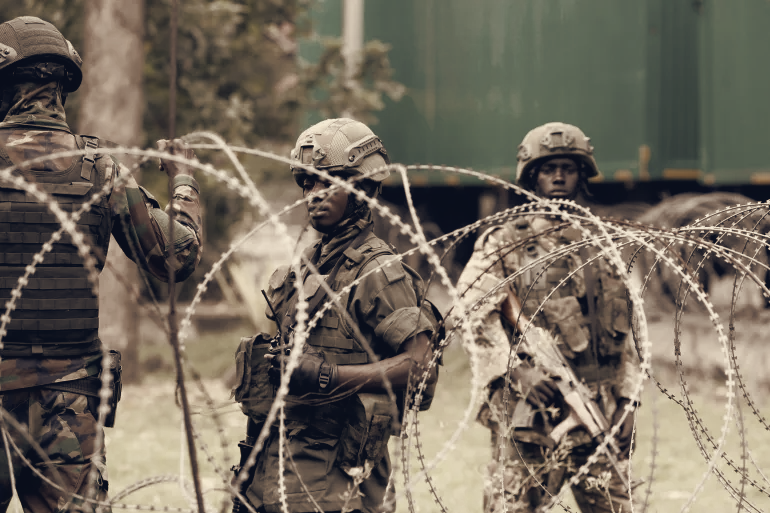
Millions of people in eastern Democratic Republic of the Congo now live under a rebel-run economic order that funds armed control and administrative services. The M23, which launched a new insurgency in 2021 and took the region's two main cities, Goma and Bukavu, in early 2025, raises steady income from everyday commerce and from mineral extraction to pay fighters and sustain a parallel administration.
The group's revenue system centres on regular levies. Trucks, motorbike taxis and cross-border traders face fees at checkpoints, while shops, warehouses and informal vendors pay registration charges or routine taxes. Those small payments add up to a predictable cash flow that supports policing, migration, customs and other services the M23 now runs, turning war finance into an ersatz state budget.
Gold and coltan are a second pillar of funding. Mining sites and transit routes in territory controlled by the rebels are taxed, and many minerals move over the border into Rwanda, the country that the reporting identifies as the M23's main backer. That flow of resources has sharpened scrutiny of how Congolese minerals reach global markets and heightened questions about international complicity in the region's prolonged extraction and conflict.
Experts say the group has converted those economic levers into governing power. "They have methodically consolidated a de facto, deeply illegal, parallel administration," said Zobel Behalal of the Global Initiative against Transnational Organized Crime. Behalal added that the structures the M23 and its political arm, the Congo River Alliance, have built amount to "forms of criminal governance" that leave civilians little choice but to finance the rebels, despite UN and other sanctions.
The system, however, runs against economic limits. Years of fighting, closed infrastructure and the collapse of formal banking have shrunk the local economy, reducing traders' ability to pay and aggravating business closures. A Goma shop owner described an environment where the airport is closed, banks are gone and most people simply have no money to spend. Local economists note new levies and the elimination of prior flexibility for businesses. "The biggest difference is that, previously, it was possible to negotiate or stagger payments," Pascal Ndyanabo, an economist based in Goma, said. "Today, if you can't pay, who will you complain to?"
That squeeze creates a contradiction for the M23: extract too much and the tax base erodes, but collect too little and the group risks losing the funds needed to maintain order and pay fighters. Meanwhile, the rebels' political wing has advanced national ambitions, calling for the removal of President Félix Tshisekedi and threatening to march on Kinshasa, a development that keeps regional tensions high as international attention focuses on mineral flows and governance in eastern DRC.