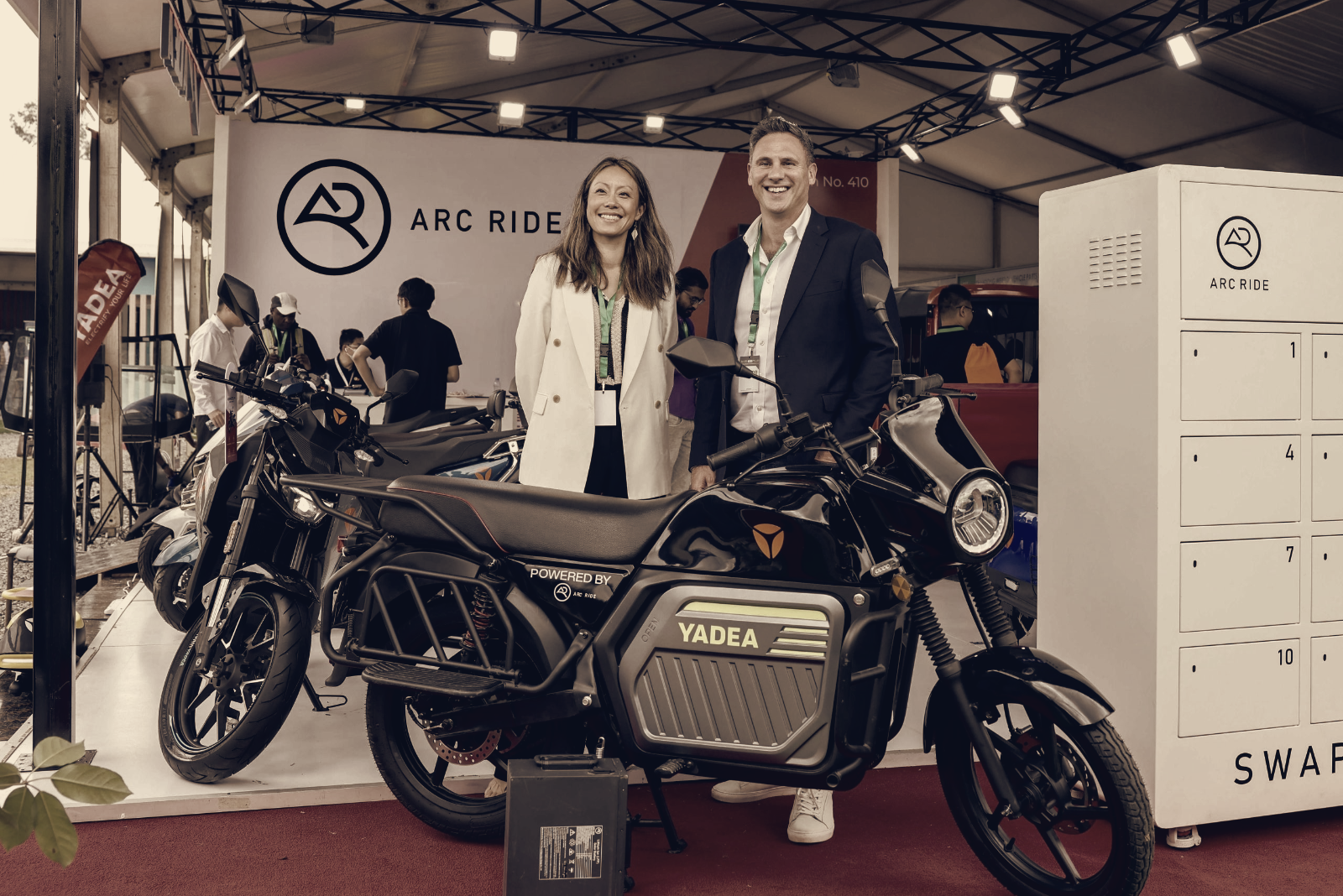

ARC Ride will expand its battery-swapping network, add 5,000 electric motorcycles and push into four additional African markets after closing $33.3 million in asset-backed debt and equity financing.
The round was led by Novastar Ventures and Norrsken22, and included participation from the International Finance Corporation, British International Investment and Proparco. Existing backers Musashi Seimitsu and Talanton also took part.
The capital will fund an increase in operations in Kenya, the company said, while strengthening its battery network and supporting market entry into Ghana, South Africa, Tanzania and Uganda. ARC Ride plans to invest in technologies designed to speed and automate operations, including automated battery swapping, smart charging and integration with renewable energy.
ARC Ride assembles two- and three-wheelers at a plant in Nairobi and collaborates with manufacturing partners on powertrain units and components. Musashi Seimitsu began working with the company in 2022 on those systems. The startup describes its batteries as open-architecture and interoperable and runs a platform that tracks vehicles and swaps across its network. Its swap stations are designed to run on solar power to reduce dependence on the grid.
Founder Jo Hurst Croft framed the fundraising as a bet on scale. "This funding reinforces our vision of building a robust, scalable energy and mobility network across Africa," she said. "Our ambition is to make electric mobility the default choice for riders across Africa by making it more accessible, more affordable and more practical than petrol alternatives. This funding allows us to scale the infrastructure required to support that transition and to do so at pace."
Norrsken22 partner Ngetha Waithaka said the model has platform characteristics and could evolve into an open standard for the sector, signalling investor confidence in interoperability and network effects rather than single-vendor systems.
ARC Ride has already trialled its swap model in South Africa, launching the ARC Panther in Gauteng and testing operations in Cape Town, and the company says it has set up an assembly plant there and cleared regulatory requirements for local operations.
The funding arrives as demand for EV infrastructure intensifies. Kenya’s registered electric vehicles rose nearly 30-fold between 2022 and 2025, increasing pressure on companies building charging and swapping systems.
Competition is already strong. Spiro raised $215 million in June 2026 and a further $55 million three weeks later, bringing its latest total to $270 million, while firms such as Ampersand, Roam and SUN Mobility continue to expand swapping networks across the continent.
What follows is execution. ARC Ride must translate this capital into installed swap stations, interoperable batteries in active use and measurable operational gains from automation and renewable integration if it is to convert financing into market share across multiple African countries.