
The exchange of strikes has increased the risk of a wider Gulf confrontation and tightened global oil markets, with Brent crude moving toward $100 a barrel.
US Central Command said its forces struck five oil tankers it links to the Islamic Revolutionary Guard Corps, sinking one ship it identified as the M/T Riesco and damaging four others in the Gulf of Oman, plus a fifth near Kharg Island. Centcom posted video of the damaged vessel and described the vessels as part of a "multi-billion-dollar shadow network" that the United States says funds the IRGC and regional proxies.
Kharg Island, the terminal near where one vessel was struck, handles roughly 90% of Iran's crude exports, supplied by mainland pipelines, a critical chokepoint for Tehran's oil flows.
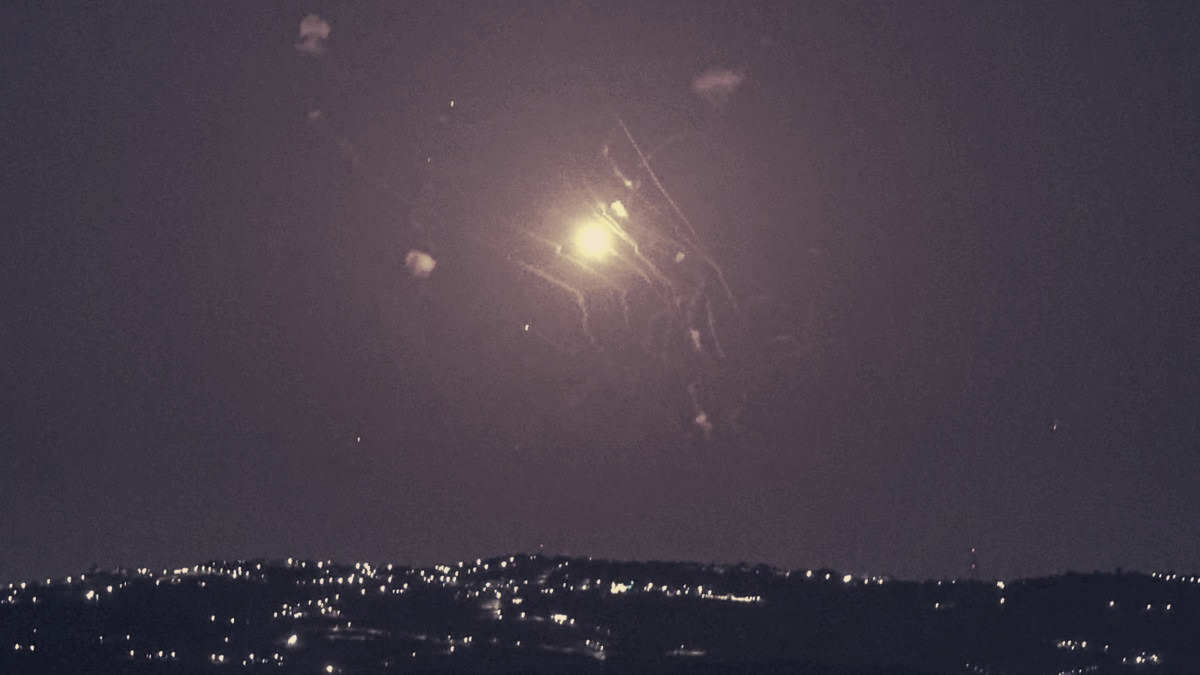
Iran responded by launching a missile barrage at a US base in Jordan, the Jordanian Armed Forces said. Jordanian officials reported they shot down 18 of 20 incoming missiles, and said the remaining two fell in unpopulated areas. Centcom also said Iran targeted a US warship with ballistic missiles that were "successfully evaded" and that no American troops were harmed.
Iran's Revolutionary Guards, speaking through state media, said they had struck two US vessels, eight oil tankers and 10 "non-compliant vessels" in the Strait of Hormuz. Separately, Iran claimed to have seized an uncrewed US submarine; Centcom spokesman Captain Tim Hawkins said the underwater drone "operated by US forces malfunctioned more than a day ago" and described it as "an older model that neither collected sensitive data nor carried any classified sonar or radar equipment," adding US operations in the area were continuing.
When asked about the exchanges, Marco Rubio said the situation was "pretty straightforward" and added, "Iran continues to try to hit US naval ships. And, for every time they do that or try to do that, they're going to lose tankers. And I think you'll see that again today."
Markets moved immediately: Brent rose 1.5% to $99.35 a barrel, while US-traded oil was 1.3% higher at $94.23. Pressure on prices was amplified by separate attacks on Saudi energy facilities by Yemen's Iran-backed Houthi movement, which Saudi authorities said injured 73 people, sparked fires at oil installations and temporarily halted some operations.
The incidents extend a week of tit-for-tat strikes tied to a campaign that traces back to US and Israeli operations on 28 February. Iran's Revolutionary Guards have warned of further retaliation. The coming days will test whether the exchanges remain focused on shipping and isolated bases or escalate into sustained cross-border conflict involving more states and commercial traffic through the Gulf.