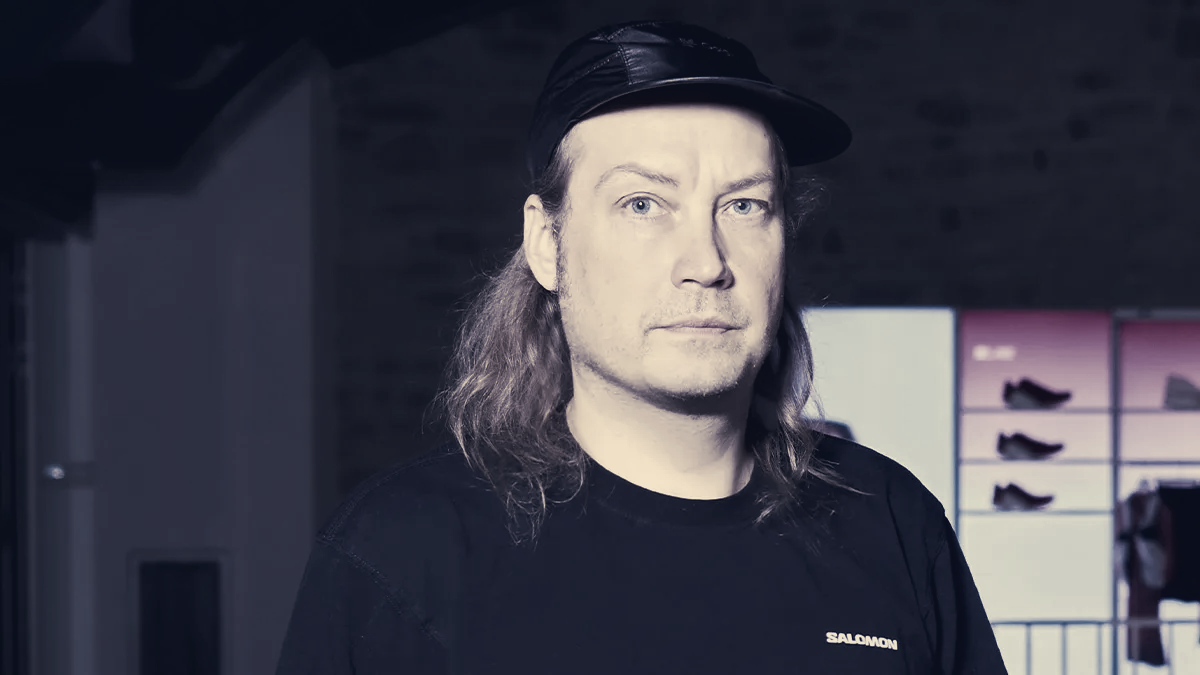

Salomon is shifting its public position and design priorities to foreground technical performance, a change set in motion by the appointment of Heikki Salonen as the brand’s first official creative director. Salonen, who joined the company in January and spoke by video from Salomon’s Annecy headquarters, argues the label should not rebrand itself as a fashion house. His brief is to protect the technical DNA that originally drew collaborators and new consumers, while allowing lifestyle lines to grow from authentic product innovation.
The Story in Pictures
Salonen arrives with a resume rooted in womenswear and experimental ready-to-wear. He spent six years as the anonymous creative director of MM6, led womenswear at Diesel from 2011, and showed an eponymous label during London Fashion Week in 2010. He had already worked with Salomon as a consultant on the Advanced line, where he questioned the separation of the brand into discrete fashion, lifestyle, and outdoors silos. His view is that new icons should emerge from technical experimentation, then migrate into the lifestyle wardrobe, rather than the reverse.
That stance comes as Salomon’s lifestyle traction has materially expanded its audience. The Sportstyle category, and designs such as the XT-6, helped the label move beyond a core of alpine and trail specialists into broader urban and millennial spheres. Salomon has also shifted its customer base: over five years ago the gender split was roughly 35 percent women and 65 percent men, and today it measures about 45 percent women and 55 percent men, according to CEO Guillaume Meyzenq, who described the evolution as a journey. The company credits product launches and cultural moments for bringing in younger and more female consumers.
Financial results underline the strategic stakes. Parent company Amer Sports reported $6.57 billion in revenues in 2025, a 26 percent year-on-year increase, with Salomon contributing more than $2 billion in sales during fiscal 2025’s fourth quarter. Amer Sports continued to grow in 2026, with Q1 revenues of $1.95 billion, up 26 percent year-on-year, and Q2 revenues of $1.63 billion, up 30 percent, driven by Salomon soft goods including footwear, apparel, and bags.
Salonen and Meyzenq are positioning the brand to unify its business wings, concentrate in-house design on technical innovation, and reserve some fashion-forward work for collaborations. The aim is to keep the company’s performance credibility intact while allowing the Sportstyle momentum to continue through apparel and product development. Next steps will emphasise product trials and technical innovation as the primary source of future lifestyle successes.