
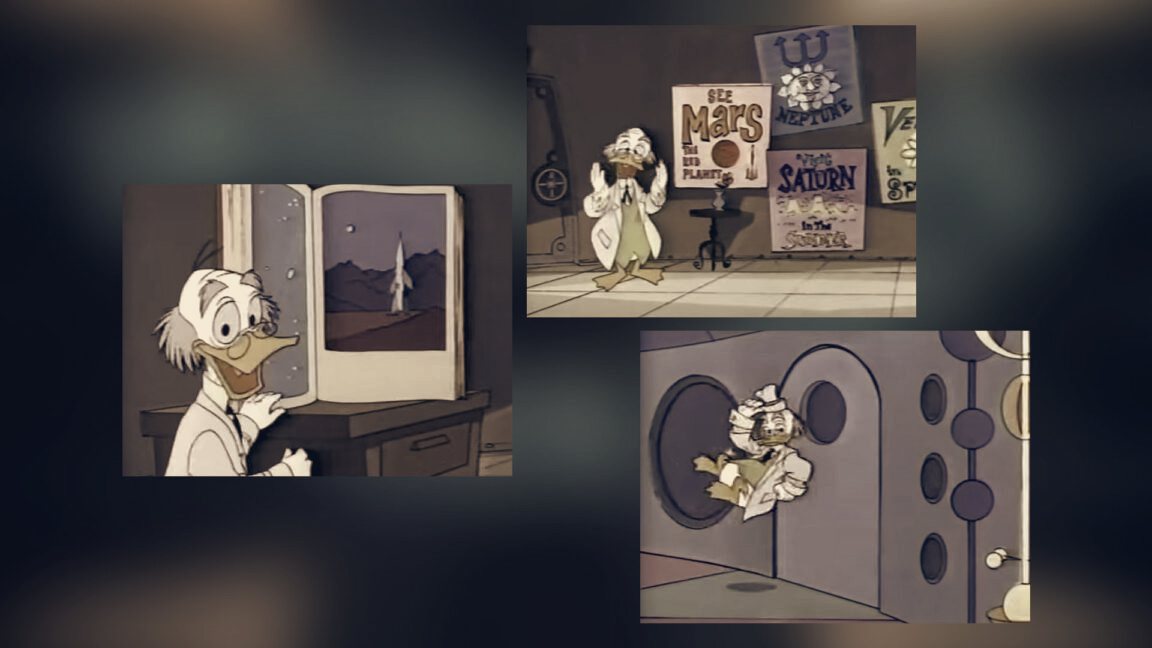
A familiar Disney character now carries a clearer link to twentieth-century rocketry, after a report found the uncle of Donald Duck was partly modelled on Wernher von Braun. That connection reframes how a mainstream children’s cartoon borrowed from a real, controversial figure known for his work in aerospace.
The report cites promotional language that introduced the real-life figure as the "world-famous authority on outer space," using that public stature as part of the character's creative lineage. Presenting a comic uncle alongside the aura of a well-known rocket scientist reveals how studios reached beyond fictional templates and drew on contemporary celebrities and experts to shape cartoon personalities.
The discovery matters because it shows how animation circulated contemporary reputations to wide, young audiences. When a comic figure traces back to an identifiable historical personality, the choice carries interpretive weight: it connects playful storytelling to the politics and ethics of the person's life and career. For educators and parents, that link invites closer attention to the assumptions behind characters introduced without context.
For animation historians and archivists, the finding supplies a concrete example of cross-pollination between real-world fame and cartoon design in the mid-20th century. It offers a prompt to re-examine studio archives, publicity materials and creator notes to map other instances where illustrators and writers borrowed from living figures whose legacies are now contested.
What happens next is likely to be retrospective rather than immediate: researchers and cultural commentators may reassess the character's place in Disney's catalogue and in the broader history of how popular media translates technical celebrity into children’s entertainment. The connection complicates a familiar comic figure and underscores the need to surface the origins behind characters that have shaped several generations.