
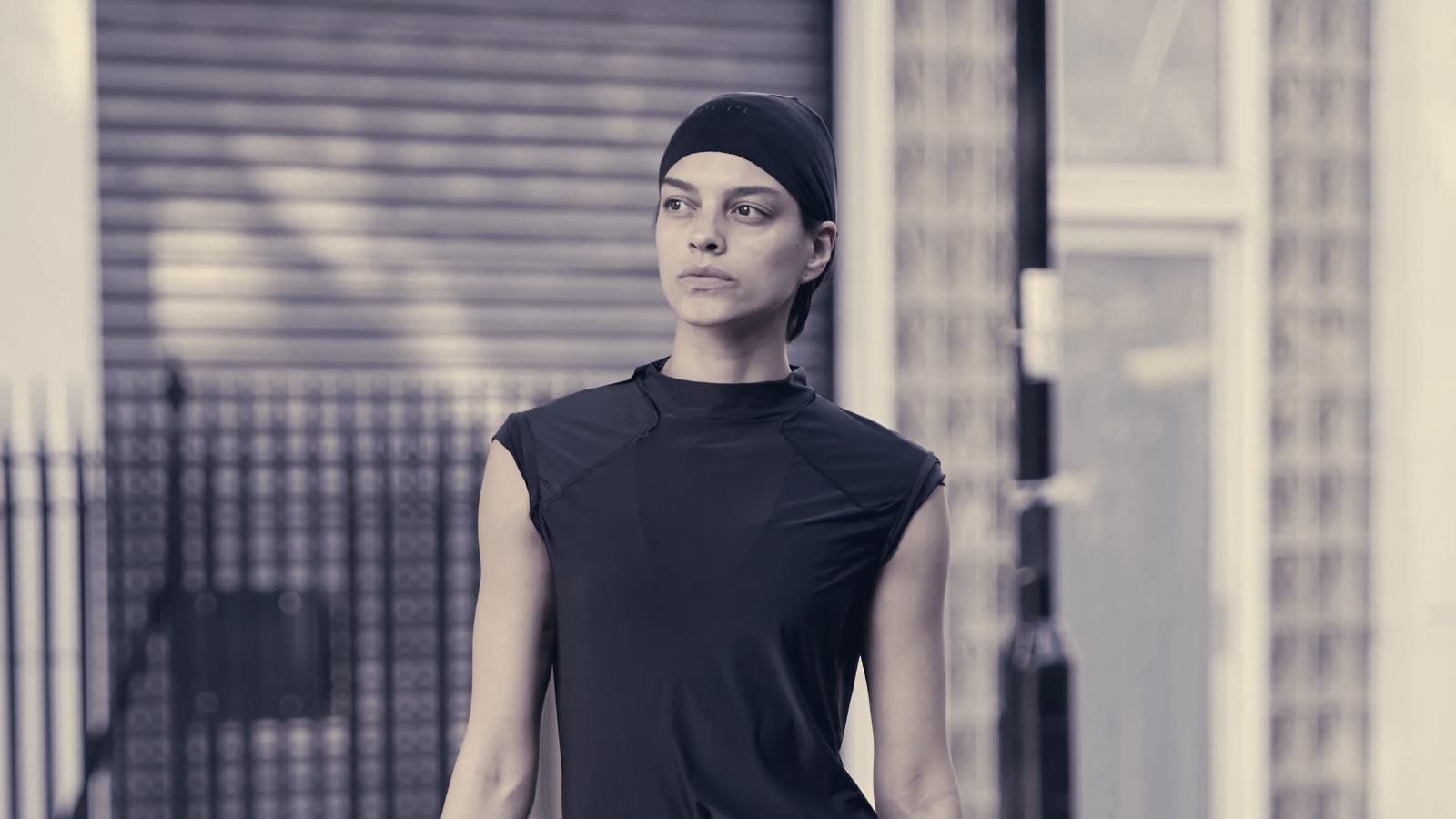
Londoners gain a spring wardrobe designed to resist heat, dust and sudden showers, Johanna Parv argued at a preview of her Spring 2027 collection. Parv presented a curated exhibition rather than a conventional runway, unveiling a capsule titled "Tempo" built around hardy, weatherproof fabrications and construction that aim to age gracefully.
The Story in Pictures
The show opened in a dim room hung with sculptural metal rods that suggested human forms, the clothes suspended like protective shells. Video projections introduced the four collaborators cast for the collection, Saša Štucin of Soft Baroque, chef Imogen Kwok, artist and ceramicist Phoebe Collings-James and architect Nara Lee, each filmed speaking about how pace and practice shape their work.
Parv explicitly framed the clothes as practical armour for urban life. A gargantuan crunchy-nylon tote, intentionally scuffed from stones carried on a holiday to Marseille, sat at the preview as a testament to the label’s durability ethos. Parv told attendees the pieces are made to "withstand the elements." The palette reflected what she described as the city haze: sandy park browns, smoggy charcoal and cool blues that reference clearer sky filtered through urban fumes.
Material choices pushed functionality into seasonally unexpected territory. Parv used a lightweight waterproof wool for jackets, citing its temperature-regulating qualities and observing, "I quite like the contrast of using wool for summer." The collection included a wool-cotton denim notched-lapel jacket with matching capris, a Merino lounge set of trousers and a capped-sleeve polo, and a trench that doubles as a cycling outfit cut from water-repellent gabardine.
Spring staples arrived alongside technical innovations. Breathable, highly moldable linen appeared in shaped separates, and a circular-knit skirt with built-in briefs, which took a year to develop, pointed to the technical investment behind the pieces. Striped cotton shirts with high and deep chest pockets nodded to 1950s and 1960s cycling jerseys, translating utilitarian references into contemporary tailoring.
Parv’s practice remains deliberate and meticulous: construction, reinforcements, zippers and bonding all contribute to silhouettes that are intended to endure rather than evaporate with trend cycles. The presentation, timed with London Fashion Week and London Design Week, reinforced the collection’s overlap with design thinking and urban use. The result was a spring offering positioned less as fleeting style and more as a toolkit for moving through the city, whatever the weather.