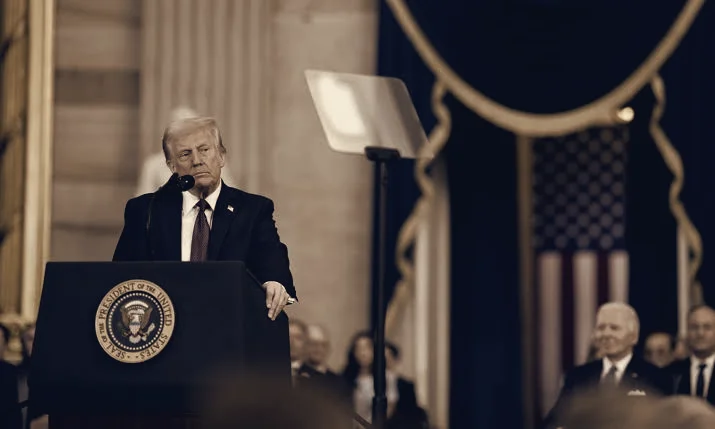
A conciliatory United States address at this year’s United Nations General Assembly looks increasingly unlikely after President Donald Trump spent several days publishing assertive and unconventional claims on social media. The pattern shifts the balance toward a speech that could prioritise domestic political messaging and confrontation over the kind of broadly shared diplomacy that typically emerges from the UN floor.
In recent posts the president promoted a planned triumphal arch in Washington and said he would turn it into a storage facility for the military, an idea he said had been requested by the armed forces. He circulated a list titled his “Top 25 Trump Achievements” since returning to office and touted a package of initiatives on artificial intelligence, including proposals for an “AI force” and an “AI Czar.” On the technology question he wrote, “AI is the next Industrial Revolution, or Internet, but will be even larger and more impactful, possibly as much as 25% of our country’s GDP.”
The tone of those posts, which included imperious imagery, has revived memories of Mr Trump’s past UN appearances. In 2023 he told the assembly that some countries were “going to hell,” and in 2018 he opened his address by saying, “In less than two years, my administration has accomplished almost more than any other administration in the history of our country.” Those interventions fractured the usual expectation that the US president will use the platform to advance broadly shared foreign-policy priorities.
Mr Trump travels to New York while managing a war he and Israel launched against Iran in February, a conflict that has not produced the rapid collapse of Tehran’s government he predicted. Iran’s closure of the Strait of Hormuz, once a conduit for one-fifth of the world’s oil exports, has pushed energy prices higher and fed inflation in the United States. Polls show most Americans oppose the war, and Mr Trump’s approval ratings have fallen, adding a domestic political stake to his UN remarks.
The presence at the UN of Iran’s president, Masoud Pezeshkian, creates an additional flashpoint. Mr Trump has signalled he would be willing to meet him, but Pezeshkian is widely expected to resist overtures that would appear conciliatory; a public rebuff could sharpen the president’s rhetoric on the assembly floor.
US presidential addresses to the UN usually undergo detailed interagency drafting and rehearsals. Mr Trump’s social-media barrage suggests he may either echo the themes he has been pushing online or deliver an unusually combative speech. His address is scheduled for Tuesday, and diplomats and foreign capitals will be watching to see whether he follows the conventional script of presidential diplomacy or uses the stage to amplify the positions he has set out on social platforms.