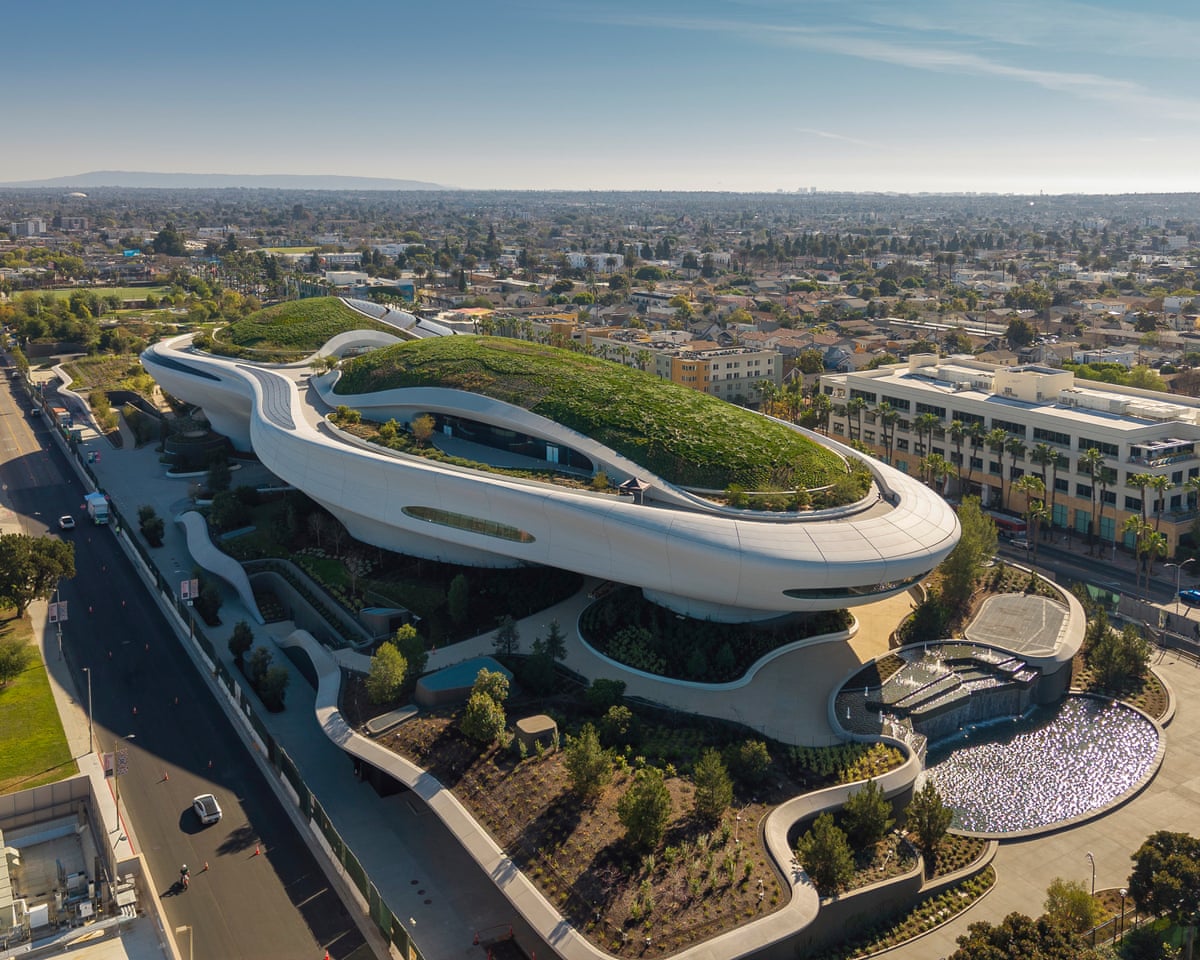

Los Angeles will gain a new cultural landmark when the Lucas Museum of Narrative Art opens on 22 September. The spaceship-shaped building, sited beside the University of Southern California, offers 100,000 sq ft of galleries devoted to what the founders call visual storytelling, bringing together paintings, comics, murals, photography, sculpture and film ephemera under a single roof.
George Lucas, who said, "I'm used to doing the impossible," acknowledged the effort behind the project, adding that "this one almost broke my will." He and Mellody Hobson have combined collections amassed over decades to create an institution that foregrounds images that tell stories, often in a single frame. "Narrative art depicts the myths that anchor us, the stories that we believe in," Hobson told the press, arguing that pictures make those myths feel real.
The museum is split into two linked volumes, one holding most galleries and two cinemas, the other housing the mural collection and a research library. Architect Ma Yansong describes the exterior forms as inspired by tree canopies and clouds, and a central plaza contains an oculus intended to let visitors "see the sky and the universe." The building's sleek profile invites comparisons with Star Wars, a connection the team does not shy away from, though the project is pitched as a broad survey of narrative forms rather than a franchise shrine.
The ground floor traces thousands of years of visual storytelling, beginning with an immersive reproduction of cave paintings and moving through mosaics, sculptures and paintings that set historical context for the museum's core 20th- and 21st-century collection. Visitors ascend to the main galleries via round glass elevators and encounter a wide and sometimes surprising mix: works by Judy Baca, Norman Rockwell, Diego Rivera and Banksy sit alongside the Cowardly Lion costume from The Wizard of Oz and drawings of Asterix and Garfield.
Galleries are organised by medium and theme. A comics room displays strips including Krazy Kat, Little Orphan Annie, The Adventures of Tintin and Superman, while a manga room features Astro Boy and a portrait of Pikachu. The children's stories gallery includes work from Where the Wild Things Are, and rooms grouped by theme host pieces such as Ernie Barnes's neighbourhood scenes, a Frida Kahlo self-portrait, Margaret Keane's Children of Paris and a Picasso drawing titled Little Girl. Civic life is represented with photography from a 1968 sanitation workers' strike and a painting by Shepard Fairey and Ernesto Yerena Montejano opposing immigration raids.
The museum also stages genre and artist-focused rooms, including galleries for NC Wyeth, Jessie Willcox Smith and Maxfield Parrish, and areas devoted to science fiction, fantasy and adventure. Fans will find Star Wars material too, including an exhibit on on-screen transportation with vehicle models, production artwork and costumes. After eight years on site and two earlier failed city bids, the museum is positioned as a new platform for visual narratives in the city the founders say is "where we believe we were always meant to be."
Opening day programming and the museum's public calendar begin with the 22 September launch, and the institution will operate the research library and mural displays as part of its long-term offering to scholars and visitors.