
Verso's July reissue returns Jennifer Higgie's Bedlam to circulation, recasting Richard Dadd's psychosis through an intimate, first-person voice.
Originally published by Sternberg Press in 2006, Higgie's novel stages a fictionalized version of Dadd's 1842 expedition across Europe, Southwest Asia, and North Africa, where he worked as a draughtsman for a British nobleman. That journey precipitated a period of psychosis that culminated in Dadd's patricide at age 26 and his confinement first at Bethlem Royal Hospital, then at Broadmoor Hospital. Higgie translates the painter's life and art into a fragmented diary, leaning on snapshots and interior reverie rather than straight biography.
The novel deliberately inhabits the painter's perspective, letting the narrator's perception collapse the line between description and hallucination. As the book opens from Broadmoor, the voice admits, "Perhaps it is the story that chooses the man … I did not write my life." Higgie uses that surrender to remake Dadd's visual concerns as verbal problems, the narrator arguing over the value of representation: at one point he asks why bother to render the Alps if drawings "can't help but be inferior to the original," then soothes himself with the thought that "a drawing is simply another mountain."
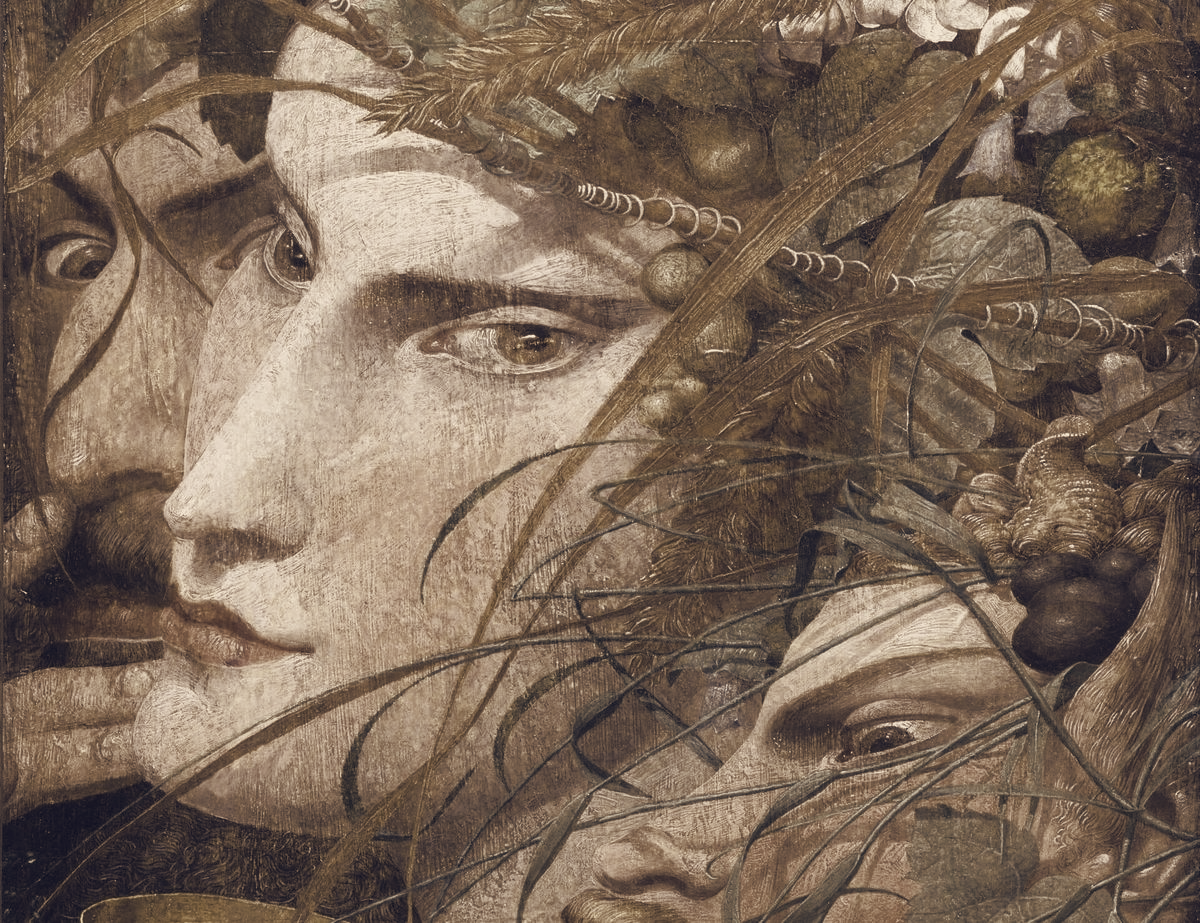
Higgie links particular scenes from Dadd's oeuvre to interior disturbances. Her narrator reports failing to translate certain images, telling a companion, "In every wave a picture hides from me, but none I can mention or describe to my companion." Near En Gedi the prose slides into hallucination, the voice claiming, "I see scorpions the size of men haunting ruins," and, "I crash into walls I do not see." Those lines echo the uncanny atmospheres of works such as The Fairy Feller's Master-Stroke (1855-64) and Bacchanalian Scene (1862), where detailed, odd figures and dreamlike scale unsettle viewers.
Higgie's technique is an explicit experiment in empathy, not an exercise in clinical diagnosis. By embodying Dadd rather than mediating him, she forces readers to confront how representation itself can break down, and how creative practice and psychiatric crisis can be entangled. The Verso reissue brings that experiment back into print, offering contemporary readers a renewed occasion to reassess Dadd's work and the ethical challenges of narrating historical mental illness.