
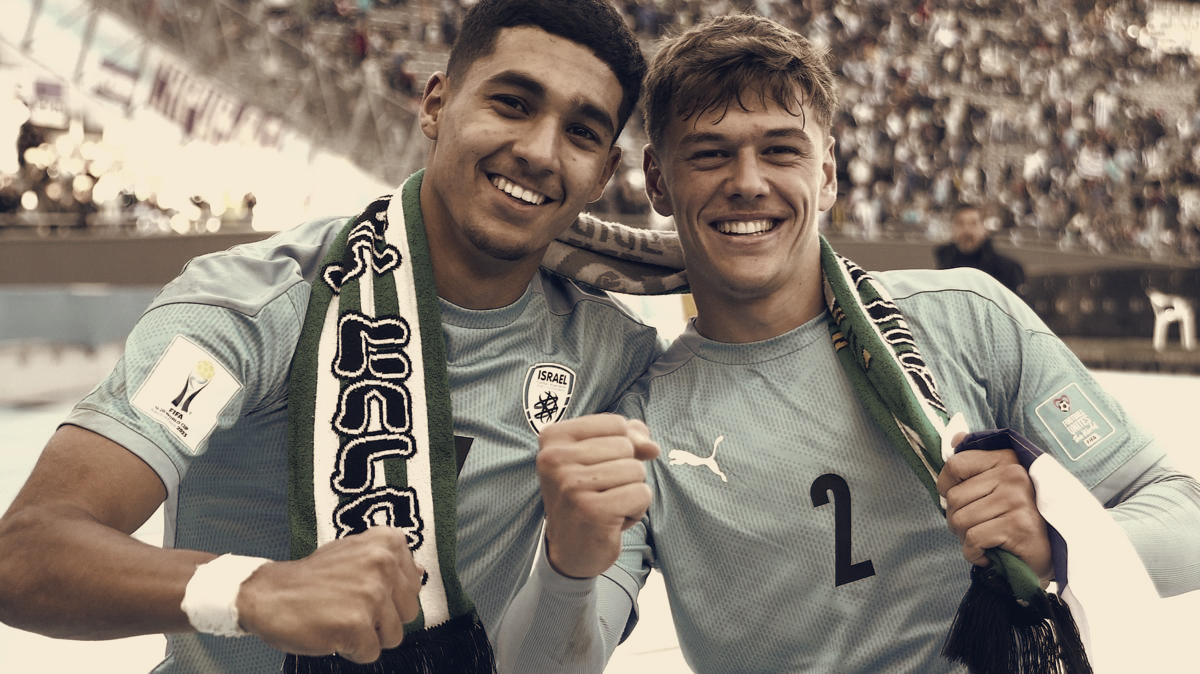
The national momentum that Israel's Under-20 footballers built in the summer of 2023 is at risk as the conflict following Hamas's attack reshapes public life and attention. What looked like a rare moment of sporting unity, players from different backgrounds winning broad public admiration, now faces the practical and moral strains of a large-scale war and its aftermath.
In June 2023 the side reached the Under-20 World Cup semi-finals and finished third after losing 1-0 to Uruguay, a run that included a quarter-final victory over Brazil. The semi-final drew a 23% viewing share on Israeli television, and politicians publicly congratulated the squad. Ido Rakovsky, who covered the campaign, said the coverage felt more like "science fiction" than sport and recalled that "that summer, everybody was watching under-20 football, everybody knew the players."
Beyond results, the team symbolised integration. After a stoppage-time winner in the last 16, Anan Khalaili, an Israeli Arab, addressed viewers using the Hebrew phrase Am Yisrael. That moment, observers say, suggested the squad had forged an identity that cut across religious lines. Ofir Haim, who coached the age-grade teams, told reporters, "It isn't an issue at all here. We don't have any problem with religion. Not at all. We have players here who put on tefillin, and Anan, Hamza and Ahmed perform the Muslim prayers. We don't even talk about this. We unite everybody, and I wish the country were as united as this team."
The achievements did not arrive from nowhere. The players had already been continental standouts, finishing runners-up at the 2022 Under-19 Euros and reaching the semi-finals of the 2023 Under-20 Euros. Several have moved to higher-profile clubs: Khalaili joined Crystal Palace after a proposed £21.5m transfer to Inter Milan collapsed, Oscar Gloukh moved to Ajax from Red Bull Salzburg and wears Ajax's number 10 shirt, Roy Revivo signed for Elche from Maccabi Tel Aviv, and Stav Lemkin is rated after his spell with Twente. Dor Turgeman, Ilay Feingold and Idan Toklomati are playing in Major League Soccer. All have earned full international caps.
Football has long been one of the Israeli public spaces where communities mix. Dr Omer Einav, a historian, notes that the sport became a shared language for communities with otherwise different cultural roots. Arab citizens make up about 20% of Israel's population but represent around 35% of those involved in elite football nationally. The national side's early Arab pioneers, such as Rifaat Turk who first played for Israel in 1976, faced hostility; Turk was widely abused. In 2018 Bibars Natcho became the first Muslim to captain the national team.
Those social and sporting gains now confront a different reality. A little over four months after the summer that raised public hopes, Hamas's attack killed about 1,200 people and took 251 hostages. Israel's response has been a massive military offensive in Gaza, which the United Nations says has led to more than 70,000 Palestinian deaths. The scale of the violence has redirected national priorities and attention, and it leaves open questions about whether the team's sporting progress and the social bridges it symbolised can be sustained.
The immediate future for the players involves their club careers and international duties, but the wider civic promise, the idea that a single team could model shared identity, faces the reality of an entrenched and violent conflict. Whether that summer's hope will translate into long-term change depends on developments off the pitch as much as on it.