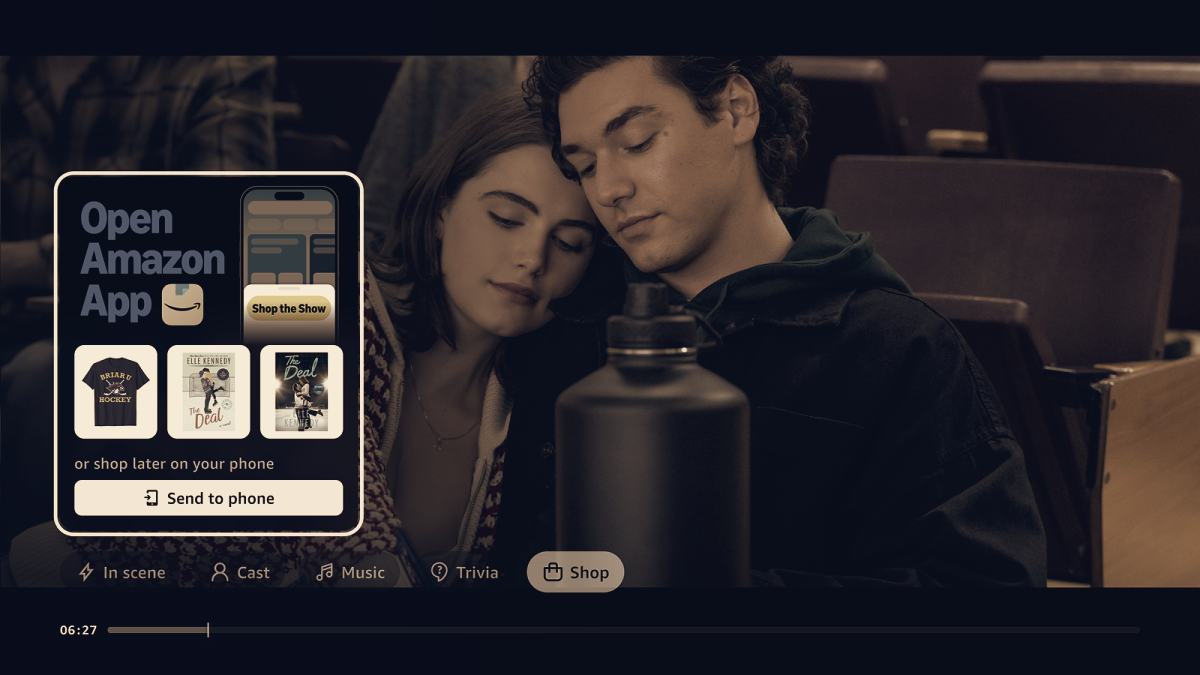
Prime Video viewers will gain direct access to products tied to what they watch as Amazon rolls shopping deeper into its streaming experience. The company is integrating commerce into its existing X-Ray panel on Fire TV, expanding the second-screen Shop the Show experience inside the Amazon Shopping app, and launching a Lens-powered Shop the Scene visual search feature.
On Fire TV, users can pause a program and press up on the remote to open X-Ray, where a new Shop tab will surface items related to the current title. Selecting products opens the Amazon Shopping app, which recognises the playing title and drops the user into a feed synced to that moment so they can browse and buy. The separate mobile experience no longer requires typing a special search phrase; opening the Shopping app while a show or movie plays will take users directly to that title's storefront.
Shop the Scene uses Amazon Lens visual search to identify products inspired by costumes, decor and other on-screen items. The feature is available today on iOS and Android in the U.S. and covers more than 600 titles, Amazon says. The broader Shop the Show catalogue is expanding from 1,300 titles to more than 8,000 in the U.S., including Prime Originals, select licensed favourites, and live sports.
Amazon notes Shop the Scene will not always return exact matches, because many characters wear pieces that Amazon or its sellers do not stock, including high-end labels and custom costumes. Instead, Lens will surface lookalike items and other products that help viewers recreate a look or a set piece.
The move puts Amazon alongside other platforms experimenting with shoppable streaming. YouTube offers creator merchandising and shoppable connected TV ads, Peacock added a Must ShopTV feature in 2023, Roku provides remote-driven shopping options, and Disney has tested shoppable ads across Disney+, Hulu and ESPN. For Amazon, integrating shopping into viewing serves as a route to drive additional retail revenue from content already on its platform.
For viewers, the change reduces friction between discovery and purchase by tying product feeds to the moment on screen. For Amazon and sellers, it creates a more prominent, native path from entertainment to conversion. The company has deployed the features in the U.S. and expanded its catalogue; further rollout or broader availability was not detailed.