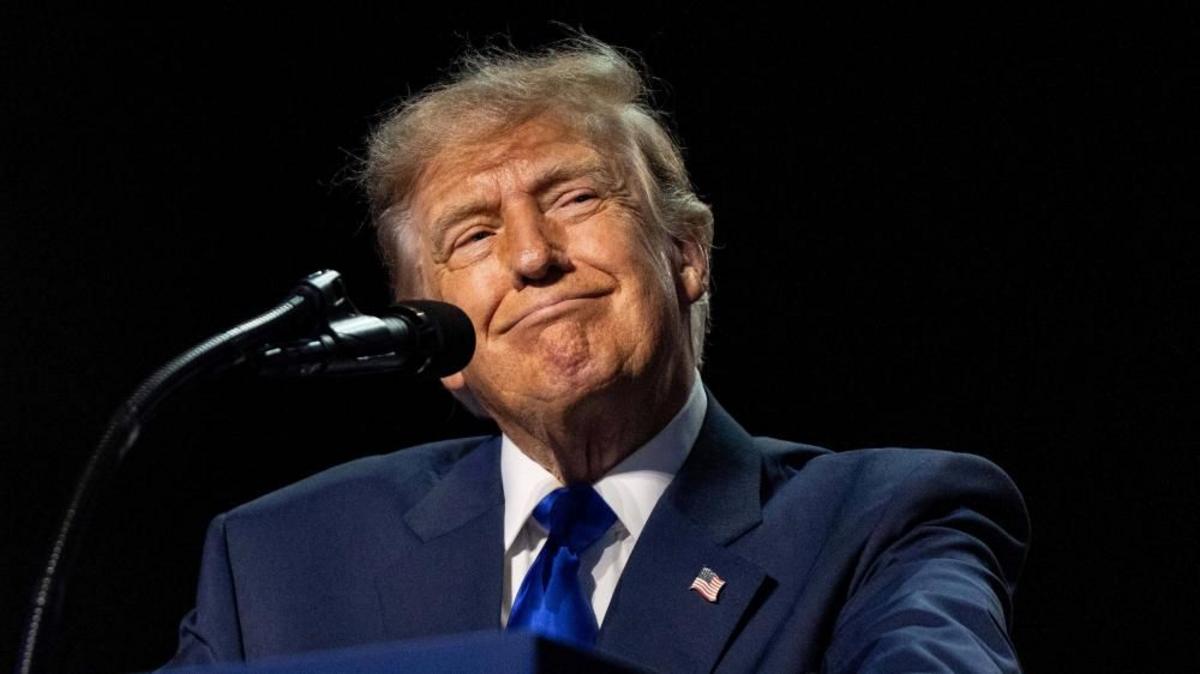
The immediate fiscal consequence of President Donald Trump's pledge is clear: implementing a $5,000 payment for every adult American would create roughly a $1.3 trillion obligation for the federal government.
Trump made the promise at the Republican conference in Texas, winning loud applause from supporters. He said recipients would have to spend the money in the US, though how that requirement could be enforced was not explained. Vice-President JD Vance suggested on Fox News that tariff revenue might cover the cost and said wealthy Americans would be excluded from any payments.
Legal experts are divided on whether the proposal would run afoul of statutes barring payments intended to influence voting. Dr Joan Mahoney of the University of Southampton said she thought the plan would be legal, likening it to a pledge to cut taxes. "On the one hand it sounds a bit like a bribe, vote for the Republicans and you'll get money, which would be decidedly illegal," she said. Laurel Rapp of Chatham House described the offer as "a very different, very transactional agreement" from normal campaign promises.
Financially the proposal faces steep obstacles. With nearly 270 million American adults, the one-off cheques would total about $1.3 trillion. Congress controls federal spending, and the president gave no indication he would seek distinct legislative approval. Erica York of the Tax Foundation said she would be "extremely surprised" if lawmakers approved such a package, calling it "one of the worst ways to use $1.3 trillion," and warning deficits are on an unsustainable path.
Relying on tariffs would fall far short of the sum. The Bipartisan Policy Center notes roughly $475bn in tariff and excise receipts since the start of 2025, and more than $100bn of that has been returned after the Supreme Court struck down many tariffs earlier this year. The White House dismissed sceptics, with spokesman Davis Ingle saying "The doomers and naysayers have consistently doubted President Trump," and adding the president will "keep delivering real results" with popular support.
Political strategists framed the pledge as an overtly electoral move. Former Republican pollster Robert Moran called it "an extraordinary promise" and said the timing reflects campaign season with the midterms now less than two months away. Chatham House's Rapp said the payment is a short-term effort to shore up Republican prospects as polling weakens.
Trump has floated similar ideas before, including $2,000 cheques funded by tariffs, which never materialised. Past US controversies have included accusations that cash offers can amount to buying votes, most notably around proposed $2,000 Covid stimulus payments in January 2021 and a 2024 episode involving incentives in swing states.
The plan’s next steps are unclear: a massive appropriation would require congressional action and a concrete funding source, and legal scrutiny is likely if the proposal advances. For now the pledge functions as a high-profile campaign commitment with significant questions about feasibility and legality unresolved.