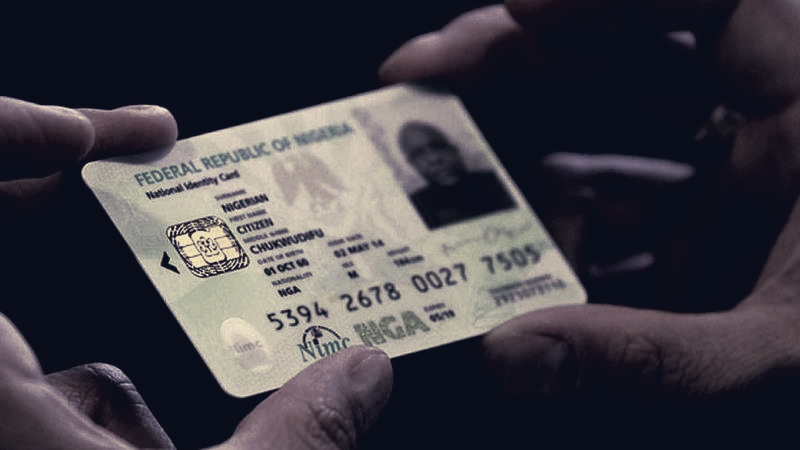

Nigeria must register another 62.5 million National Identification Numbers within the remaining months of 2026 if it is to hit the World Bank-backed ID4D programme's target of 180 million records by December. The National Identity Management Commission had issued 117.5 million NINs by June 30, 2026, drawn from 134.6 million enrolments, leaving a 62.5 million shortfall that must be closed before year end.
The arithmetic exposes the scale of the task. At present enrolment runs between 1.5 million and 1.8 million people a month, while meeting the ID4D goal requires about 7.4 million records monthly. NIMC did not respond to multiple requests for comment about the operational and funding steps needed to accelerate both front‑line enrolments and backend processing.
The ID4D programme, implemented by NIMC and co‑financed by the World Bank, the European Investment Bank and Agence Française de Développement, is a $430 million initiative approved in February 2020 that aims to build a foundational identity system enabling access to services. The World Bank report traces progress from an October 2019 baseline of 36.9 million NINs and lists several achievements: licensing 362 front‑end enrolment partners, training nearly 34,000 people, and equipping 46 Nigerian government offices abroad to register citizens. By June, more than 13.4 million people were using digitally enabled services, exceeding a three million target.
Despite those gains, closing the programme’s final gap will be tougher. Kelechi Ndieze, founder and CEO of Africa Tech Factory, said on August 31, “Nigeria is Africa’s most populous country, and its population gives any foundational identity system enormous scale,” and added, “I would describe the 180 million target as ambitious, but necessary given Nigeria’s population and the importance of having a functional foundational identity system.” Adeoye Abodunrin, an AI and cybersecurity expert, called the target “ambitious, but not inherently unrealistic,” and stressed that the practical test is whether the country can produce 180 million trustworthy digital identities.
The World Bank data highlight persistent coverage gaps. Women and girls account for about 40.4 million NINs issued by June against a 79 million goal, while children under 16 total 26.3 million against a 60.8 million objective. NIMC is responding with ward‑level campaigns, plans to onboard more enrolment partners, procurement of 7,000 MOSIP‑certified devices, and a 20% premium on enrolment payments to attract more women.
There is also a processing backlog: 134.6 million people enrolled but only 117.5 million have been issued NINs, a 17.1 million gap that reflects validation, deduplication and issuance delays rather than outright exclusion. Dengiyefa Angalapu, a research analyst at the Centre for Democracy and Development, warned against sacrificing quality for numbers. “I really wouldn’t be worried if the target is not met,” he said. “I would rather be very, very worried if we don't have an identity system that is usable.”
The outcome now turns on two linked challenges: scaling front‑end enrolment severalfold and expanding backend capacity to validate and deduplicate records without weakening assurance. If NIMC cannot lift monthly processing to the level the World Bank target requires, Nigeria will miss the December deadline; if authorities accelerate issuance at the expense of verification, the system risks duplication, errors and eroded trust just as its use across government and private services grows.