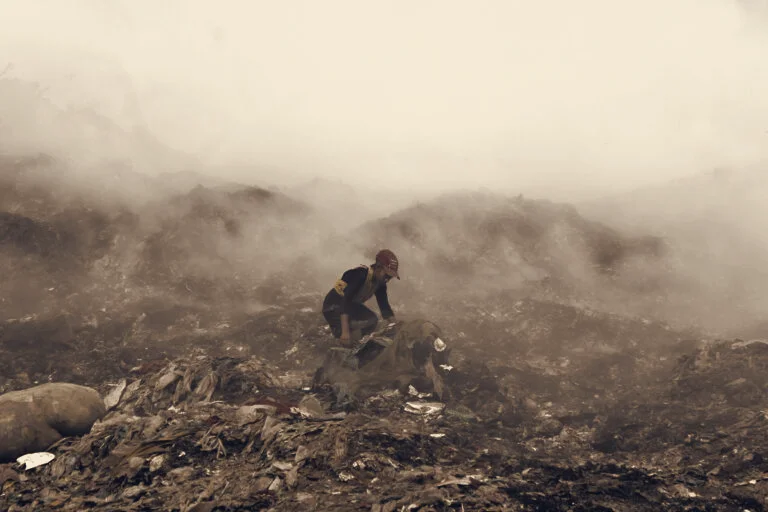
Residents who live beside the Amin Bazar landfill say their neighbourhoods stand to lose cleaner air and safer water if Dhaka’s planned waste-to-energy plant begins routine combustion of municipal refuse. Locals report that informal burning already sends smoke, ash and persistent odours into homes, and they fear those impacts will intensify if the city proceeds with industrial-scale incineration of up to 3,0000 metric tons every day.
Yeasmin Begum, a long-time resident near the site, described ongoing health effects and pointed to routine fires at the dump as a cause. "Sometimes it is quite difficult for us to breathe when waste collectors burn the waste under the open sky. Smoke and ashes envelop our home and surroundings," she says.
The North Dhaka project is designed to convert municipal solid waste into electricity by using combustion heat to drive a steam turbine, creating a 42.5-megawatt generation unit. If finished as planned it would be the first waste-to-energy facility in Bangladesh, and Dhaka North City Corporation is the municipal authority overseeing the scheme.
Ownership is with China Machinery Engineering Corporation, and developers list the total cost of the project at $467 million. Some financing has been pledged by multilateral lenders, including the Asian Infrastructure Investment Bank and the New Development Bank, and the construction timetable targets completion in December 2028, a schedule now four years later than originally proposed.
Opponents and households near Amin Bazar point to existing contamination of air, water and soil around the landfill, and they warn that sustained industrial combustion could release toxic pollutants, naming heavy metals and dioxins among items of concern. Those warnings reflect the community’s ongoing exposure to emissions from informal burning and waste handling, and they sharpen scrutiny of the plant’s planned pollution controls.
As the project advances under the city corporation’s oversight, residents and local advocates say they will watch how planners address emissions limits, health safeguards and environmental monitoring ahead of the December 2028 completion target. The combination of large-scale combustion, external financing and a delayed schedule means regulatory decisions in the coming months will determine whether community health risks rise or are mitigated.