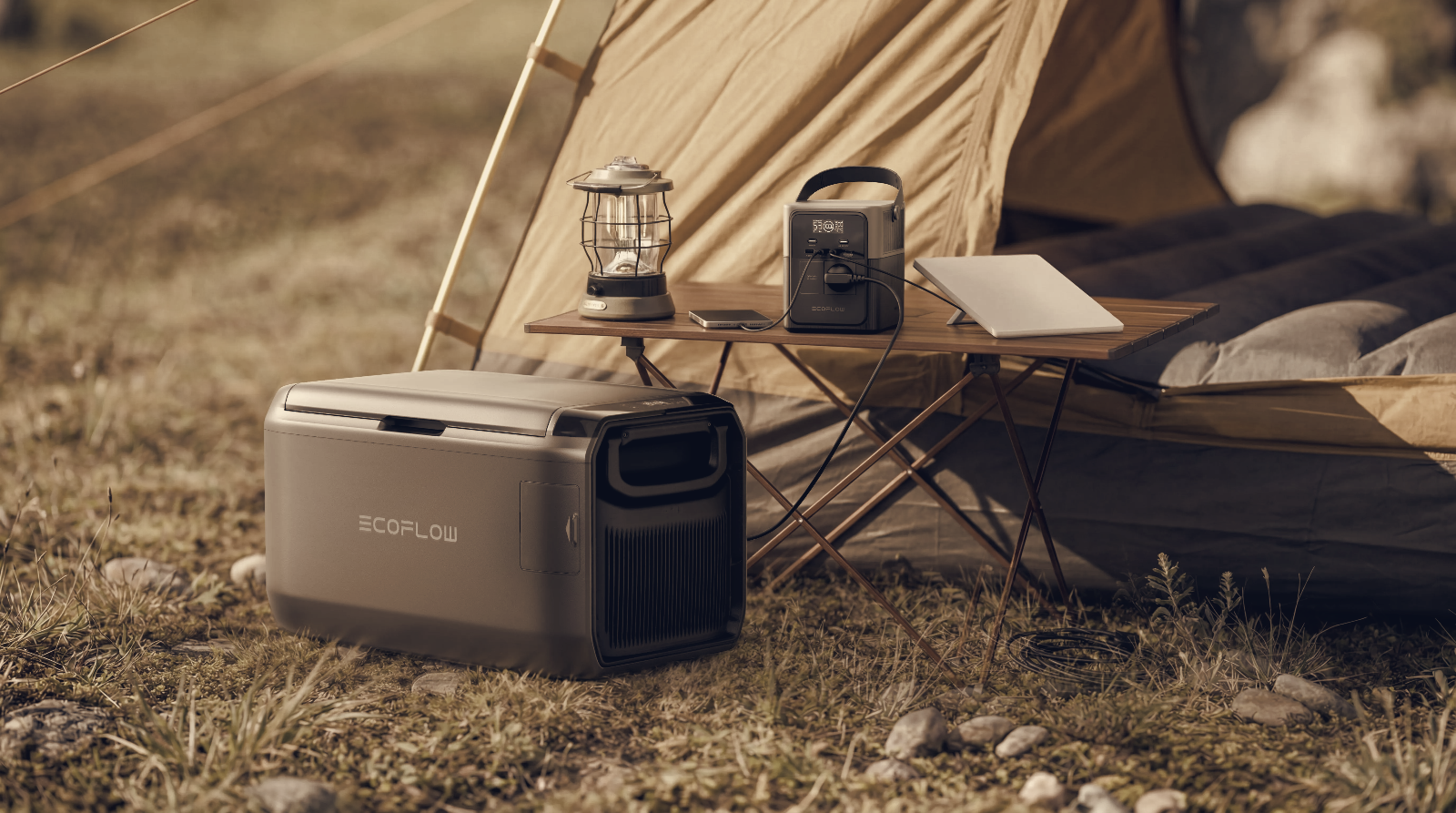

Day trippers, photographers, and weekend campers can carry far more usable power for less weight, EcoFlow says, with its fourth-generation River series. The River 260 Gen4 stores 256Wh and the River 520 Gen4 stores 512Wh while cutting both size and mass through higher volumetric energy density and LFP battery chemistry.
The 260 Gen4 is built around a 256Wh battery, offers one AC outlet rated for 300W continuous output, four USB ports, and weighs 3.0 kg. The 520 Gen4 doubles the capacity to 512Wh, includes two AC jacks delivering 500W continuous, uses the same USB port lineup, and weighs 4.6 kg. Both units include a single 140W USB-C PD3.1 port that is bidirectional, which lets users charge laptops and devices while also charging the station from a compatible USB-C wall charger or a portable USB-C solar panel that EcoFlow will sell.
EcoFlow highlights class-leading volumetric energy density to explain the smaller dimensions. The River 520 Gen4 measures 13.9 × 17.7 × 22.9 cm, with a volume of 5.63 liters and a density of 90.9 Wh/L. The River 260 Gen4 measures 13.9 × 17.7 × 17.5 cm, with a volume of 4.30 liters and a density of 59.5 Wh/L. EcoFlow contrasts those figures with older and competing models at larger volumes and lower Wh/L numbers, arguing the tighter packaging yields lighter, more compact power stations for the same nominal watt-hours.
Both Gen4 models use longer-lasting LFP chemistry, which the company says is far less volatile than alternatives. They also function as an uninterruptible power supply for computers with a cutover time of less than 10ms. EcoFlow has further reduced idle losses by minimizing DC-to-AC conversion waste, preserving more stored watt-hours for devices like drones, bike computers, compact fridges, and the Starlink Mini.
Availability is staggered: the River 260 Gen4 will arrive in Europe in Q4 2026, and the River 520 Gen4 follows sometime in Q1 2027. EcoFlow has not published global pricing; the company says it will announce prices closer to those release windows.