
Australia’s ability to stay clear of US military operations is now at stake, after a Nautilus Institute mapping found US forces, defence firms or access arrangements apply to 110 Australian defence facilities, a level the report’s authors and critics say could pull Canberra into conflicts. The database counts 17 sites under US control on the mainland, 75 Australian-run installations with US access, and a further 18 locations available to US defence contractors, together spanning more than half the facilities surveyed.
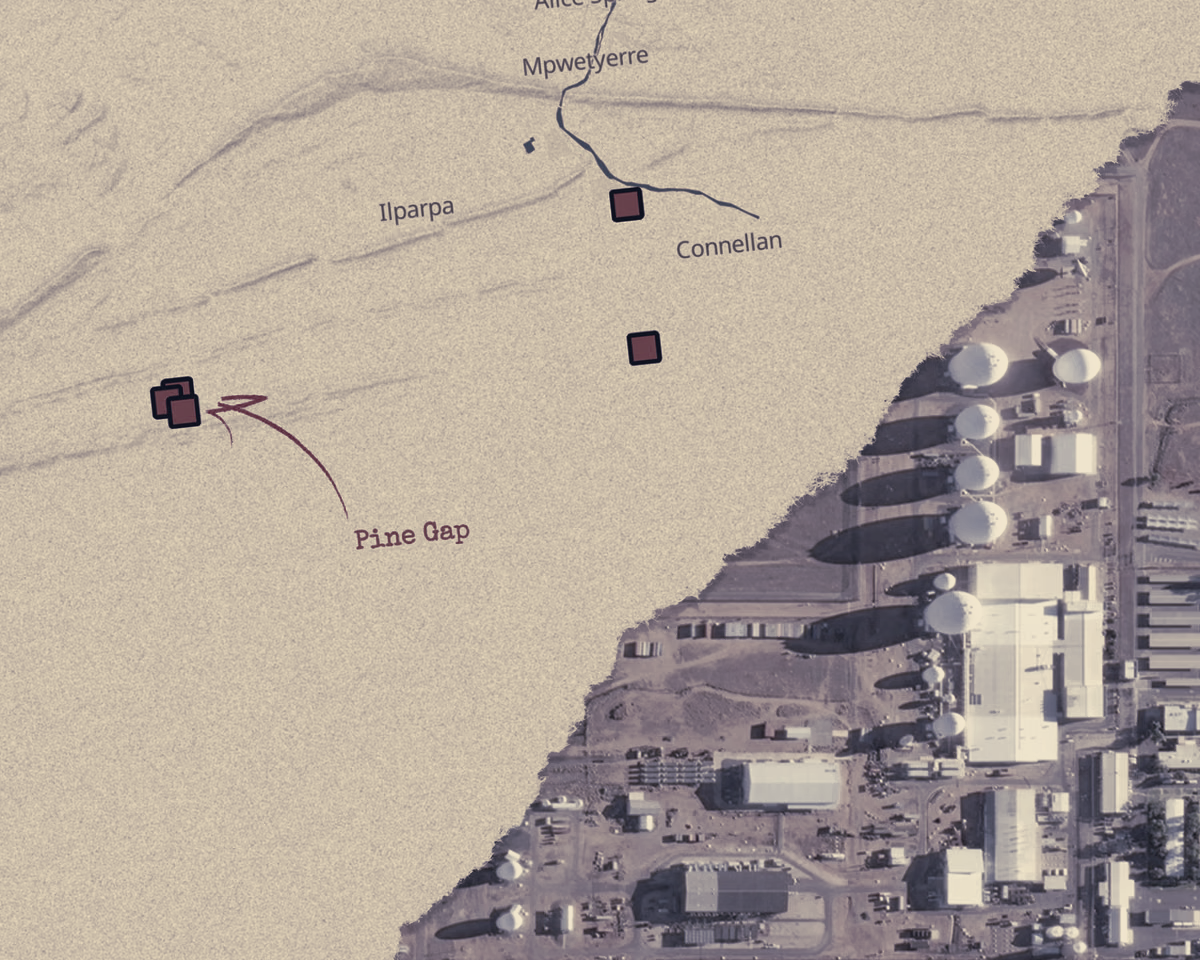
That footprint ranges from established intelligence hubs to remote training grounds. Pine Gap in central Australia is listed as a key US intelligence station performing satellite tracking, signals interception and contributing targeting data. On Western Australia’s coast, the Harold E. Holt naval communication station supports very low frequency broadcasts and houses deep space radar plus a space surveillance telescope, capabilities linked to submarine and space operations.
The mapping cites specific operational links, including RAAF Base Amberley hosting visiting US aircraft such as the B-2 Spirit for regional refuelling, and runway expansion at RAAF Base Tindal intended to take B-52 Stratofortress bombers. Logistics and stockpiles form part of the picture, with rotations of 2,500 US marines in the Northern Territory, pre-positioned aircraft like Ospreys, and stocks held for rapid use. Some areas are vast and little known; the Bradshaw training area in the Northern Territory is noted as roughly the size of Cyprus.
Canberra recently announced Bandiana in Wodonga will store tens of millions of dollars of pre-positioned US weapons, munitions, fuel and vehicles. The mapping highlights how US presence supports intelligence collection, satellite targeting data, communications intercepts, training, logistics and the pre-positioning of armaments, functions that critics say integrate Australian sites directly into US warfighting plans. The report also flags a political asymmetry: the US does not disclose whether visiting aircraft carry nuclear weapons, and Australia does not require such disclosure.
“We have been thinking about American influence on Australian defence policy as a matter of penetration,” Professor Richard Tanter said, “and we’re aware of the closeness of the alliance, the integration of the armed forces. But what this database shows is it’s not a matter of penetration, it’s a matter of saturation. Over half of the defence facilities that we have looked at have some level of American access: that means American personnel, it means American corporations, some of the biggest armaments companies in the world.”
Supporters of the alliance argue these arrangements strengthen deterrence and interoperability against regional threats. Opponents counter that embedded US capabilities turn Australian territory into a platform for US operations, increasing the chance Australia could be drawn into a conflict not of its choosing. The mapping now places political pressure on Canberra to disclose the terms of access, the legal status of US personnel and equipment on Australian soil, and what safeguards govern use of facilities that support intelligence and targeting. The outcome of that debate will influence defence planning and how closely Australia remains operationally integrated with US forces.