
Serbia's bid to join the European Union faces renewed pressure after thousands converged on Belgrade for the funeral of Ratko Mladić, whose send-off drew a formal rebuke from Brussels for amounting to public glorification of a convicted war criminal.
Mladić died aged 84 while serving a life sentence at the UN detention centre in The Hague. He was found guilty of genocide for his role in the 1995 Srebrenica massacre, where around 8,000 Bosniak Muslim men and boys were killed, a court verdict that described those killings as Europe’s worst atrocity since the Second World War. He also commanded forces that besieged Sarajevo during the 1992-1995 conflict, which left more than 10,000 dead.
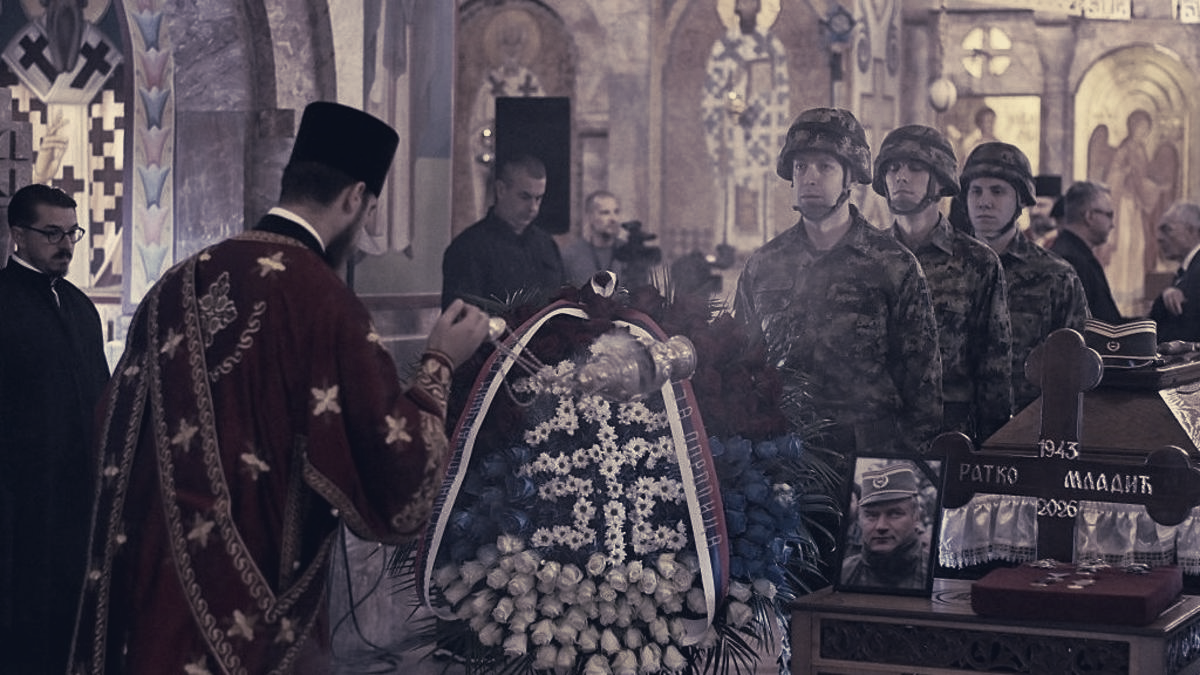
Government ministers queued with large crowds to view the coffin at the small St Luka church and attend a funeral service led by Patriarch Porfirije. The patriarch said Mladić’s name would remain "deeply etched in the memory and prayers of the majority of our Serbian Orthodox people, who feel and nurture a deep sense of gratitude towards him." The coffin had been flown back to Serbia on a government plane, carried from the aircraft by six soldiers and draped with flags.
The ceremony and its surrounding displays highlighted deep divisions in the region. Many attendees were veterans or nationalist supporters who wore flags bearing Mladić’s image, and supporter groups staged public tributes, including a tifo shown by Red Star Belgrade fans the night before. Authorities organised free buses from towns across Serbia and from Bosnia to bring people to the capital.
For survivors and victims’ families the event reopened raw wounds. Zdravka Gvozdjar, whose nine-year-old son was killed during the siege of Sarajevo, said it was "really horrible" that the funeral was held in Belgrade and that Mladić "deserved to be erased from memory for good, not to be... promoted as a hero." Daniella Peled, editor at the Institute of War and Peace Reporting, said the tribunal produced an extensive record of Mladić’s crimes but that Serbian media and education had often failed to reflect victims’ perspectives, making national reckoning difficult.
The EU’s formal condemnation, combined with visible state participation and large-scale public mourning, underlines a persistent domestic split over Mladić’s legacy. That division complicates Serbia’s path toward European integration, where membership talks have recently stalled, and is likely to increase diplomatic pressure on Belgrade as Brussels weighs progress on accession benchmarks.