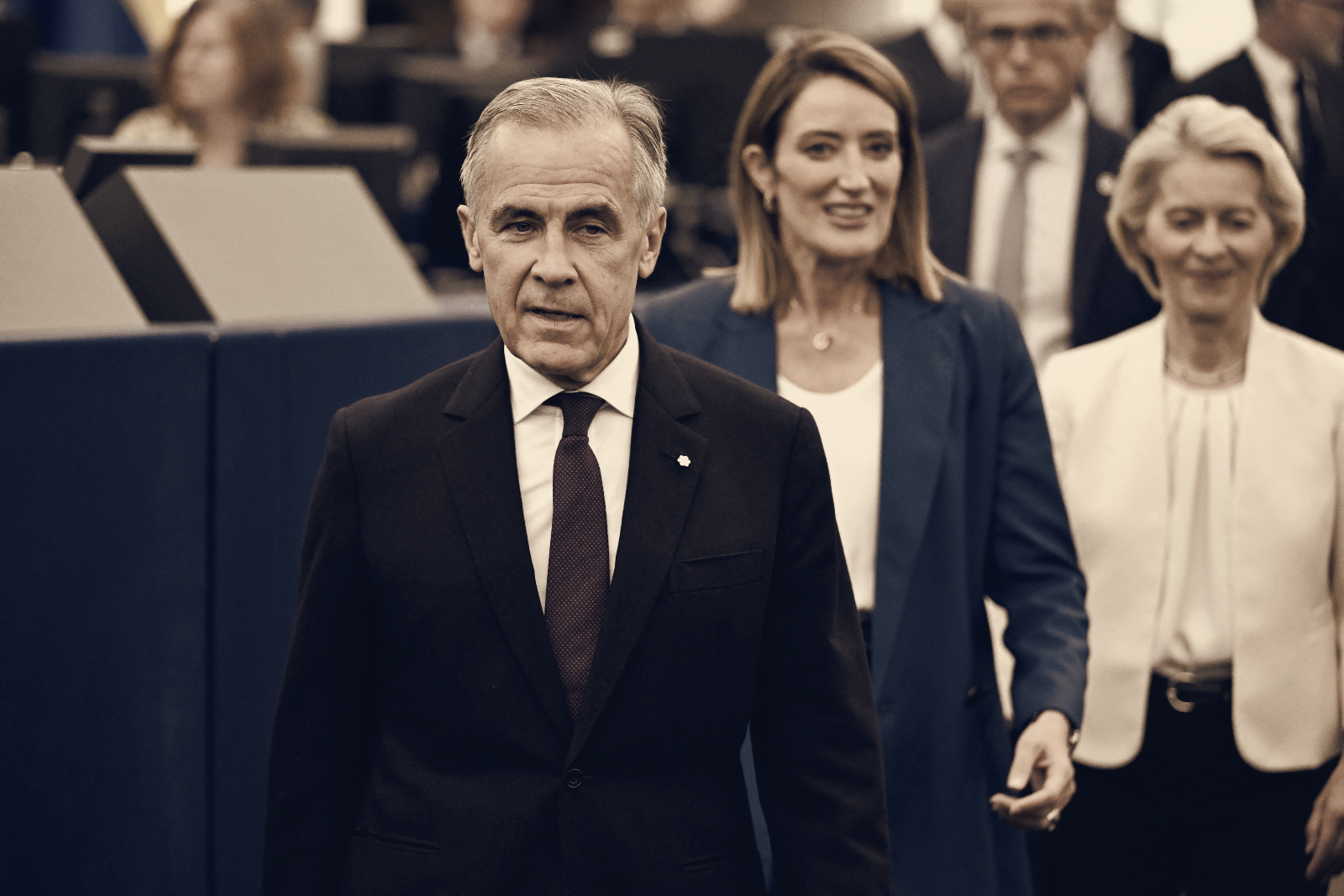
The European Commission has proposed a formal route for Canada to become the EU’s first associate member, a step designed to deepen economic and security links between Brussels and Ottawa. European Commission President Ursula von der Leyen announced the idea in her annual state of the European Union address in Strasbourg, saying she wants to "bring the relationship with Canada to the highest level possible."
Von der Leyen spoke directly to the Canadian leader in the chamber, adding, "And, dear Mark, I said we must urgently reimagine our partnerships so I would like to work with you on opening the door for Canada to being the first associate member of the European Union." Canadian Prime Minister Mark Carney attended the speech. Carney has previously said Ottawa sought a "unique security and economic alliance" with Europe while stopping short of pursuing full EU membership.
The offer lands amid tensions in North American trade relations, with Canada having pledged to match President Donald Trump's tariffs "dollar for dollar." EU officials presented the proposal as part of a wider strategy to lock in cooperation on technology, climate policy, geopolitics and Arctic security, framing it as a way to knit closer ties among like-minded democracies.
Market voices hailed the move as substantial. Holger Schmieding, chief economist at Berenberg, said, "I think this is a big step, indeed." He added the strategy aims to make Europe "less dependent on the U.S. and less dependent on China," and to cultivate deeper cooperation with other democracies.
Flexible membership ideas are not new inside Brussels. German Chancellor Friedrich Merz earlier pushed for associate status for Ukraine, a proposal that drew resistance. In June, Finnish President Alexander Stubb urged the EU to "think big" about expansion and suggested the bloc could grow toward 40 states, quipping, "Wouldn't it be lovely if Canada was the 28th state of the European Union rather than the 51st state of the United States?"
European lawmakers signalled broader ambitions beyond Canada. Bernd Lange, chair of the European Parliament's trade committee, called for strengthened economic links with Brazil, Indonesia, Japan and South Korea and stressed the value of forming a bloc of cooperative democracies.
The proposal now moves into political negotiations across EU institutions and among member states. Past reluctance to create new membership categories and differing national priorities will shape the next steps and determine whether the offer becomes a practical framework for deeper transatlantic cooperation.