Republican strategy now hinges on Donald Trump’s personal appeal after he used the party’s first midterms convention to both promise a $5,000 payout to every adult if Republicans win both chambers and to reaffirm that he remains the party’s dominant figure.
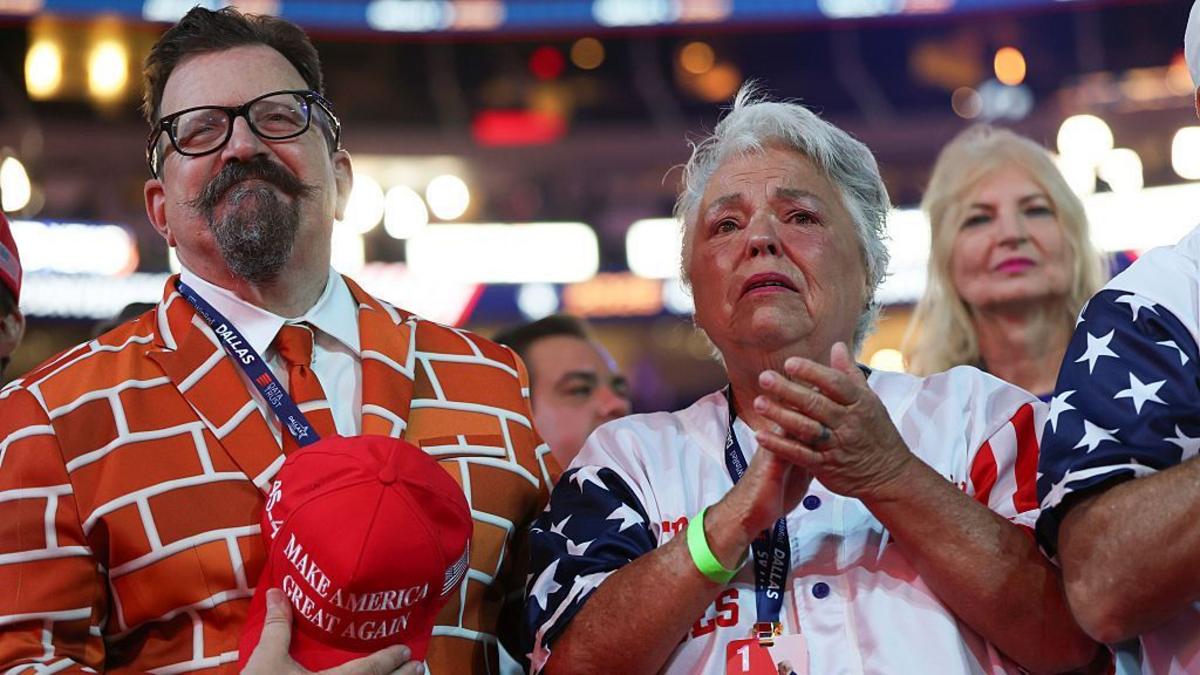
The Dallas gathering functioned as a rally rather than a formal party meeting, drawing a crowd of ardent Trump supporters in MAGA gear while many moderates stayed away. The absence of figures such as Senator Susan Collins exposed a widening split between the party’s hardline base and the more centrist Republicans competing in tight races.
On stage, Trump acknowledged the party’s reliance on his name to drive turnout, telling the crowd, "I'm asking you to pretend that I'm on the ballot." That line was a blunt recognition that Republican prospects in November and beyond are tied to his ability to mobilise voters even when he himself is not running.
He also sought to justify recent economic pain tied to the war in Iran, saying, "I think it's going to take a little bit longer than the midterms," when asked about relief from high fuel prices. Polling pressure is rising: a Financial Times / Focaldata poll released on Sunday showed only 33% of registered voters approve of his presidential performance, a new low cited at the convention.
The most concrete offer of the night was an unconventional pledge: $5,000, or about £3,700, to every adult US citizen if Republicans capture both chambers. Trump gave no details on funding, legal feasibility, or mechanisms for enforcing the requirement that the money be spent domestically. There are nearly 270 million American adults, which implies a headline cost of roughly $1.3 trillion if the proposal were implemented as described.
Democrats quickly dismissed the idea as an empty promise and critics questioned its legality and logistics. Yet the vow won loud applause from the rally crowd, underscoring the political calculus: vivid promises and spectacle to boost turnout among loyalists, rather than a carefully engineered policy pitch aimed at moderates.
What happens next is a test of that calculus. Republicans must translate the convention energy into broader voter support in November without a unified message on cost-of-living relief, and the party still lacks an obvious successor who can replicate Trump’s pull when his name is not on the ballot.