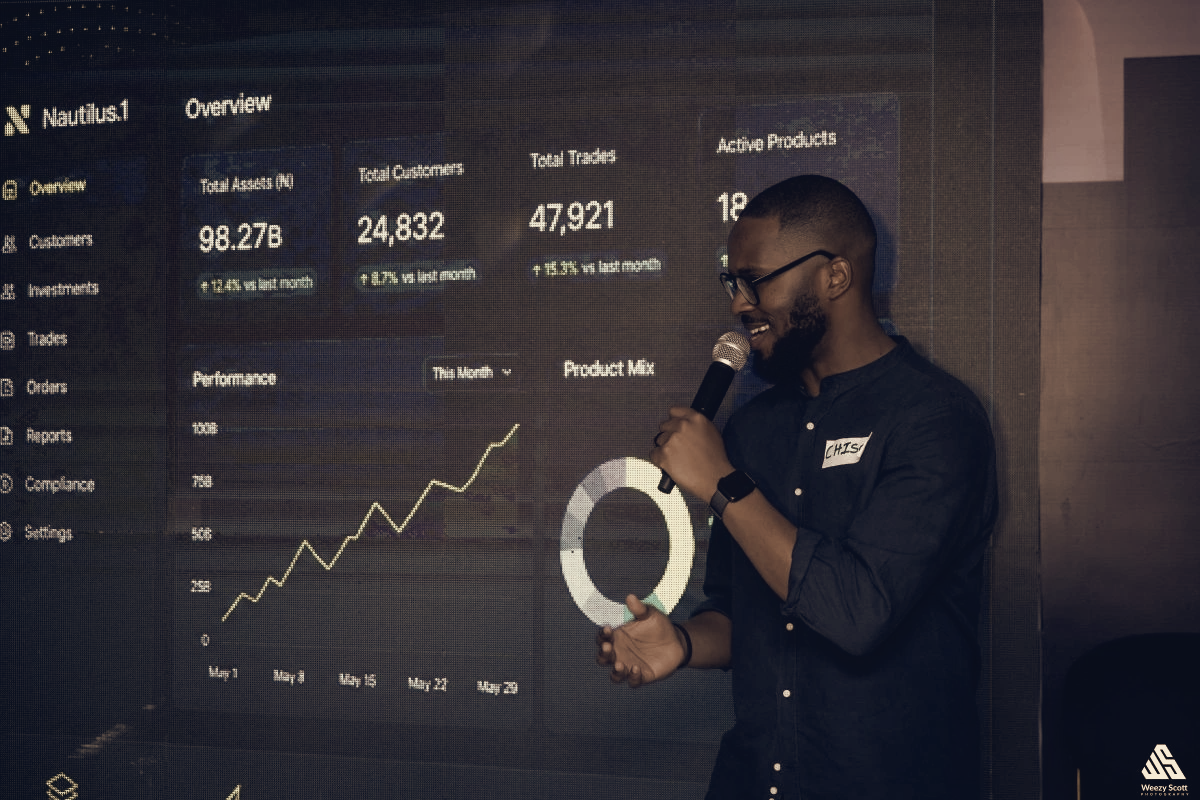

Millions of Nigerians who say they want to invest face a seven-to-ten-year delay before they actually begin, Check told attendees at a Retail Investment Innovation Mixer on August 25, 2026, at O’DA Art Gallery in Victoria Island, Lagos. The company unveiled research showing that making products available online does not automatically convert interest into active investors.
Check’s study reframes the problem away from product supply to the social and emotional realities that shape decisions. The research, presented at the mixer and summarised by company spokespeople, argues that platforms built solely for transactions miss the reasons people hesitate to commit capital. The firm grouped the barriers into themes including shared household claims on funds, prior scam experiences, and patterns of charitable or faith-based giving.
Trust emerged as the clearest impediment to conversion. Seventy-seven percent of respondents said their primary trust signal was a person they already knew. As Mr. Oyin Oludipe, Head of Content & Engagement at Check, put it, “It was somebody they already knew. Seventy-seven percent, not the credentials of an investment company, or badges, or copy, or anything.” That reliance on personal relationships means digital credibility markers alone may not persuade many prospective investors.
Real-world financial pressures also reduce runway for new savers. Fifty-five percent of participants cited family obligations as recurring demands that directly compete with saving and investing, and 82% reported an emotional reaction tied to putting money away. Those responses, Check says, help explain why interest often does not become activity for years.
Behavioural patterns in the study point to product design choices platforms must confront. Fifty-six percent of investors use multiple apps, attributing specific roles such as liquidity, short-term yield, currency hedging or discipline. Sixty-two percent keep their investing private, and 81% aim to generate income that reduces reliance on continuous work or asking others for help. Every investor engaged in the research had stopped using a platform at some point over an issue they did not escalate, leaving quietly rather than reporting the problem.
On advanced tools, 80% of those who discussed artificial intelligence wanted automated analysis and recommendations, while 20% said they would not cede final buying decisions or custody to a machine. Check contrasted these human-centred findings with a separate review of ten digital investment products in Nigeria last year that recorded an average usability score of 43.2 out of 100.
Speakers at the mixer included Check’s research associate Somto Okechukwu and Head of Innovation Lanre Wright. Wright argued platforms should permit engagement with products before users have funds ready to invest, expanding apps’ roles beyond pure transactions. The report closes with a direct challenge to the industry: putting offerings online is no longer enough, firms must design around trust, household obligations and emotional responses to convert intent into sustained investing.