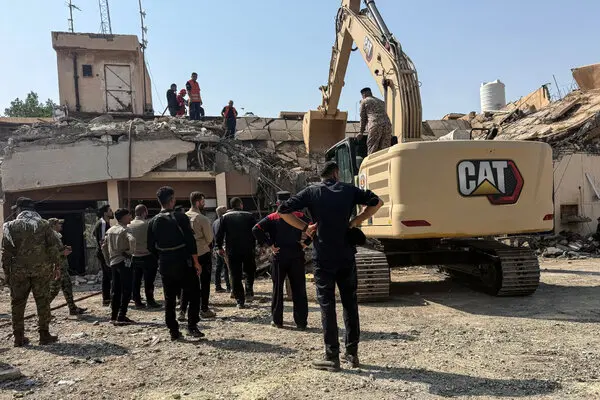
Saudi Arabia has been pulled into the fighting after the latest exchanges of strikes between the U.S. and Iran. The immediate consequence is a wider regional footprint for a confrontation that had previously focused on direct U.S.-Iran dynamics.
The U.S. and Iran are now combatants in a cycle of strikes, and the conflict’s expansion to include Saudi Arabia changes the balance of risk. A third state entering the confrontation magnifies diplomatic pressure, complicates military planning, and increases the chance that localized incidents will cascade into broader clashes.
For regional capitals and external powers alike, the shift raises two urgent problems. First, the presence of Saudi Arabia in the dispute fragments the diplomatic terrain, forcing mediators to account for new security priorities and alliances. Second, military and economic calculations become more fraught when additional states face direct exposure to strikes, reprisals, and the political fallout those actions create.
The entry of Saudi Arabia reframes what had been a bilateral escalation into a regional contest. That matters for energy markets, maritime security, and the stability of neighboring states, all of which are sensitive to wider confrontations in the Middle East. Even without detailed casualty or damage figures, the strategic picture changes when a Gulf monarchy confronts the same cycle of attack and response that has defined U.S.-Iran interactions.
Policy responses will determine whether this expansion remains limited or evolves into sustained, multi-party hostilities. Diplomatic channels, military restraint and third-party mediation will be decisive, but the immediate fact is clear: the conflict no longer involves only the U.S. and Iran. Saudi Arabia’s involvement raises the stakes and shortens the margin for error.
What happens next depends on choices by the states involved. If strikes continue to spread, the region faces growing instability. If political and military leaders de-escalate, the confrontation could contract back to its bilateral origins. Either way, the addition of Saudi Arabia to the battlefield has already altered the strategic calculus for all actors in the Middle East.