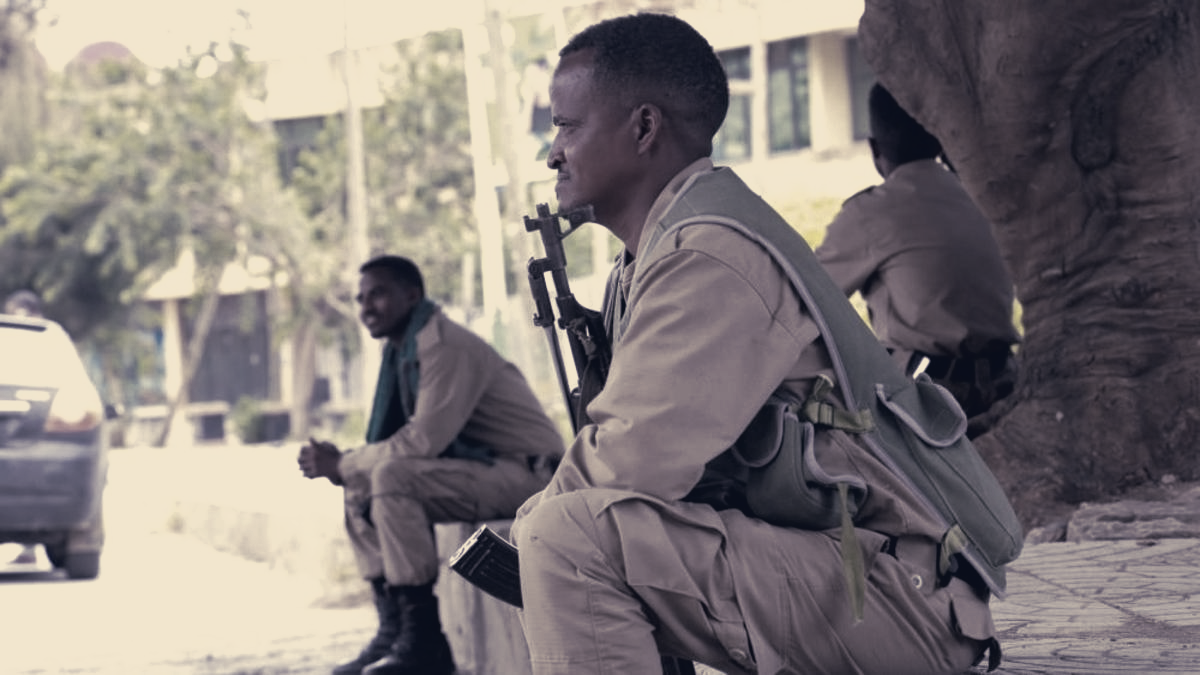
Risk of a return to large-scale civil war in Ethiopia increased after the federal military reported it had repelled attacks in the country’s north and captured weapons from advancing fighters. The statement, the army’s first public comment since clashes began on Wednesday, says the fighting started in Amhara close to the Tigray border and that soldiers inflicted heavy casualties.
Separately, forces from the Tigray People’s Liberation Front seized control of three airports from federal police on Wednesday, a move followed by the cancellation of all flights to Tigray by Ethiopian Airlines. Local reports said control of Mekelle airport was assumed by regional forces early on Wednesday, while residents described the city as largely quiet even as violence spread elsewhere.
There are unconfirmed accounts of attacks by Tigrayan fighters in neighbouring Afar and Amhara regions. A humanitarian contact in Afar reported heavy artillery being used around the town of Yallo as forces sought to take control near the Tigray border. TPLF vice-president Amanuel Assefa said, "We are in the situation of full-blown war now." The TPLF has not publicly replied to the army’s casualty and capture claims, and those assertions have not been independently verified.
The current clashes follow months of escalating tension between Prime Minister Abiy Ahmed’s federal government and Tigray authorities, who fought a devastating war from 2020 to 2022 that ended with an African Union brokered agreement. The AU mediator estimated about 600,000 people died during that conflict. On Sunday the TPLF announced an alliance with six other armed groups aiming to oust the government, a shift that has sharpened the prospect of wider confrontation.
Civilians in Tigray reported acute economic strain. A resident of Mekelle, identified only as Fitsum for safety, said the city felt calm but anxious. He warned that months of withheld budgets for civil servants and banks running low on cash had pushed residents to rely on mobile money, a fragile arrangement if communications or banking services are disrupted. "Mekelle is calm, except the stress from the people," he said, adding that "people are going to be in grave danger because there is almost no cash" and that, with movement restricted, "it’s like a curfew has been placed."
The immediate outlook is uncertain. The army’s announcement and the TPLF’s seizure of airports signal a rapid escalation that could widen into further regional fighting, deepen humanitarian strain, and disrupt transport and cash flows unless de-escalation or outside mediation follows.