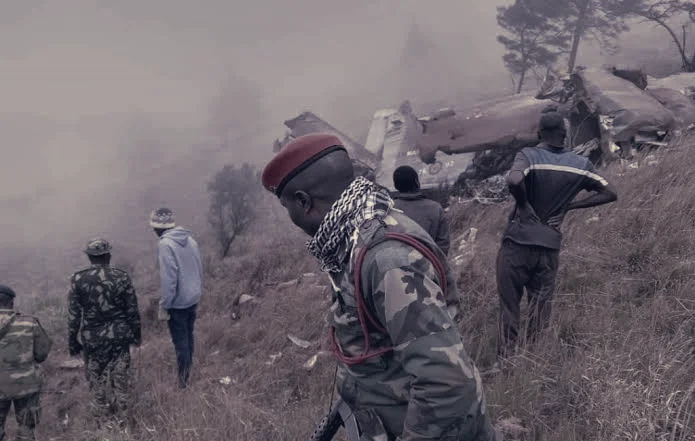

The inquiry risks leaving critical questions unanswered after testimony revealed gaps in how the military plane's final movements were tracked. Witnesses told the commission there is a mismatch between where the pilot last said the aircraft was and the logged tracking information for the June crash near Chikangawa. That gap has produced competing accounts of the plane's last known location and put the reconstruction investigators need at risk.
Resolving the discrepancy will force investigators to reconcile pilot statements with radar and telemetry records, a technically demanding task. The inquiry record now contains divergent movement data, and without a clear sequence of logged positions, analysts cannot reliably map the aircraft's final minutes. That uncertainty directly weakens efforts to determine whether procedural errors or equipment faults played a role.
Officials framed the issue as one of tracking and record-keeping, not a settled determination of cause or culpability. The plane's military status compounds the problem. When flight records are incomplete or kept separate from civilian tracking systems, assembling a continuous movement history becomes harder. The inquiry may need external specialists to interpret fragmented logs and verify timestamps.
Establishing who handled and preserved the records is now central to the commission's work. Technical data alone will not suffice if chains of custody are unclear, because uncertainty over provenance will limit the credibility of any reconstruction. The inquiry must secure authenticated logs and document stewardship to support its findings.
For now the hearing has exposed a fundamental vulnerability: without reconciled tracking data, the commission risks producing an account that leaves substantive questions unresolved. The next phase will prioritise obtaining and verifying missing tracking material so investigators can build a reliable timeline and, where necessary, identify corrective steps.