
The Nigerian Financial Intelligence Unit is asking banks, insurers, fintech firms and virtual asset service providers to join a new public-private intelligence partnership, a move the agency says will boost Nigeria’s capacity to detect and disrupt money laundering, terrorist financing and illicit financial flows.
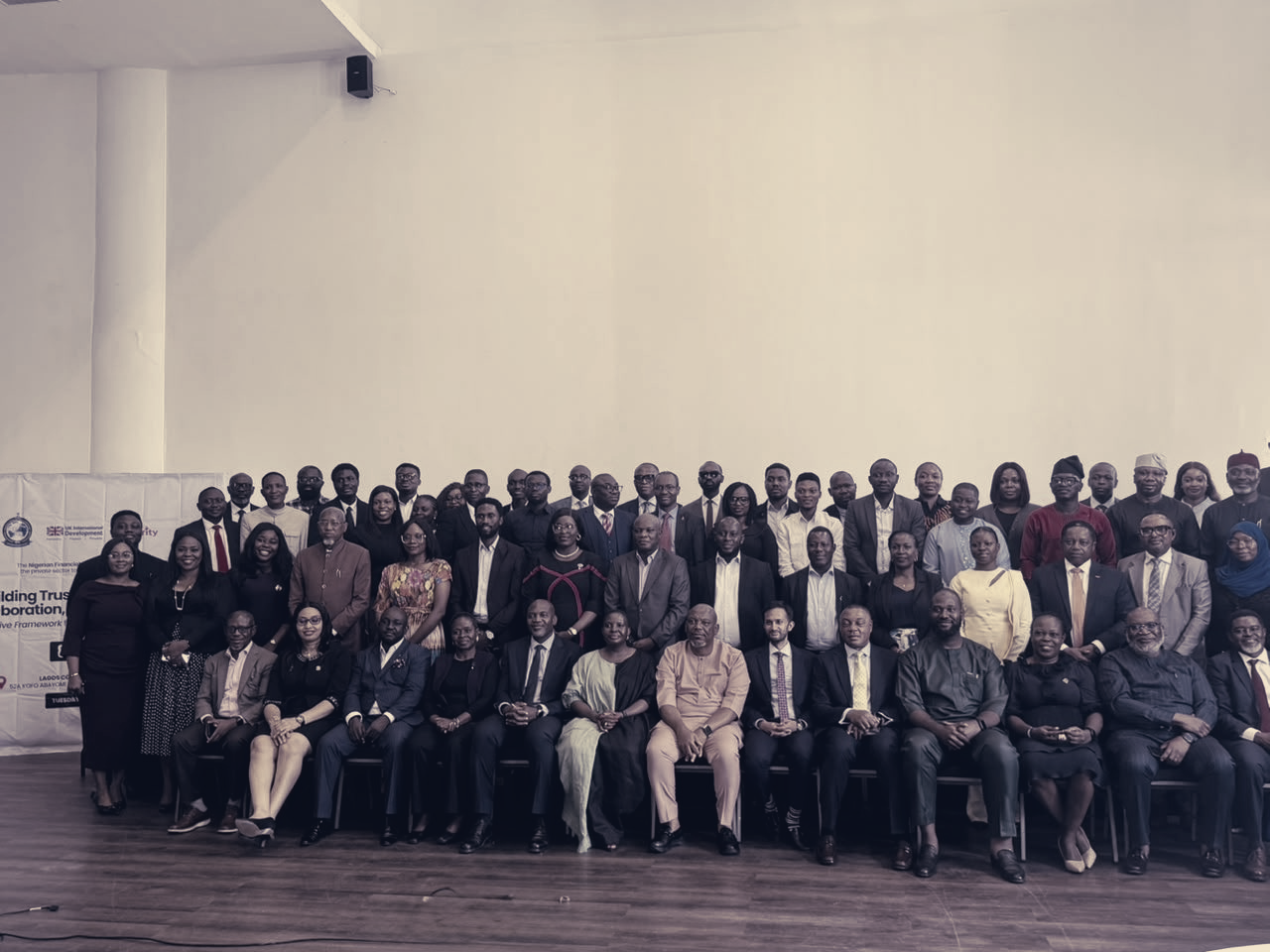
The appeal came during a high-level private sector engagement in Lagos supported by the British High Commission and the Convention for Business Integrity. Regulators, financial institutions, technology companies, fintech operators, insurers and crypto businesses took part in discussions about practical steps to deepen cooperation between government agencies and private-sector operators.
Speaking for NFIU chief executive Hajia Hafsat Abubakar Bakari, General Counsel Felix Obiamalu urged attendees to participate actively in shaping the proposed Joint Financial Intelligence Collaboration framework. The NFIU described the JFIC as a mechanism to formalise and accelerate information sharing and intelligence exchange between public authorities and market participants.
The session included a keynote from Xolisile Khanyile, former chair of the Egmont Group, who stressed that trust, shared ownership and effective collaboration are prerequisites for sustainable financial intelligence partnerships. Participants voiced strong support for collective action to protect the integrity of Nigeria’s financial system and to reinforce the country’s anti‑money laundering and countering the financing of terrorism framework.
The push for closer public‑private cooperation follows the NFIU’s overseas deployment of its indigenous Ilivro analytics platform to the Financial Intelligence Unit of Guinea‑Bissau, CENTIF. The agency said it supplied the platform along with technical assistance and hands‑on training to help the partner unit integrate and use the tool. CENTIF president Justino Sá welcomed access to a modern analytical system, saying it would improve the institution’s operational capacity and support broader development goals.
The NFIU, which is domiciled within the Central Bank of Nigeria, noted that tax‑related crimes and fraud accounted for more than 50% of financial crime intelligence reports disseminated to law enforcement and regulators during the year, underscoring the practical rationale for tighter public‑private collaboration. The agency has called on private sector stakeholders to help design the JFIC, signalling the next step in its effort to formalise intelligence sharing across Nigeria’s financial system.