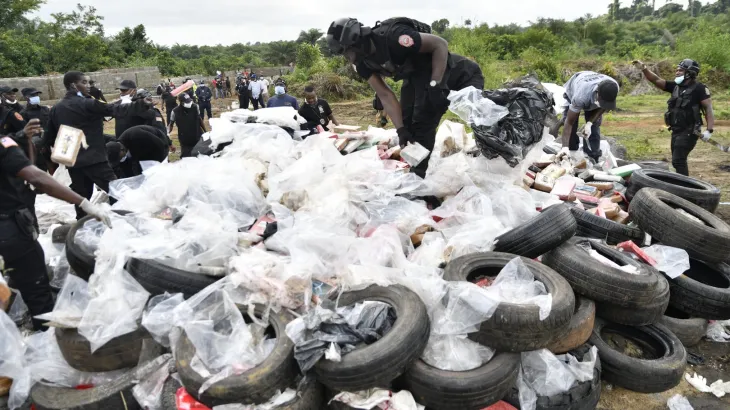
Liberia removed $336 million worth of cocaine from circulation when authorities burned 4.2 metric tonnes of the drug following a record seizure. The public destruction turns a major enforcement haul into a permanent loss of product and cash for whoever controlled the shipment.
The burning underscores the scale of the seizure, both in weight and in dollar value. At 4.2 metric tonnes, the consignment ranks among the largest drug hauls the country has reported, and the $336 million valuation signals how lucrative the cargo would have been on downstream markets.
Officials chose incineration, a final and irreversible disposal method, which eliminates the risk of diversion of seized stock and demonstrates a visible enforcement outcome. Destroying contraband also serves as a public statement about the state response to large-scale trafficking, but it does not by itself produce prosecutions or disrupt wider trafficking networks.
The operation and subsequent burning highlight ongoing enforcement activity in Liberia, and they raise immediate questions about supply chains, prosecutorial follow-through and cross-border cooperation. Removing 4.2 metric tonnes from circulation will affect the specific shipment’s controllers, though the broader market effects depend on whether authorities can trace and dismantle the networks behind the seizure.
The destruction closes this chapter on the physical drugs, but it leaves open the next steps for investigators and the justice system. How authorities translate a headline-grabbing seizure and the $336 million valuation into arrests, convictions and longer-term disruption of trafficking routes will determine whether the operation achieves lasting impact.