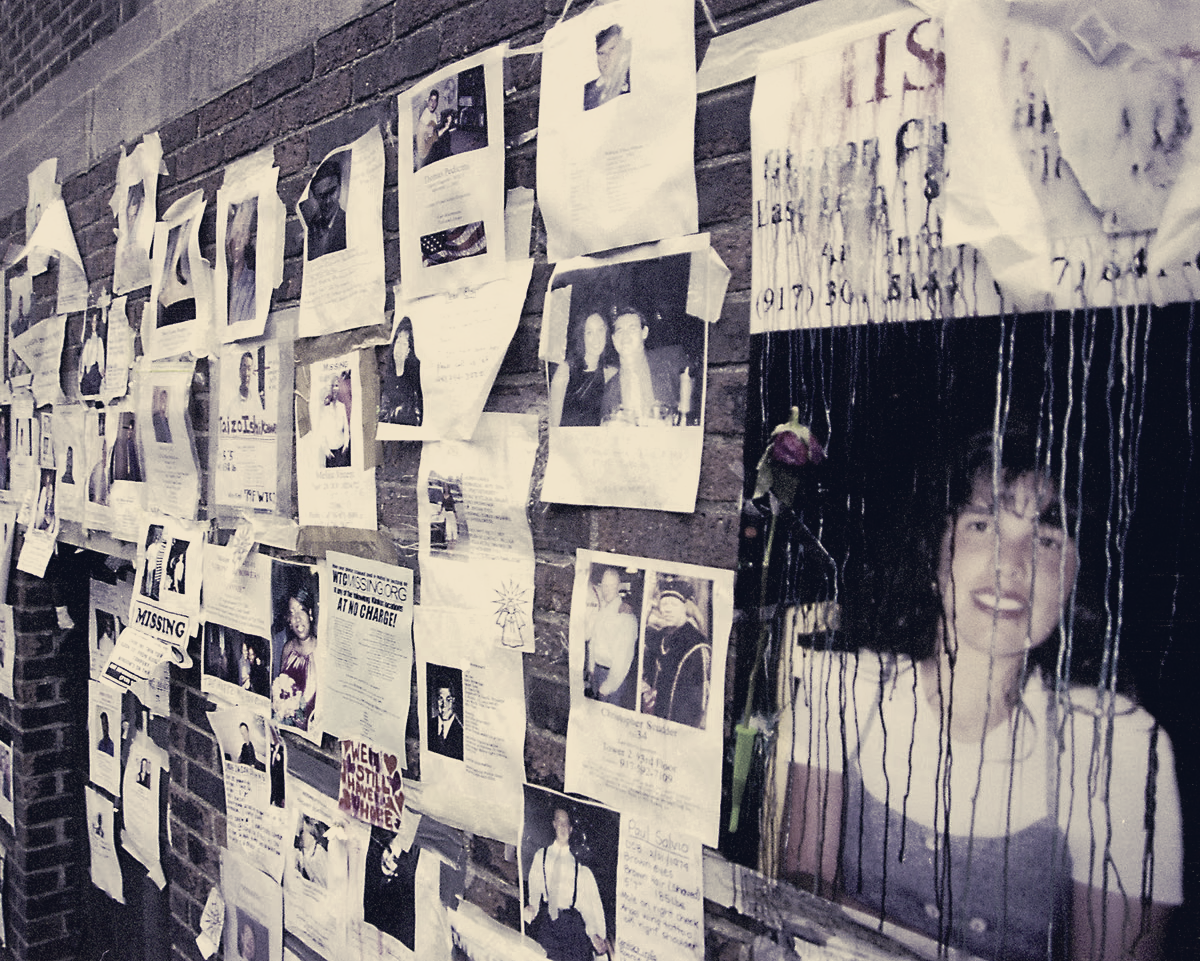

A previously boxed archive of missing-person posters from September 11 will be shown publicly for the first time as the city marks the attack’s 25th anniversary. Phil Buehler, the photographer who documented the hand-lettered and printed pleas in the days after the attacks, has selected 144 images from an archive of more than 500 for a new installation in Brooklyn.
Countenance: The 9/11 Missing Posters places the images on 24 translucent vellum panels hung in vertical pairs, an intentional echo of the twin towers. The installation opens at Most Holy Trinity, St Mary’s church, where the panels will reproduce the dense visual field of fences, storefronts and subway entrances that became makeshift noticeboards in the outbreak of grief.
Buehler began photographing the posters as they appeared across Manhattan in the hours and weeks after the attacks. He watched the towers fall from his office window and later recalled the immediate sense that survival would be rare, saying, "But you knew that there would be very few survivors. You knew it then." He amassed hundreds of images, then put them away because the material was too painful to keep looking at, only returning to the collection as the quarter-century mark approached.
His account also registers how the city improvised a language of public searching and remembrance. Some notices were produced with early desktop-publishing tools, others were frantic, handwritten pages with a single pasted photograph and notes about tattoos, scars, wristwatches, height, weight and the floor where a person worked. One plea read, "Please find daddy," a fragment that captures the raw hope behind many of the sheets.
As the weeks passed and recovery work at Ground Zero yielded mostly wreckage, the tone of the posters shifted. Buehler describes how notices evolved from literal identification details to statements of identity and loss, listing roles, families and community ties without saying the word memorial. The images also record the social makeup of those lost, placing suited finance workers next to off-duty firefighters, transit staff and others, Latino, Asian, Black and white faces appearing side by side.
Among the portraits Buehler preserved is Manny Devalle, described in caption material as a seven-year FDNY veteran who responded after finishing an overnight shift and who had organised Engine 5’s participation in the Puerto Rican Day Parade. The archive therefore functions both as a record of search efforts and as a cross-section of the city’s workforce and civic life at the moment of catastrophe.
The exhibition reunites ephemeral objects that once circulated on fences and shop windows with a wider public. The photographs force a confrontation with the way private loss was made public in 2001, and how, in the absence of digital archives and smartphones, families turned to paper and paste to keep the possibility of reunion alive. The installation will be on display this week as a deliberate act of retrieval and remembrance ahead of the anniversary.