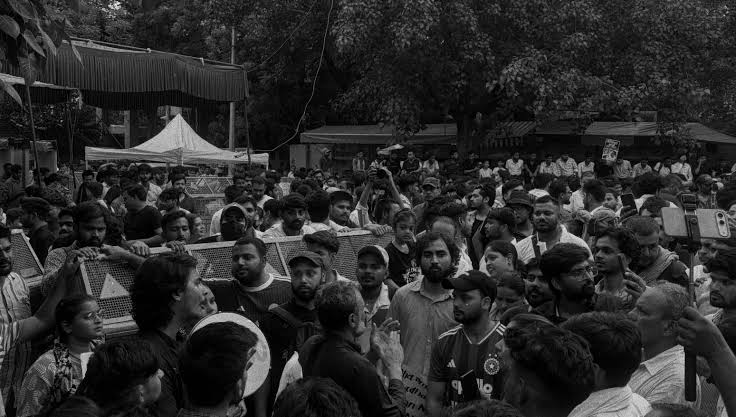
The government lost control of the story as a new generation weaponised humour to shape mass protest. What began as a conventional demonstration over a leaked medical exam paper and accusations against education minister Dharmendra Pradhan became a contest of clips, memes and AI parodies that rewrote how the protest played out at Jantar Mantar in New Delhi.
Standup comic Anuvab Pal, who has performed for 16 years and spent the last 10 under Narendra Modi’s government, says he was repeatedly warned by audiences, "Anuvab, you can joke about anything – just don’t mention any specific names, places, incidents or events." That caution vanished once the Cockroach Janata party and a flood of students mobilised around educator Sonam Wangchuk’s hunger strike. Police moved in, as they have in past protests, but the Gen Z response did not mirror the old playbook.
Rather than relying on slogans and street theatre, young protesters focused on digital disruption. They produced doctored videos, AI-generated nonsense, posters and protest art that spread across Instagram and X. One clip showed hundreds chanting, "The prime minister is a thief." Another cartoon depicted Narendra Modi flanked and kissed by two billionaires. Romcom-style mashups paired Modi and Giorgia Meloni, while an AI clip staged Kim Jong Un berating Modi in Hindi. Protesters filmed reels beside policemen to the Lana Del Rey lyric "everyone knows I'm a good girl, officer," and held posters saying "Arrest me daddy."
The response unsettled official channels. Narendra Modi released selfie videos outlining steps taken, but users quickly posted AI parodies that appeared to show him swearing and insulting the education minister. After one early clip prompted jokes of people playing noughts and crosses on a screenshot of his forehead, government videos were mocked for moving further from camera until, comically, the head vanished.
Pro-government outlets pushed familiar narratives, blaming foreign influence. That line failed to land with students who largely avoid television. Instead they clipped elite news shows, adding split-screen commentary to neutralise anchors such as Arnab Goswami and turn sober broadcasts into material for satire. The result was not only ridicule but rapid amplification, as short-form edits outran attempts at traditional rebuttal.
The fight over truth and tone is now a battle for platforms as much as public squares. The protesters have shown how humour and technical fluency can undo carefully staged communications. The government responded with videos and denials; the students answered with edits. Expect the contest to continue online, where speed, creativity and viral formats will determine which side controls the next headline.