
This fall’s art books shift attention toward communities and experiences often missing from mainstream archives, bringing personal memory, disability culture, grief and conflict into sharper view.
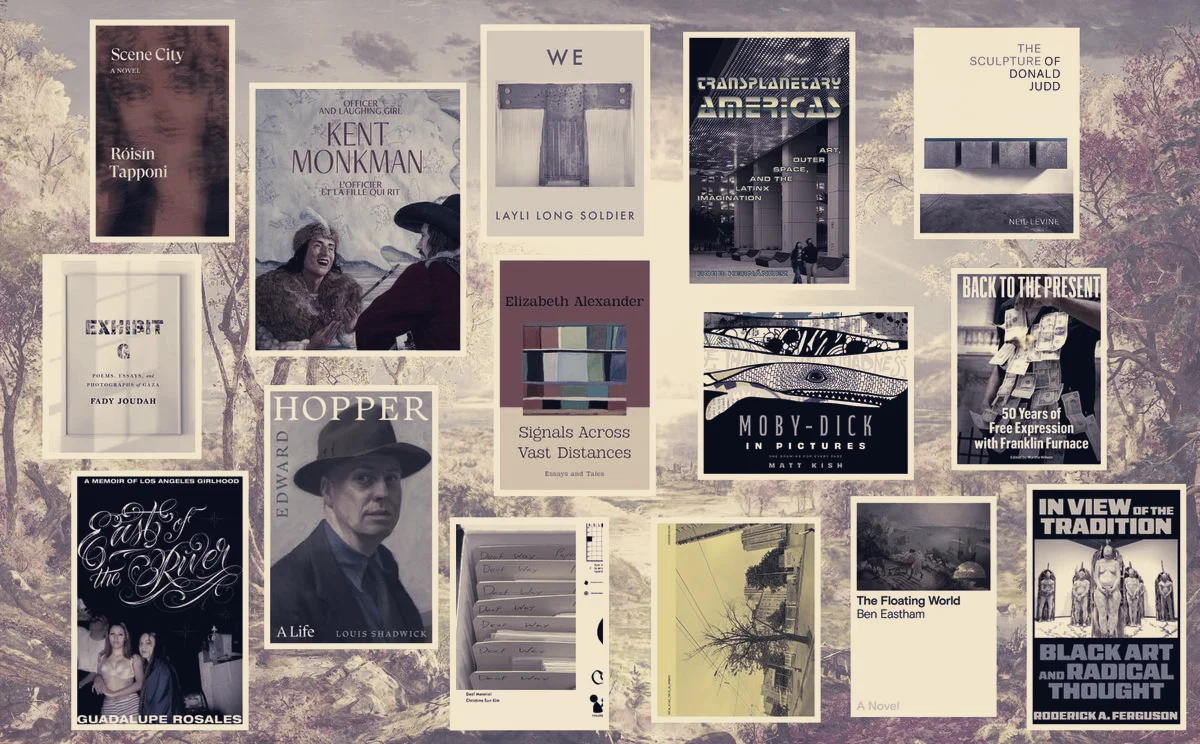
Guadalupe Rosales’s East of the River: A Memoir of Los Angeles Girlhood, published by One World on September 8, uses images and ephemera from the artist’s personal archive to reconstruct a Chicana girlhood in East Los Angeles. Phillip Pyle highlights how Rosales pairs photographs, party flyers and lowrider culture with the narratives that produced them, stressing the importance of telling one’s own story when existing records remain silent.
Christine Sun Kim’s Deaf Material, due from Primary Information on September 15, collects more than 600 instances of deaf imagery drawn from mainstream culture. The book assembles memes, advertisements, disability signage, artwork and other sourced or photographed material, serving as both a corrective to absent documentation and an intimate window into Kim’s practice, Lisa Yin Zhang writes.
Signals Across Vast Distances, an essay collection by Elizabeth Alexander from W. W. Norton & Company, also arrives on September 15. Alexander, who published The Light of the World in 2015 three years after the sudden death of her husband, Ficre Ghebreyesus, turns here to the perennial question artists confront, "What is our role?" Lakshmi Rivera Amin flags the essays as essential reading for those who follow Alexander’s work as poet, scholar and cultural leader.
Fady Joudah’s Exhibit G: Poems, Essays, and Photographs of Gaza, published by Milkweed Editions on September 22, combines images, poems and reportage to document daily life under siege. Hakim Bishara emphasizes the collection’s focus on children and families whose routines of schooling, play and basic comfort have been devastated, and he frames the book as a testimony to survival and resistance.
These four titles illustrate how this season’s art publishing blends genres, pairing memoir and artist book, poetry and documentary photography to center voices shaped by loss, exclusion and political violence. Readers looking for art books that do more than survey exhibitions will find work that assembles archives, insists on self-representation and registers urgent human consequences.
Expect these releases in September from independent and trade publishers alike, a signal that publishers are committing space and resources to work that documents marginal histories and contested present-day crises.