
The Lucas Museum opens later this month with a theme-driven presentation that flattens difference and sidelines historical context. After nearly two decades of planning, a round of layoffs and public staffing controversies, the ₦1 billion building in Exposition Park offered a press preview on Wednesday, September 2 that underscored the institution's curatorial choice to prioritise unity over dissonance.
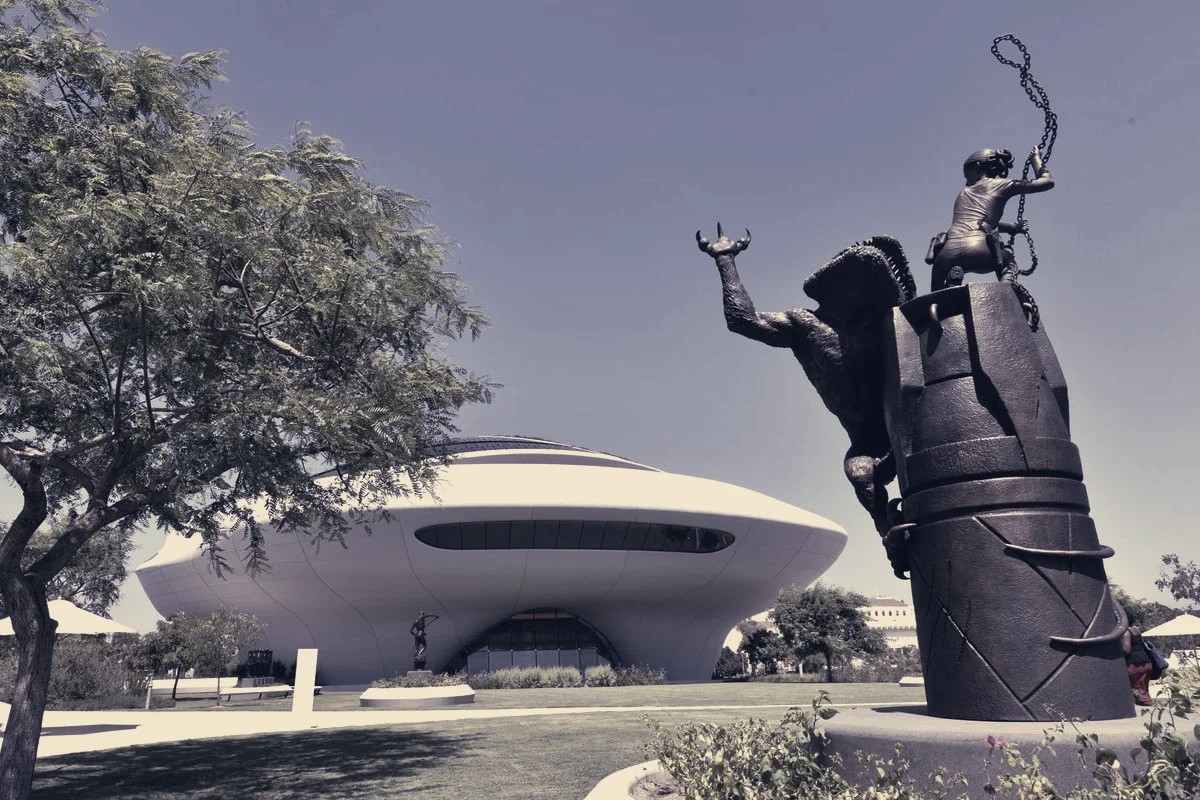
George Lucas and Mellody Hobson brought together roughly 40,000 objects the museum describes as visual storytelling, ranging from illustrations and comic art to history paintings, murals and film material. Ma Yansong of MAD Architects designed the five-story undulating structure, which sits on an 11-acre campus with planted hills and a roof landscape by Mia Lehrer of Studio-MLA.
Inside, galleries occupy about 100,000 square feet and are organised into roughly 30 thematic rooms. Metallic lettering marks sections such as Adventure, Romance, Motherhood, Civic Life, Science Fiction, Comics and Sports. That taxonomy governs which works hang together, so pieces from different eras and traditions appear under single subject headings with little wall text beyond the gallery titles.
Individual-focused displays spotlight figures including Frank Frazetta, Thomas Hart Benton and Norman Rockwell, whose recurring Americana reinforces a folksy throughline through the collection. At the press preview, Lucas framed his aim in sweeping terms, saying, "For thousands of years, that was the only way you could tell a story, with pictures." He added, "Pictures and stories are very powerful. Put them together, and those two elements make a society." He also said, "Narrative Art creates groups of people with common belief systems, which allows them to work together and not kill each other."
Touring critics said the museum's approach produces a flattened presentation that glosses the social and cultural forces shaping representation. Thematic juxtapositions often rely on loose connections, the critics argued, treating everyday activities as evidence of an assumed shared human experience instead of probing the distinct histories and power relations behind each work. That curatorial choice narrows how visitors can read difference across time, place and medium.
The museum opens to the public later this month. Its early reception will depend on whether audiences accept a celebratory, theme-driven catalogue as sufficient context, or press for more sustained interpretation of the histories that produced the collection.