Europe's economic crisis is no longer measured in ratings downgrades and borrowing costs, but in engagement depth and consumer trust. The recent Ceuta crisis, where over 70,000 people crossed from Morocco to the Spanish enclave, highlights the European Union's struggle to cope with the shrinking attention economy. Social media platforms, designed to reward content that instantly hooks viewers, have created a geopolitical flashpoint that appears to have been engineered and processed via short video clips online.
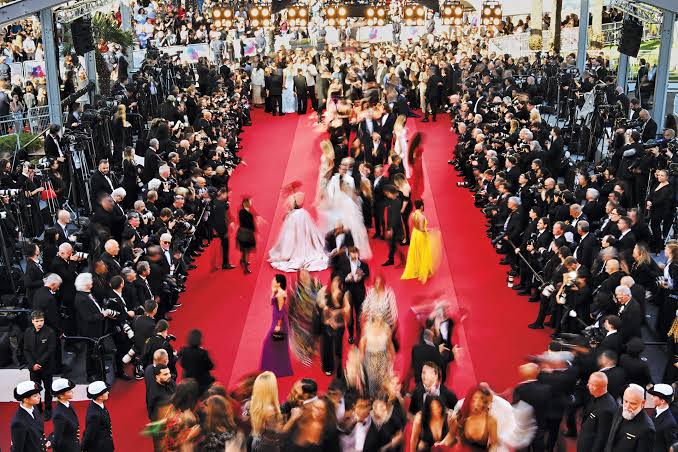
Lawmakers are finding it challenging to keep up with the wildfire speed of social media, where three seconds is the golden rule for content. However, the Venice film festival, opening on 2 September, offers a contrasting approach. The lineup includes films like Sergei Loznitsa's Imperium, a three-hour documentary about the Italian Communist party, and Alex Gibney's Musk, a four-hour documentary about Elon Musk. These films, along with others, are surprisingly politically forthright and aim to capture people's imaginations and attention.
While these lengthy films may seem to risk playing only to a gallery of cinephiles, they also raise questions about the point between extremes, where attention spans can be stretched without overwhelming viewers. The Guardian, in collaboration with Franco-German culture channel Arte, is inviting film-makers to propose short-form documentaries exploring democracy in Europe today. The winning submission will be presented at the DOK Leipzig film festival and receive funding, editorial support, and distribution through Guardian Documentaries and Arte platforms.
The deadline for submissions is 14 September, and the films should be no longer than 20 minutes, a length that encourages participation and debate. Recent Guardian documentaries, such as Liane Aviram and Louis Hollis's 23-minute short The Oath, have led to significant outcomes, including the protagonist being invited to speak in front of the UK parliament. This approach suggests that there is a point between the extremes of social media and lengthy films, where attention can be held without being overwhelmed.
As the Venice film festival and the Guardian's documentary initiative demonstrate, there is a growing recognition of the need to challenge the shrinking attention economy and find new ways to capture people's imaginations and attention. By exploring the intersection of politics, social media, and film, these initiatives offer a unique perspective on the state of democracy in Europe today and the role of attention in shaping our understanding of the world.