
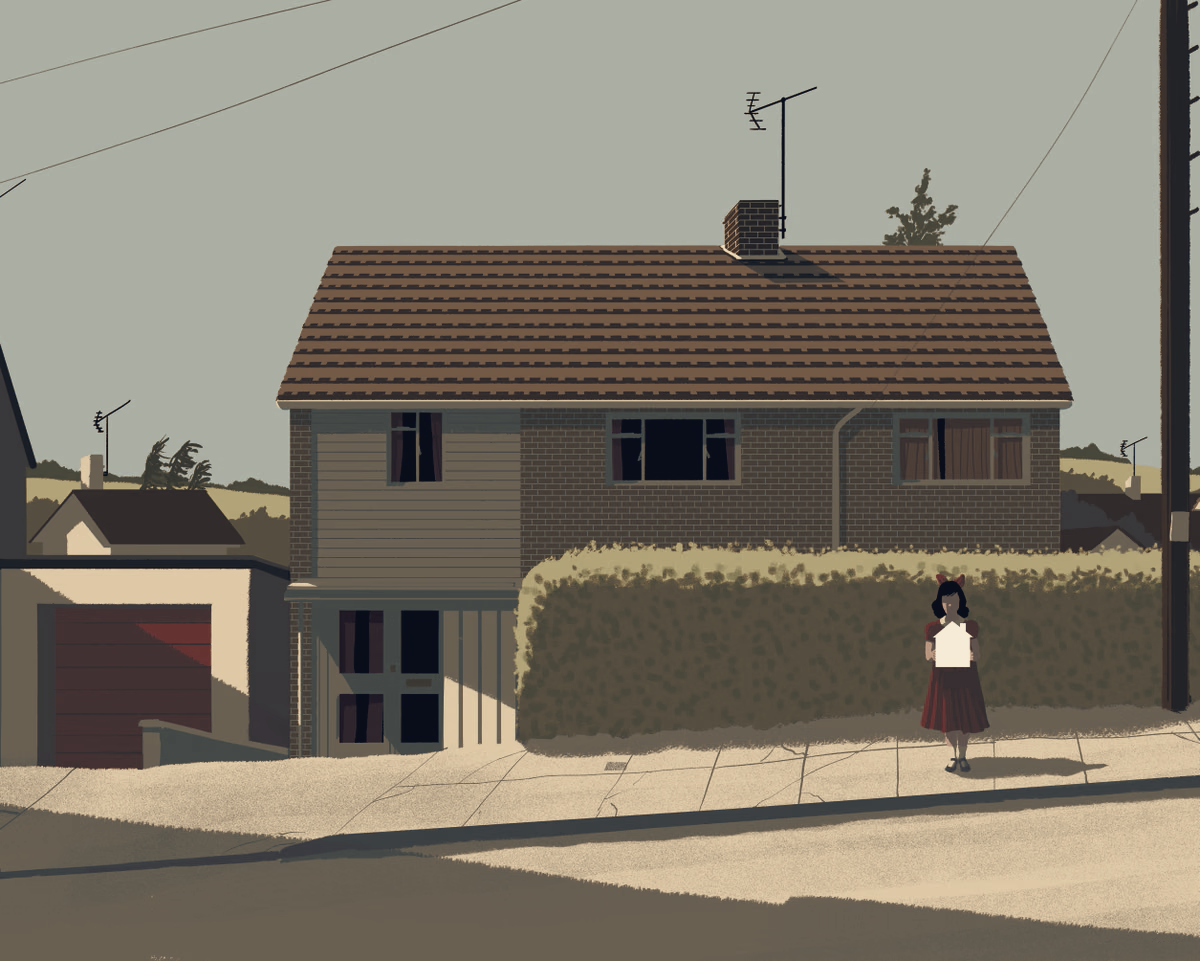
Returning to a childhood house reactivates long-held emotional patterns and confirms that the domestic architecture of early life continues to shape adults’ sense of safety, belonging and relationship templates. A series of writers went back to the streets and rooms where they were raised to test whether those places still hold power, and their accounts show memory rooted in bodies as much as in bricks.
Julia Samuel, who lived in a Kensington house from the age of one until she was 20, describes a bodily recall that came before conscious thought as she walked through Holland Park toward her old street. She had not been inside since the property was sold when she was 23, 43 years earlier. The house itself has changed in detail but not in the force it exerts: stone eagles that once marked the entrance are gone, a coal hole in the front wall remains, and the top-floor window still reads as the bedroom where she first wrote stories. Samuel says people do not typically return for the building, but to revisit earlier versions of themselves, noting that childhood homes provide the template for whether people feel safe, whether conflict seems survivable, and how they expect to be treated.
Those templates persist even when a house acquires another family’s furniture and smells. Samuel says that when parents die and homes are cleared, people are doing more than sorting objects; they are dismantling repositories of attachment. She chose not to enter her old house because she wanted to preserve the architecture of memory, and because what mattered to her had never been confined to the physical rooms but lived in the foundations they gave her: rootedness and belonging that steady her through loss and change.
Comedian Alexei Sayle reports a different but related experience. He left his family home on Valley Road in Anfield in 1971 at 19 to study at Chelsea School of Art, and while his mother was alive he visited Liverpool often, even buying her a semi in Aigburth. On return visits he watched his old street evolve; the terrace he grew up in remained a modest yellow-brick house with a bay window while neighbours’ properties were upgraded. His memory maps onto particular streets and façades, and revisiting them surfaced a mix of familiarity and dissonance.
Across these pieces, the writers show that childhood homes function as emotional coordinates. Returning to them can be consoling or painfully revealing, but it always mixes present and past selves on the same pavement. The accounts underline a simple consequence: places where people grow up do not only host memory, they shape the expectations and internal rhythms adults carry into later life.