
Fusion startups are finding new sources of cash and engineering support from defense contractors and federal agencies as venture funding for climate-focused projects cools. That shift gives companies alternative pathways to develop hardware and run experiments while they pursue longer-term commercial power goals.
Denver-based Xcimer announced an investment from RTX Ventures alongside a commercial relationship that will let the conglomerate evaluate Xcimer’s high-power lasers for defense uses. Xcimer operates a private laser installation it says is the largest of its kind and plans to scale that hardware toward a power plant. The company says its current system, Phoenix, runs at roughly one tenth of the power a commercial reactor will need but is already powerful enough to draw interest from military contractors.
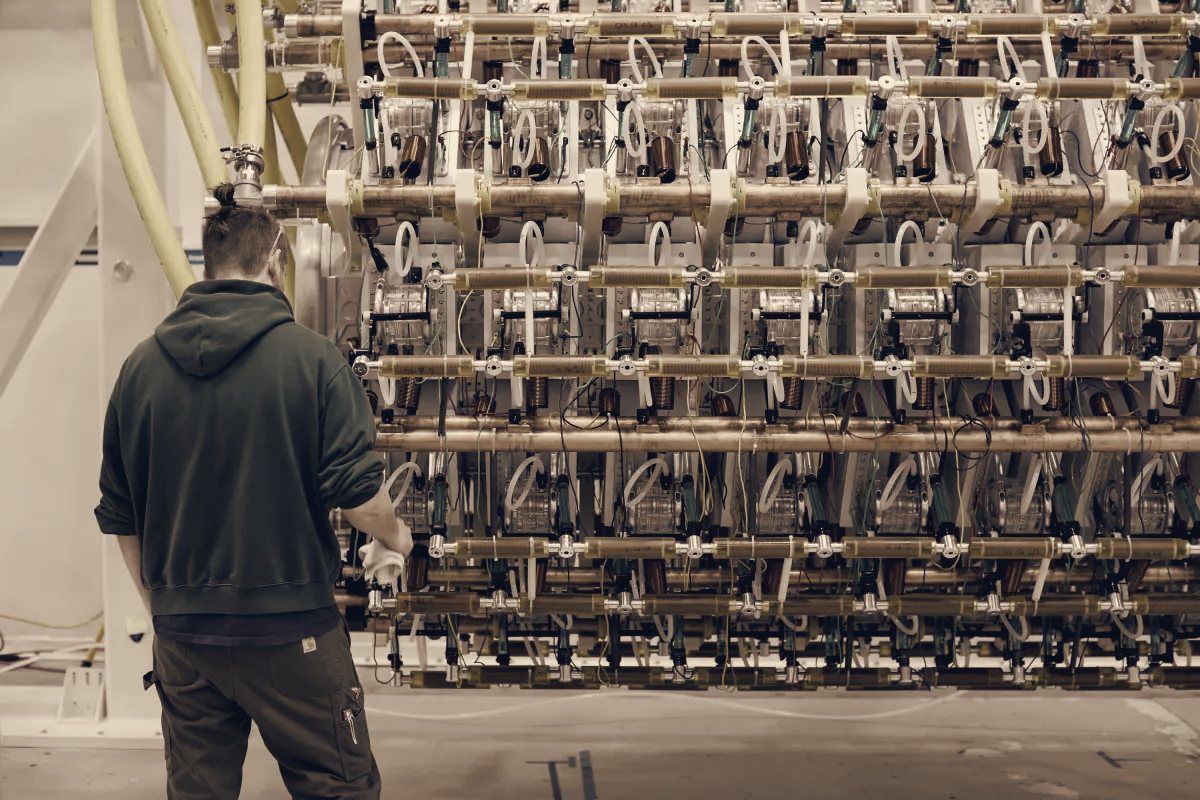
Pacific Fusion has moved in the same direction, signing a memorandum of understanding with the National Nuclear Security Administration to collaborate on high-energy-density experiments. The startup recently began construction on a demonstration facility in New Mexico, sited close to Sandia and Los Alamos National Laboratories. Company founders say the facility’s fusion output will exceed the energy levels the government uses today for some weapons experiments. “It turns out that the facility that we’re building also has utility in this world-leading defense application,” said Keith LeChien, co-founder and chief technical officer at Pacific Fusion.
That alignment is deliberate, the company adds. “It was always on our mind,” said Carrie von Muench, co-founder and chief operating officer at Pacific Fusion. Several members of Pacific Fusion’s technical team, including its lead inventor, previously worked at national labs and at the NNSA, giving the firm direct ties into federal science and security networks.
The practical logic for defense interest is clear. Modern conflicts have heightened demand for high-rate, electricity-driven weapons such as lasers, which can be cheaper per shot than one-use interceptors. Observers point to an earlier mismatch when a roughly $3 million Patriot missile was used against an off-the-shelf $200 drone, underscoring the appeal of lower-cost directed-energy options.
Commercial fusion remains capital intensive and venture investment has slowed, so partnerships with contractors and agencies offer startups funding, facilities and experimental regimes that pure VC rounds are not providing today. Expect more alliances as startups and legacy defense players test overlaps between fusion hardware and high-power lasers, a trend that could accelerate technical milestones for firms willing to make the trade and provide a near-term financial lifeline for some teams.