
Temi Adegbayibi has moved from hobbyist to in-house photographer at the Royal Albert Hall, after a solo show at the venue showcased images he made on tour and at UK festivals.
Born and raised in Enfield, north London, Adegbayibi first picked up a camera when his cousin, TJ Koleoso, asked him to shoot their church worship band. He spent two years documenting services before taking his camera to local gigs. He built a portfolio by approaching smaller artists and posting work on Instagram, and those early festival frames helped crystallise a professional aim.
At Love Supreme in Lewes in 2022 an image of TJ leaning back on his bass, and another shot that later appeared on an album sleeve, convinced Adegbayibi he could move beyond a pastime. "I was like: 'Damn, I can actually do something with this,'" he says. That confidence fed a freelance practice that now includes Jorja Smith, Basement Jaxx, Fireboy DML, and appearances across Glastonbury and Recessland.
He photographed Ezra Collective on tour and at their Royal Albert Hall performance in November 2023, a body of work that formed part of his Hall exhibition and led to the venue hiring him as an in-house photographer. The appointment gives Adegbayibi regular access to staged performances and a platform inside one of the country's most prominent music institutions.
Adegbayibi balances venue commitments with film production commissions and the unpredictable income of freelance creative work. "I’ve always had day jobs," he says. "Most photographers back in the day weren’t shooting for money, they were shooting for passion." His images reward that passion, privileging motion, closeness and joy, especially in portraits of Black musicians.
"I’ve always loved shooting Black people," he says, framing his photography as a counter to reductive reportage. "Black people and musicians are often portrayed as aggressive, violent or angry," he adds, "I think my photography serves as an example of Black joy and the truth behind Black communities; what we are actually like."
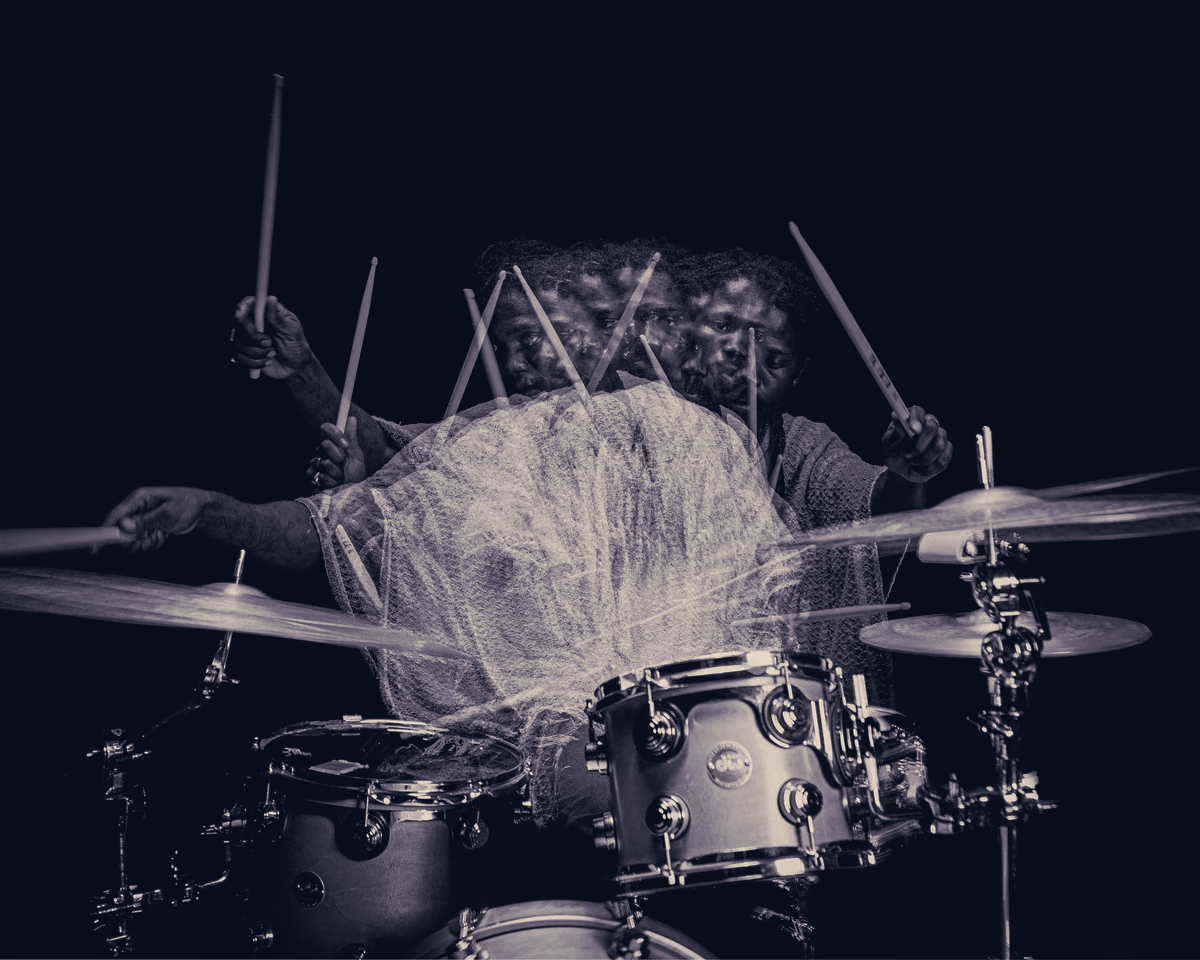
Technically, Adegbayibi experiments with slow shutter speeds, light and layering to suggest movement, a method partly inspired by visual artist Kat Anderson. His studio work and live frames probe how jazz can be both kinetic and still, a tension his Royal Albert Hall show emphasised. Seeing the V&A East’s inaugural exhibition The Music Is Black also sharpened his sense of lineage, and his ambition that future viewers might recognise his images as records of a particular moment in British jazz. "Maybe someday someone can look at an image and think: 'That’s what jazz gigs were like back then,'" he says. "That’s the hope."
Competition in London keeps him driven rather than deterred, and he plans to continue shooting gigs and festivals while expanding the archive he is building of contemporary British jazz.