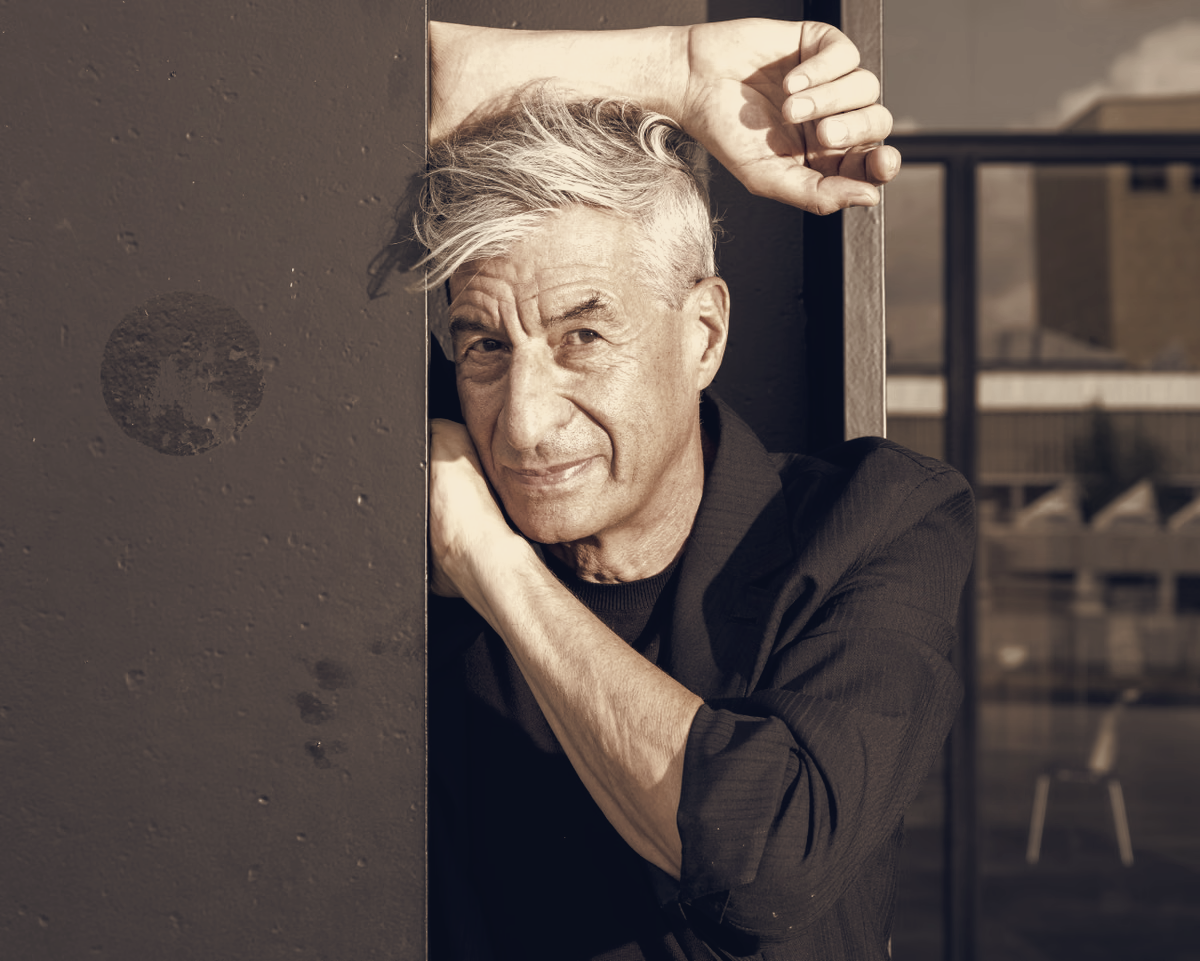

Berlin gains a major Cattelan survey that forces a rethink of his prankish reputation, presenting works such as the $6.2m banana and an 18-carat gold toilet as deliberate interventions on power and memory. Night, Cattelan’s first large solo exhibition in Germany, fills the subterranean space of Mies van der Rohe’s Neue Nationalgalerie with new commissions and selections spanning three decades, a survey granted to him after he won this year’s NNG prize.
Visitors will find pieces that trade on shock and simplicity, then pivot to darker registers. Comedian, the duct‑taped banana that sold for $6.2m in 2019 and became infamous when its buyer bit into it, sits in the catalogue of works that made Cattelan a recognisable figure beyond the art world. America, the gold toilet first installed at the Guggenheim in 2016 and later stolen while on display at Blenheim Palace, is another headline-making object that the exhibition places inside a broader enquiry.
For Cattelan, the attention given to spectacle obscures intent. “My work has always been serious. The problem is people often stop at the joke,” he says, arguing the humour is a mask for sustained interrogation. The show’s curatorial choices underline that point, notably by skipping some of his most famous individual hits, which Cattelan says belonged to a different conversation.
Night arranges a sequence of loaded images that ask how societies remember and who occupies public space. Never, from 2003, looks down from the roof as Oskar, the child witness from Günter Grass’s The Tin Drum. A new commission, Purgatory, compresses Berlin’s Brandenburg Gate into a stunted portal, encouraging visitors to recalibrate their relationship with European history. Thousands of stuffed pigeons hang against a black ceiling, a presence Cattelan describes as menacing; curator Lisa Botti adds, “It’s also about the holy spirit, about looking up. It’s a bit of optimism.”
The exhibition stages two of Cattelan’s most contentious sculptures opposite one another. Him, from 2001, reveals a kneeling figure to be Adolf Hitler, and has been his most valuable sale, fetching $17.2m in 2016. Dawn, from 2007, is a female figure with real human hair, hands fixed in a crucifixion pose. The inclusion of La Nona Ora, The Ninth Hour, from 1999, which depicts Pope John Paul II struck down by a meteorite, reinforces how Cattelan uses sacred and political iconography to unsettle viewers.
NGG director Klaus Biesenbach frames the artist’s reach bluntly, noting Cattelan’s rare public recognition and the accessibility of his ideas while insisting on their depth. Cattelan himself acknowledges a long engagement with Germany’s darkest chapters, saying, “Hitler in this case represents evil. It could have been Genghis Khan or another very popular, very famous leader.” He dismisses accusations of cultural appropriation as especially American, and allows that his Catholic background surfaces in unexpected ways, quipping, “My Catholicism comes out when I don’t want it to!”
Night makes a deliberate move away from easy laughs, recasting headline-grabbing pieces as parts of a sustained meditation on authority, culpability and hope. The Neue Nationalgalerie has given Cattelan context and scale, and the exhibition is positioned to restart conversations about what provocative art can demand from public audiences and institutions.