Ancestors arrives at the Toronto Film Festival seeking distribution, presenting a vivid but inconsistent portrait of the AIDS crisis that privileges mood and memory over linear plotting. David Turpin, making his first feature, frames the film as an attempt to connect younger gay men with the lived trauma of the 1980s; Turpin, born in 1982, has described the project as a "séance." The debut repeatedly slips between eras, chromatic registers and states of consciousness, aiming for an elegiac atmosphere that often fully achieves its aims and sometimes dissipates.
The Story in Pictures
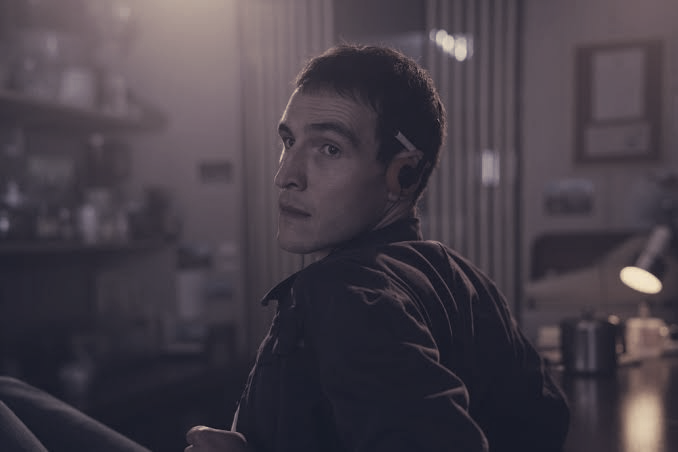
The film is set in a foggy London in 1988 and follows Beau, played by Éanna Hardwicke, who previously stood out at Toronto in Saipan where he portrayed Roy Keane. Beau works in a caff run by "Auntie" Maurice, an older drag figure played by Rupert Everett. Beau brings a young man, Tiny, played by Jack Wolfe, into an apartment he shares with his friend Shell, played by Jessica Reynolds. Tiny prefers, in his words, "love stories and ghost stories" rather than detective tales, and the film privileges the former: Turpin is more interested in the relationships and the spirits that haunt them than in procedural searching.
Hardwicke delivers the film’s most consistent element, a performance that supplies urgency, tenderness and believable fear as the epidemic closes in on his circle. The film’s quieter, conversational moments are where it feels most alive, and Turpin’s ear for domestic detail keeps the central performances grounded even when the surrounding formal play is indulgent. Small scenes land: a photograph added to a wall of other sick men, Beau’s brittle negotiations about intimacy with Shell and Maurice, and a wrenching, repeated cover of Tim Buckley’s "Song to the Siren." Those sequences illustrate the film’s emotional aim.
But Ancestors is uneven. It carries the feel of a short expanded into a feature, with some visuals that read as tentative and set pieces that do not always justify their presence. A brief, arresting appearance by Christina Hendricks feels underused, and several musical interludes at a local gay bar fail to cohere except for the one noted song. The narrative’s final act leans into a conventional reveal that sits oddly against the film’s earlier, dreamier impulses, reducing rather than amplifying the intended impact before a last scene restores some of the earlier spell.
Ancestors is striking and occasionally moving, anchored by a notable lead performance, but it remains a debut defined by ambition as much as by uneven execution. It now faces the next test at Toronto: finding an audience and a distributor willing to take a chance on its mixture of elegy, lyricism and narrative fog.