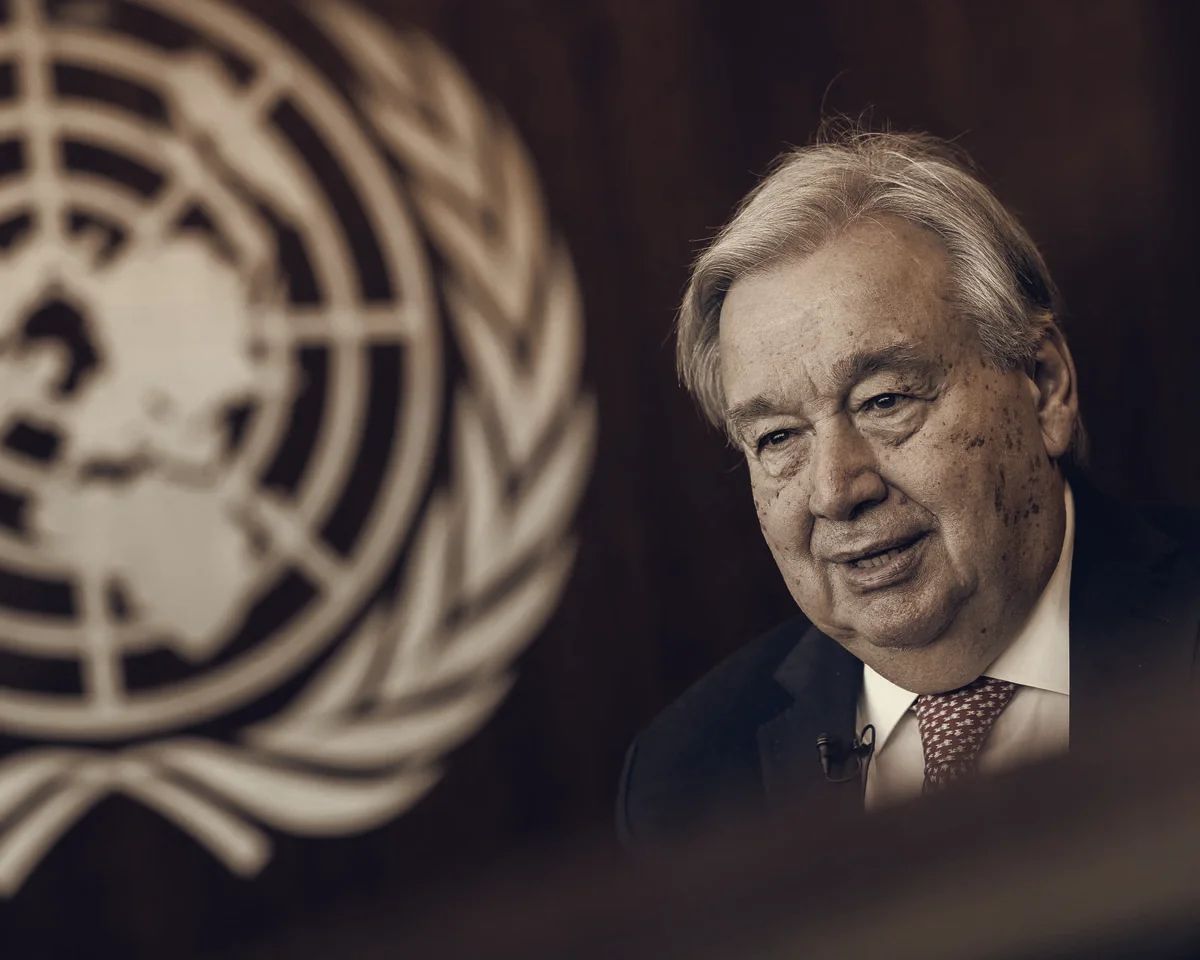
António Guterres has made climate policy the defining focus of his remaining months as UN secretary general, using his voice to press governments and companies to speed the move from fossil fuels to renewables. With his second term ending on 31 December, he has repeatedly framed global heating as an existential threat and warned of accelerating impacts unless emissions fall sharply in the next decade.
The Story in Pictures
Guterres has singled out oil and gas companies for sharp rebuke, calling some of their practices “immoral” and accusing parts of the sector of “grotesque greed.” He has warned that humanity has “opened the gates of hell” as planetary systems edge toward dangerous tipping points, noting signs such as a slowing Atlantic Meridional Overturning Circulation and the mounting risk of rapid sea level rise.
He acknowledges the limited formal power and budget of the UN, but rejects inaction on that basis. “It’s my duty to tell the truth,” he says, and he insists the secretary general’s influence lies in setting the global agenda and raising alarm bells about the risks all countries face. He argues that political life is often driven by short-term priorities, which leaves long-term threats like climate change under-addressed.
Guterres also reflected on the politics behind the stalled global response. He blamed well-financed campaigns and vested interests that defend a fossil-based development model, and he warned of regulatory capture when oversight bodies fall under private influence. On economic systems, he said a market economy can work when democratic institutions provide effective regulation; the problem is not markets per se but weak governance that allows private interests to dominate rules.
He said the UN should have built broader alliances beyond top political leaders, including with grassroots movements and local authorities, and that democratic systems and communication with young people must modernise. Ahead of his final UN general assembly, Guterres has been pushing for accelerated investment in renewable energy and stronger regulatory frameworks, casting those steps as essential to avoid the “dramatic problems” that could affect all of humankind.
What happens next rests on whether governments, subnational authorities and publics respond to his warning and move faster to cut emissions, reform regulation and mobilise finance for the energy transition before the end of the decade.