
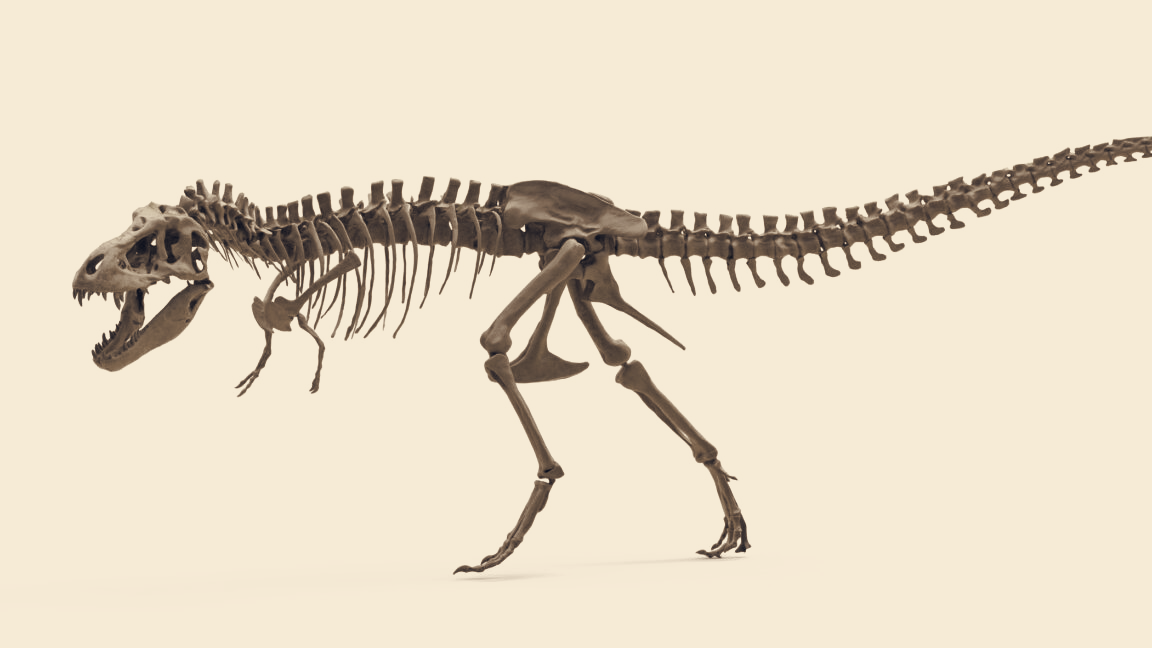
A new chemical readout from fossil teeth raises the estimated body temperature of Tyrannosaurus rex to about 36° Celsius, a level comparable to modern elephants. That temperature suggests T. rex may have operated at a warmer, more stable internal temperature than many reptiles, narrowing a long‑running debate over dinosaur physiology.
The result comes from a team led by geochemists Randon J. Flores and Robert A. Eagle at the University of California, Los Angeles, who treated fossil teeth as a natural thermometer. By measuring the ratios of isotopes preserved in the dental material, the researchers reconstructed an internal temperature for the animal, landing near 36° Celsius.
The finding arrives against a backdrop of shifting images of T. rex. Early 20th century reconstructions cast it as a slow, cold organism that needed environmental heat to become active. Later work recast the species as agile and bird‑like, yet whether that activity depended on endothermy remained unresolved. Paleontologists have relied on indirect indicators such as bone microstructure, growth rates and fossil distributions to infer metabolism. Some studies have argued many dinosaurs generated their own heat, others have proposed that thermal strategies varied by lineage.
Measuring isotopes in teeth offers a more direct probe of internal temperature than those proxies, and the 36° Celsius estimate places this T. rex within the range of large warm‑blooded mammals rather than ectothermic reptiles. The result does not by itself close the debate over dinosaur metabolic diversity, but it shifts the balance of evidence by providing a concrete temperature estimate for a top predator.
Researchers and the field now have a measured datum to compare with growth, bone and ecological studies that previously drove the discussion. The study brings scientists closer to answering whether at least some giant theropods actively regulated body heat, while broader questions about variation across dinosaur groups remain unresolved.