
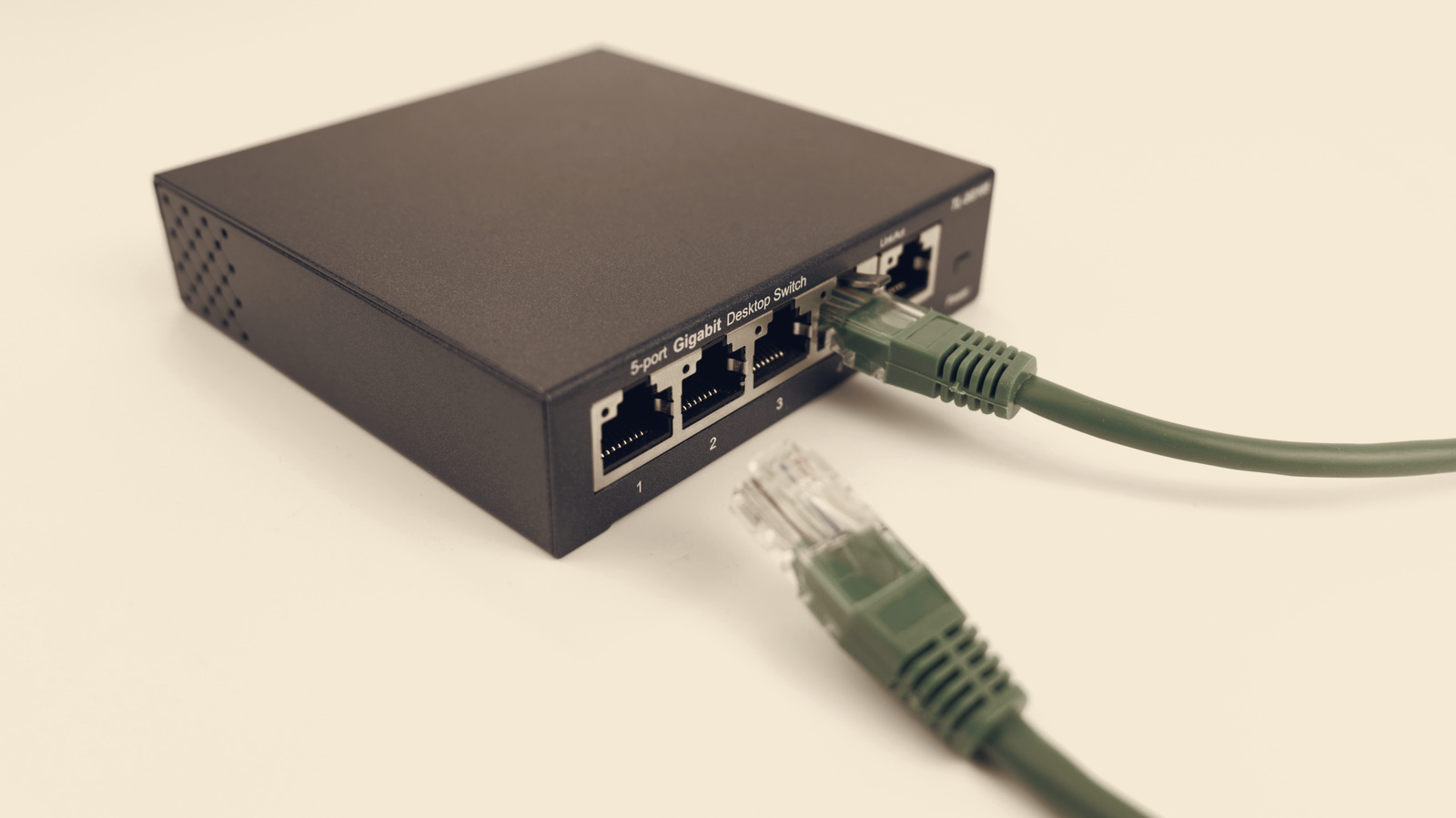
Most home routers include four LAN ports plus a WAN port for the modem, which leaves few sockets for a smart TV, game consoles, desktops, NAS drives and home office gear. A switch is an expansion device, similar in purpose to a USB hub or HDMI switch, that multiplies available Ethernet jacks. Consumer switches are commonly sold with five, eight or 16 ports, though one port is used to connect the switch to the router, so the usable count is one fewer. Elsewhere on the market a single switch can add four, seven, 15 or even more ports depending on the model.
For the majority of households an unmanaged switch is the simplest choice, because it requires no setup and costs less. Managed switches offer extra functions such as traffic monitoring and virtual LANs, but those features are unnecessary if the goal is simply to add physical connections. Most unmanaged models today support at least gigabit speeds, which will be sufficient unless your ISP plan or devices demand multi-gig performance.
Switches do not replace a router or change your Wi-Fi. The router still directs traffic between the internet and devices, while the switch ensures packets from devices connected to it reach their intended destinations on the local network. When shopping, match the switch and router port speeds and use the router port that offers the highest speed the switch and your devices can exploit, because a lower-speed switch will bottleneck faster equipment. If a router’s port standards are not printed on the chassis, consult the manual or online documentation.
If running new Ethernet cabling is impractical there are alternatives that deliver wired-style links without opening walls. MoCA adapters use coaxial wiring, powerline adapters transmit over household electrical circuits, and surface-mounted fiber optic kits let you run very thin fiber along baseboards for high-speed links, although that option is costlier and requires careful installation. Finally, remember that your internet throughput to the wider web is limited by your ISP plan, while device-to-device transfers on a local network are unaffected by that cap.