
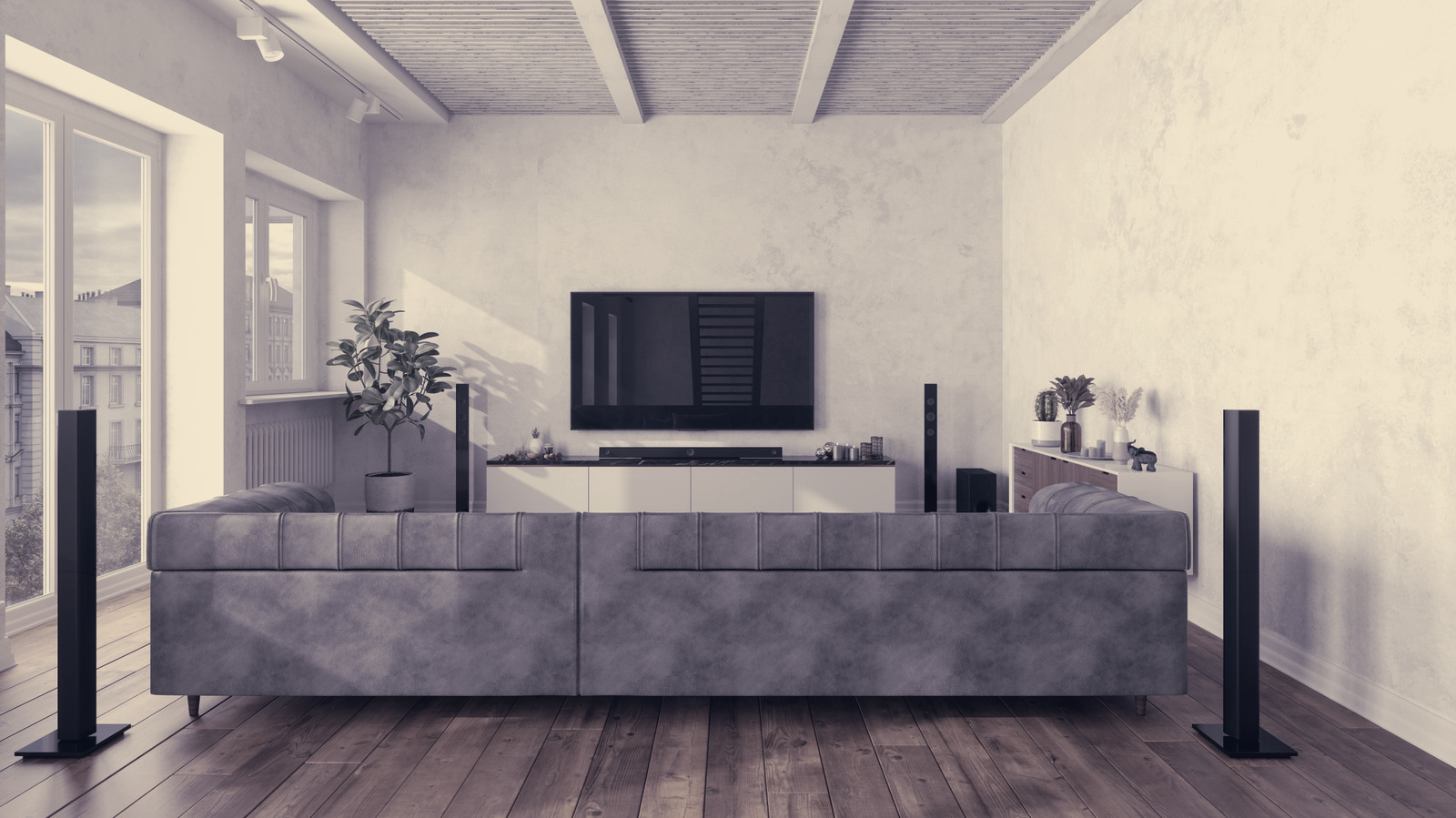
Owners of home surround systems can lift clarity, tighten bass and reduce echo without spending on replacement equipment by addressing room acoustics, repositioning speakers, moving seating and running calibration routines.
Hard surfaces such as bare walls, tile floors and large windows reflect sound and create muddiness and echo, a common cause of poor dialogue and washed-out effects. Anthony Grimani, president of Performance Media Industries and a former sound engineer with Dolby Laboratories and Lucasfilm THX, says more than half of what listeners hear in a typical room comes from sound bouncing off ceilings, walls and hard floors. Soft furnishings reduce those reflections, so adding rugs, curtains, framed art or even larger decorative items is the simplest way to fix a lot of problems.
Speaker placement and aim determine whether a system images well or collapses into indistinct sound. Front left and right speakers work best when pulled about a foot from side and back walls and spaced so the distance between them matches the distance from each to the main listening position, with both speakers angled toward that seat. The center channel should sit directly above or below the TV, aligned with the screen midpoint and aimed at ear level because it carries most dialogue. In 5.1 setups, surround channels belong to the sides of the seating area, aimed toward the listener at or slightly above ear height. For 7.1 systems, the rear channels should sit behind the seating position. Randomly tucking speakers wherever they fit undermines all other adjustments.
Subwoofer location often produces the biggest audible change. Because most subs are effectively omnidirectional, orientation matters less than placement in the room. Ported subwoofers must not be boxed in or pressed flush against a wall, those vents need space. There is no universal corner that works for every room; try the sub in two or three different spots and listen for evenness and punch.
Settings and calibration close the loop. Many AV receivers from brands like Yamaha and Pioneer include automatic calibration that plays test tones, measures room response and applies corrective filters. Owners who prefer manual control can use a sound level meter app or an external meter to set levels and distances. Also confirm each source outputs a true surround format such as Dolby Digital, Dolby Atmos or DTS rather than defaulting to stereo.
Other low-cost moves make a difference: shifting a couch a foot or two can change bass response, replacing frayed cables restores reliability, and wired connections remain more consistent than Wi-Fi or Bluetooth. The practical next step is to run the receiver’s calibration, then iteratively move speakers and the subwoofer while listening to the same test material until the sound balances.