
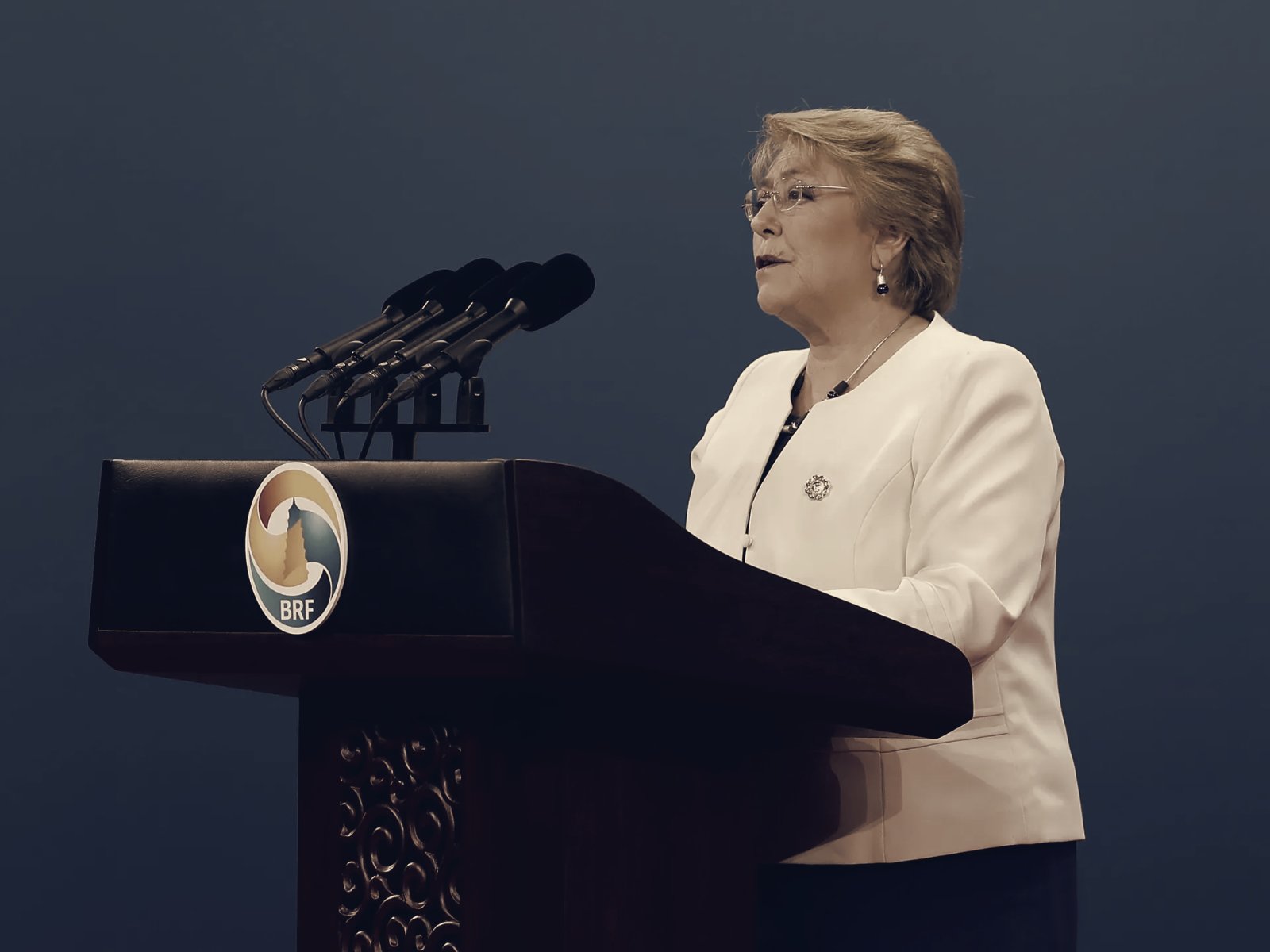
Michelle Bachelet said she would not continue her campaign for United Nations secretary-general, removing Latin America's most prominent candidate for a post the region has only once held. The former Chilean president, 74, announced the decision in a video on Instagram, saying, “Today I announced that I have decided not to continue with my candidacy for the position of Secretary-General of the United Nations.” She added she did not regret “having taken on this great challenge” even if “the time was not right” for the campaign she had hoped to run.
The withdrawal followed the Security Council's third informal straw poll, in which Bachelet received one “encourage” vote, 11 “discourage” votes and three “no opinion” votes. That showed a decline from earlier rounds, when she recorded six encouraging votes in July and two in August. The latest poll put Costa Rica's Rebeca Grynspan ahead with nine encouraging votes, and Guyana's Carolyn Rodrigues-Birkett close behind on eight.
Other candidates still listed in the informal process include Rafael Grossi, Macky Sall and Maria Fernanda Espinosa. For the council to recommend a nominee to the General Assembly, a hopeful must secure the support of at least nine of the 15 Security Council members and avoid a veto from any of the five permanent members, China, France, Russia, the United Kingdom and the United States. Bachelet had been nominated by Chile in February and reported backing from Brazil and Mexico at a moment when an unofficial rotation had placed Latin America in line for the job.
The successor to Antonio Guterres, whose current term ends on December 31, will inherit an organisation under severe strain. Guterres has warned of “imminent financial collapse”, noting $1.57bn in unpaid dues at the end of 2025, and has said rivalries among major powers, including those that “themselves violate international law and sit in the Security Council”, have paralysed action on Gaza, Ukraine and other crises.
With Bachelet out, attention will turn to whether the Security Council can coalesce around one of the remaining front-runners before a final decision reaches the General Assembly. World leaders gathering in New York next week for the Assembly's high-level session, opening Tuesday, will watch whether a clear recommendation emerges or the contest stretches into further rounds of voting.