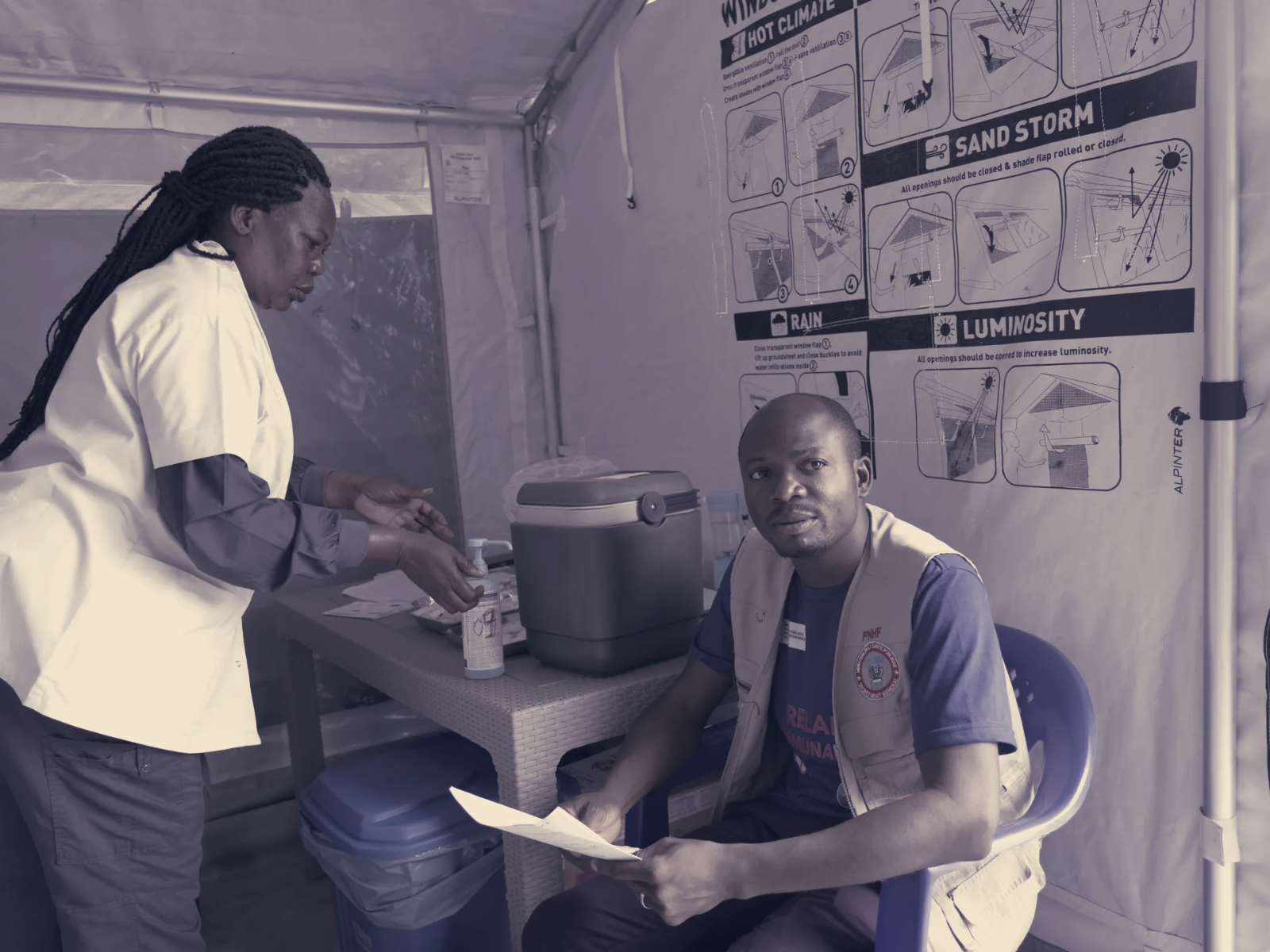
Health workers in Ituri and North Kivu gain access to a potential defence as the Democratic Republic of the Congo has begun administering the Ervebo vaccine to 50,000 frontline staff, with 20,000 of them enrolled in follow-up monitoring to assess protection against the current outbreak.
The vaccination campaign launched on Saturday in Bunia, the capital of Ituri province, where the epidemic driven by the Bundibugyo virus is growing fastest. Provincial governor Major-General Gaby Kasongo Mulumba emphasised the exposure of medical teams, noting their central role in the response.
World Health Organization experts and Doctors Without Borders, known by its French initials MSF, are supporting the operation. Ervebo was developed for the Zaire strain of Ebola; early animal data have suggested it could offer some level of protection against the Bundibugyo strain, but its effectiveness in people facing this outbreak remains unproven.
Steve Ahuka, a Congolese member of the national task force, cautioned about uncertainties, saying, "We don’t know to what degree it might be effective against the Bundibugyo strain." At a Bunia health facility Dr Jeannot Elua described the vaccine as "beneficial," and added, "We healthcare workers don’t really have a choice. We are going to receive it." He also noted some staff had previously received the earlier vaccine and that he received it because it was mandatory.
The WHO approved 70,000 doses of Ervebo for use in the DRC in August, and the shots are being administered under a compassionate-use programme, which allows use in a serious outbreak even when a product is not specifically authorised for that strain. Clinical trials continue to seek a licensed vaccine for the current epidemic, which has no approved vaccine or proven treatment tailored to Bundibugyo.
The scale of the outbreak has strained response efforts: since May the virus has killed 3,639 people and infected 7,541, while 1,823 people have recovered, according to local authorities. MSF warned there is no clear evidence the epidemic is under control, underscoring why authorities have moved to vaccinate frontline teams and why they will monitor thousands of recipients for up to one year.
What follows is a prolonged assessment period, as health officials track whether Ervebo reduces infections among vaccinated workers and as ongoing clinical trials attempt to identify a vaccine specifically licensed for the Bundibugyo virus.